News Headline
Going global with the World Kabaddi League

MUMBAI: Business tycoon Anand Mahindra’s floating the Pro-Kabaddi League has piqued nation-wide interest in the home-grown game apart from spawning similar endeavours.
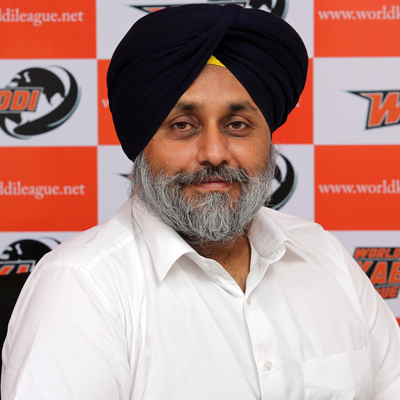
One such is the recently launched World Kabaddi League (WKL), a venture undertaken by WKL president Sukhbir Singh Badal, which also draws inspiration from four highly successful editions of the circle-style Kabaddi World Cup held in the state from 2010 to 2013 that saw participation from as many as 21 countries.

The inaugural event is slated for June at the Thyagaraj Stadium in New Delhi, with WKL president Sukhbir Singh Badal and WKL commissioner Pargat Singh expected to make a formal announcement. The event promises to be big on star presence and performances.
While seven countries including India, Pakistan, England, Belgium, USA, Canada and Australia will participate in the WKL itself. As of now, 10 teams that are neither state- nor country- specific have been confirmed, and players will be selected by ‘draw of lots’ for the maiden season. Next year onwards, the selection may be through public auction. The prize money for the opening season of the league is Rs 4 crore.
WKL CEO Raman Raheja says that WKL was launched for a variety of reasons, including building a dynamic and sustainable global sports league that would see Kabaddi become a professional sport, and engage fans and business associates with world class sports entertainment, experience and service. WKL hopes to take Kabaddi to the best of venues and provide patrons with great entertainment in a clean, secure and comfortable environment.
WKL has been modelled on the lines of a travelling sports property where all 10 teams will play each other in the same week, similar to the Formula One format. According to Raheja, the target audience is the sports viewing audience which constitutes barely three per cent of total viewership, with cricket lovers forming the majority.
“Our focus in the first season will be to grow the Kabaddi following in various pockets of HSM. The league marketing and communication will be broad based and this will target sports fans. My belief is people will watch as long as there is an excitement to the game and there are enough people here and elsewhere who are tired of watching the same sports over and over again. That audience is mine and I will play it to the field,” said Raheja.
With an exciting league in place, an important marketing strategy seems to be in place too. WKL officials said they were very much excited at the prospect of having top Bollywood personalities, pop artists, international investors, corporate giants and celebrated NRIs as possible franchise owners.
Furthermore, a 360-degree marketing plan deploying conventional and new media will be rolled out to market the league and make it one of the best marketed sports properties to come out of India. The short-term objective is to launch the WKL brand and create top-of-the-mind awareness about it, using the digital medium. The long-term objective is to engage top sports broadcasters in each of the host markets and engage top distribution feed across the world.
WKL officials said they are in touch with Sony Six for India and Geo TV for Pakistan as official broadcasters for the league. While ARY Network is the broadcaster for Dubai and the UAE. Efforts are on to rope in broadcasters from other countries as well.
WKL will have four associate sponsors and a title sponsor and each of these would conduct program activations across all geographies to ensure they capture the audience’s mind space. The revenue model for WKL is simple, involving minimum guarantee of central revenue share from broadcast and sponsorship sales. Local revenue from sponsorships, merchandising and licensing will be considered. Revenue from ticket sales and concessionaires will also start, although price points of tickets for domestic matches will be well within the reach of an average tier II Kabaddi fan. Corporate boxes will be available for sale to sponsors/guests and will be direct revenue for franchises with 100 per cent share of collection.
Franchisees will additionally gain revenue from the box office collection for matches held on international weekends.
Will having two Kabbadi leagues really give a boost to the sport? Said Zenith Optimedia managing director Naveen Khemka, “A dying sport like Kabaddi needed an uplift. Having two leagues will be good for the game both nationally and internationally. A strong financial backing from corporate and government encouragement was needed.” But when asked if the leagues will be a clash of interest, he said, “In the long run I see only one league sustaining. There will not be two Kabbadi leagues.”
While the Pro-Kabaddi League will ensure that the sport is promoted across the country, the WKL plans to take the game a notch higher and onto a global platform.





NEW DELHI: Hamdard Laboratories gathered a cross-section of India’s achievers in New Delhi on Friday, handing out the Hakeem Abdul Hameed Excellence Awards to figures who have left their mark across healthcare, education, sport, public service and the arts.
The ceremony, attended by minister of state for defence Sanjay Seth and senior officials from the ministry of Ayush, celebrated individuals whose work blends professional success with a sense of public purpose. It was as much a roll call of achievement as it was a reminder that influence is not measured only in profits or podiums, but in people reached and lives improved.
Among the headline awardees was Alakh Pandey, founder and chief executive of PhysicsWallah, recognised for turning affordable digital learning into a mass movement. On the sporting front, Arjuna Awardee and kabaddi player Sakshi Puniya was honoured for her contribution to the game and for pushing women’s participation onto bigger stages.
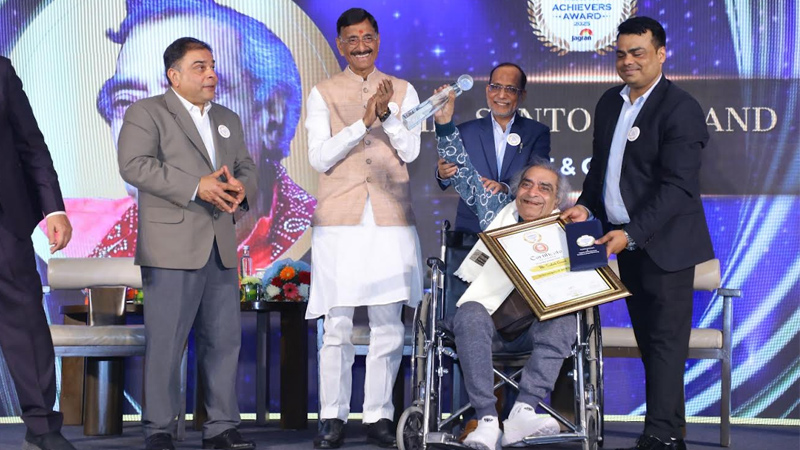
The cultural spotlight fell on veteran lyricist and poet Santosh Anand, whose songs have echoed across generations of Hindi cinema. At 97, Anand accepted the honour with characteristic humility, reflecting on a life shaped by perseverance and hope.
Healthcare honours spanned both modern and traditional systems. Manoj N. Nesari was recognised for strengthening Ayurveda’s place in national and global health frameworks. Padma shri Mohammed Abdul Waheed was honoured for his research-backed work in Unani medicine, while padma shri Mohsin Wali received recognition for his long-standing contribution to patient-centred care.
Education and social development also featured prominently. Padma shri Zahir Ishaq Kazi was honoured for decades of work in education, while former Meghalaya superintendent of Police T. C. Chacko was recognised for public service. Goonj founder Anshu Gupta received an award for his dignity-centred rural development initiatives, and the Hunar Shakti Foundation was honoured for empowering women and young girls through skill development.
The Lifetime Achievement Award went to former IAS officer Shailaja Chandra for her long career in public healthcare and governance, particularly in the traditional systems under Ayush.
Speaking at the event, Hamdard chairman Abdul Majeed said the awards were a tribute to those who combine excellence with empathy. “These awardees reflect Hakeem Sahib’s belief that healthcare, education and public service must ultimately serve humanity,” he said.
Minister Seth struck a forward-looking note, saying India’s young population gives the country a unique opportunity to become a global destination for learning, health and wellness by 2047.
The ceremony also featured the trailer launch of Unani Ki Kahaani, an upcoming documentary starring actor Jim Sarbh, set to premiere on Discovery on 11 February.
Instituted in memory of Unani scholar and educationist Hakeem Abdul Hameed, the awards have grown into a national platform that celebrates those building a more inclusive and resilient India. For one evening at least, the spotlight was not just on success, but on service with substance.






