eNews
Goa food & cultural festival 2026 begins


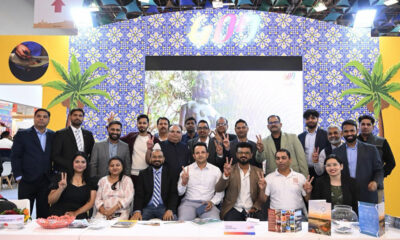
GOA: Margao lit up on Thursday evening as the Goa Food & Cultural Festival 2026 opened with a riot of flavours, folk rhythms and festival buzz, signalling a renewed push to sell the state beyond its beaches.
Held at the Margao Cricket Club’s Dr Rajendra Prasad Stadium, the three-day festival brings together Goan food traditions, live music and dance, and locally made products—stitched into a single, high-energy celebration aimed at residents and tourists alike.
The festival was inaugurated by tourism minister Rohan A. Khaunte, alongside Digambar Kamat, minister for PWD and captain of ports; Kedar J. Naik, chairman of the Goa Tourism Development Corporation; Ulhas Tuenkar, MLA from Navelim; Damodar Shirodkar, chairperson of the Margao Municipal Council; Kedar Naik, director of tourism; and Kuldeep Arolkar, managing director of GTDC.


Several local food and culture contributors, including Shubham Naik, Nilesh Shirodkar, Harish Deulker, Sudha Kudalkar and Vishwas Chari, were felicitated for their work in keeping Goa’s culinary and artistic traditions alive.
Addressing the gathering, Rohan A. Khaunte said the Margao edition marked the festival’s second outing in the city and underlined Goa’s growing reputation as a food destination. From north to south, he noted, Goa’s kitchens reflect a diversity that allows visitors to taste the world while standing firmly on Goan soil.

Calling Goa a “creative capital” and, informally, a culinary one too, Khaunte said the state’s regenerative tourism model is designed to spread benefits widely. Every stall at the festival, he said, is run by Goans—from self-help groups to homegrown entrepreneurs—while local artists are given a prime stage to perform.
Digambar Kamat pointed to tourism’s role as a key economic driver, arguing that festivals such as this add depth and momentum to Goa’s tourism calendar. Strong visitor interest and high hotel occupancy, he said, underline how cultural events translate directly into economic activity.
For Kedar J. Naik, the festival is also personal. He recalled attending earlier editions at Miramar, noting that the event has long served as a launchpad for self-help groups and folk performers, helping preserve traditions while creating livelihoods.

Ulhas Tuenkar echoed that view, saying the festival’s core purpose is to empower local communities by turning skills—whether culinary or artistic—into income.
The opening night set the tempo with traditional dance by the Kanta Gaude troupe, followed by live performances from Anson, Chelsea & Jeliska Trio, Sonia Shirsat with her band, and LYNX. Food stalls, craft counters and handmade products did brisk business, blurring the line between culture and commerce.
Part of the tourism department’s ‘Goa beyond beaches’ push, the festival runs until January 25, with more music, food and local colour lined up. Goa is not just hosting a party—it is making a point.






eNews
Paisabazaar launches Credit Premier League 2.0
Nationwide campaign rewards highest credit scores with Rs 1 lakh top prize.

MUMBAI: When credit scores become a national league, even your CIBIL report starts feeling like it’s playing in the IPL and Paisabazaar has just kicked off the second season. Paisabazaar, India’s leading marketplace for financial products and the country’s largest free credit score platform, has announced the return of the Credit Premier League (CPL) 2.0, a fun, nationwide initiative to recognise and reward individuals with the highest credit scores.
Building on the success of the first edition, CPL 2.0 introduces higher rewards and broader participation. The individual(s) with the highest credit score in the country will win Rs 1 lakh, while state champions will each receive Rs 10,000. Additionally, all participants from the winning state, the one with the highest average credit score will also be rewarded.
All winnings will be credited directly to winners’ PB Wallet, allowing them to pay credit card bills, recharge mobiles, or settle utility bills seamlessly on the Paisabazaar platform.
Paisabazaar CEO Santosh Agarwal said the campaign aims to make credit awareness more engaging and mainstream. “With CPL, we are bringing together engagement, gamification and rewards to make conversations around credit scores more mainstream,” he noted. “Our focus remains on building a financially aware and credit-healthy Bharat.”
The first edition of CPL saw over 5.5 million participants, with the highest individual score touching 861. Delhi recorded the highest average credit score of 746.
Consumers can participate simply by checking their free credit score on the Paisabazaar platform or app. The CPL leaderboard and rankings will be available exclusively on the Paisabazaar App.
In a country where financial dreams are serious business, Paisabazaar has found a smart way to turn credit scores into an exciting game – because when your financial health gets rewarded, everyone wants to play.







