Cable TV
Global broadband consumption of sports content expected to increase by 25 per cent


MUMBAI: A New Media Sportscasting Summit delegation survey done reveals that global broadband consumption of sports content will increase by 25 per cent over the next three years.
The New Media Sportscasting Summit held in Dublin, a few days ago, saw experts from the sports industry gathered together to discuss the trends and opportunities for the delivery of sport over broadband and 3G.
Participants included LiverpoolFC.TV, Setanta Sports in the US, Aura Sports, Google Video, The Rugby Football League and Vodafone. The best way to minimise subscriber churn from broadband sports subscription services is to incentivise customers towards annual rather than monthly subscription.

Setanta Sports CEO Simon Green emphasised that the new phenomenon of ‘Placeshifting’ means that the desire to have sports content anytime, any place is driving new media sportscasting.
Reduction in time delay to ‘as live’ will increase opportunities to incorporate in-running betting with online sports content; live pictures can sit alongside prices for events and web content dictated by the broadcast.
At the same time the creation of more web-specific content will create opportunities to sponsor on-demand broadcasts linked to major racing events. The fourth screen – the mobile phone – is vital in the communications mix for new media sports content. An understanding of mobile personalisation, content recommendations and search capabilities in a wireless environment are key to enabling the success of mobile portal content propositions in the sports industry.
Having a well presented preview function with sample content and offering occasional free video samples to get customer more used to watching video online is essential for successful subscriber recruitment. Investing heavily in customer services and technical support is also key to keeping online subscribers.
There is also a need to understand the time-starved individual who lives in an ‘information overload’ society. The sports industry must react strongly to this. The sports industry is in the entertainment business and must compete for the customer’s attention in a very busy market dominated by MTV, iPods, PSPs, television soaps, the cinema, pubs and PCs.
It was pointed out that the ‘Placeshifting’ phenomenon is growing. This means having content anytime, any place. In the US, this is reflected in the Slingbox which enables users to watch their TV programming from wherever they are by turning virtually any Internet-connected PC into a personal TV.
In the US, it is selling three times as fast as Tivo did.This phenonmenon is reflecting the needs and demands of time starved, busy individuals who want sports information anytime, anywhere. One potential problem for broadcasters in this scenario is that national territorial rights deals could get eroded.
Streaming services are now succeeding because the delay on the television picture is cut down to seven seconds. More users now understand the relationship between PC Spec, Connection Speed and picture quality and broadband penetration is growing rapidly. Further improvements are taking place in terms of the quality of the stream, reductions in the delay as well as enhancements to the free and archive video services.
There is also a huge potential in the online gambling space and the opportunities to integrate broadband video with a ‘Bet & Watch’ facility.
Vodafone media head Kieran Mahon sees sport as the most compelling content to distribute over mobile. He described the importance of the fourth screen – the mobile screen. He outlined that recent developments in mobile data delivery means that mobile sports content can be consumed easily, adding, “Personalisation of mobile content has improved usability by learning about users’ mobile content preferences, dynamically building the user a personalised menu and reducing the time and clicks to services.”
For a sports fan using their mobile to access sports content, this means the link to their favourite sports content will be top of the menu on their mobile phone. Kieran also emphasised that an understanding of personalisation, automatic content recommendation and mobile search in a wireless environment is key to enabling the success of mobile portal content propositions.
Online sports ad agency, Aura Sports MD Paul Wright offered insight into the best ways to develop an advertising revenue stream from digital sports properties. He stated that sponsorship and advertising was equally important and beneficial online as on TV and that the interactivity that can be achieved through online advertising is extremely valuable.






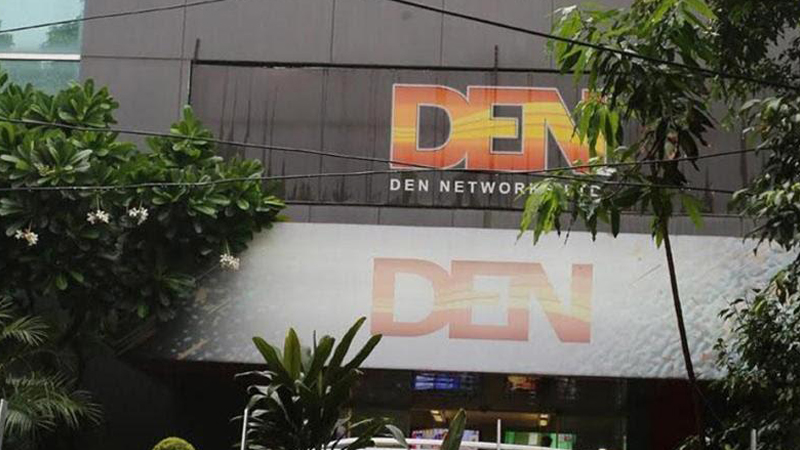
MUMBAI: When margins wobble, liquidity talks and in Q3 FY25-26, cash did most of the talking. Den Networks Limited closed the December quarter with consolidated revenue of Rs.251 crore, marginally higher than the previous quarter but down 4 per cent year-on-year, even as profitability stayed resilient on the back of strong cash reserves and disciplined cost control.
Subscription income softened to Rs.98 crore, slipping 3 per cent sequentially and 14 per cent from last year, while placement and marketing income offered some cheer, rising 15 per cent quarter-on-quarter to Rs.148 crore. Total costs climbed faster than revenue, up 7 per cent QoQ to Rs.238 crore, driven largely by higher content costs and operating expenses. As a result, EBITDA dropped sharply to Rs.13 crore from Rs.19 crore in Q2 and Rs.28 crore a year ago, pulling margins down to 5 per cent.
Yet, the bottom line refused to blink. Profit after tax stood at Rs.40 crore, up 15 per cent sequentially and only marginally lower than last year’s Rs.42 crore. A healthy Rs.57 crore in other income helped cushion operating pressure, keeping profit before tax at Rs.48 crore, broadly stable quarter-on-quarter despite the tougher cost environment.
The real headline-grabber, however, sits on the balance sheet. The company remains debt-free, with cash and cash equivalents swelling to Rs.3,279 crore as of December 31, 2025. Net worth rose to Rs.3,748 crore, while online collections accounted for 97 per cent of total receipts, underscoring strong cash discipline across operations, including subsidiaries.
In short, while Q3 showed signs of operating strain, the financial backbone remains solid. With zero gross debt, steady profits and a formidable cash war chest, the company enters the next quarter with flexibility firmly on its side proving that in uncertain markets, balance sheet strength can be the best growth strategy.






