Cable TV
GGCTOA writes to APDCL, asks to disclose electric pole data for Guwahati

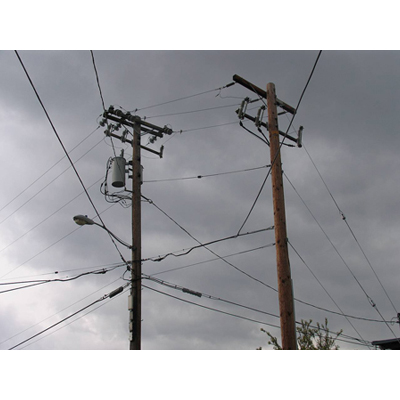
MUMBAI: The Assam Power Distribution Company Limited (APDCL) and Greater Guwahati Cable TV Operators’ Association (GGCTOA) still seem to be at loggerheads on the issue of the payment for the electric poles. After several meetings and deadlines, the issue remains unresolved.
The issue began in September last year when APDCL asked the cable operators in Assam to pay Rs 25 per electric pole per month. The issue has just stretched since then, the last set deadline for cable operators to pay Rs 25 as electric pole fee was 22 January. It was then that GGCTOA approached the Guwahati High Court. The High Court, in the hearing held on 29 January, has asked both parties to come on a consensus by 28 February.

“Let the required exercise be carried out as expeditiously as possible preferably within 28.02.2014, subject however, to the condition that petitioner shall pay the change of Rs 10 per pole for a period of one month i.e. up to 28.02.2014, which however is subject to the final outcome of the exercise required to be carried out in terms of the order and without prejudicing the rights and contentions of the parties. Needless to say that in the event of the prayer of the petitioners finds favour of APDCL authority, the said amount will be adjusted with future charge, if any, or refunded,” the Guwahati HC order reads.
However, now GGCTOA has written to the APDCL and has asked to disclose the number of poles used by the cable operators. “We have written to the APDCL on 3 February and have asked them to arrange for a meeting and also give us the complete data of the number of polls used by the cable operators and amount that has to be collected, since we do not have any such data with us,” informs GGCTOA general secretary Md Iquebal Ahmed.
The cable operators have also agreed to pay Rs 10 per electric pole per month in the interim. “But for that we will need the data. Also, if in this interim the APDCL can bring down the electric pole fee to Rs 10 or less, we will be happy. If it doesn’t, we will again approach the court,” adds Ahmed.
According to APDCL, 31,000 electric poles in Guwahati are being used by the cable operators. “The HC expects us to settle down issues before 28 February. We will decide on that in the coming days,” says APDCL public relation officer Chandra Mudoi, informing that they have received the letter from GGCTOA and will act on it soon.



MUMBAI: When margins wobble, liquidity talks and in Q3 FY25-26, cash did most of the talking. Den Networks Limited closed the December quarter with consolidated revenue of Rs.251 crore, marginally higher than the previous quarter but down 4 per cent year-on-year, even as profitability stayed resilient on the back of strong cash reserves and disciplined cost control.
Subscription income softened to Rs.98 crore, slipping 3 per cent sequentially and 14 per cent from last year, while placement and marketing income offered some cheer, rising 15 per cent quarter-on-quarter to Rs.148 crore. Total costs climbed faster than revenue, up 7 per cent QoQ to Rs.238 crore, driven largely by higher content costs and operating expenses. As a result, EBITDA dropped sharply to Rs.13 crore from Rs.19 crore in Q2 and Rs.28 crore a year ago, pulling margins down to 5 per cent.
Yet, the bottom line refused to blink. Profit after tax stood at Rs.40 crore, up 15 per cent sequentially and only marginally lower than last year’s Rs.42 crore. A healthy Rs.57 crore in other income helped cushion operating pressure, keeping profit before tax at Rs.48 crore, broadly stable quarter-on-quarter despite the tougher cost environment.
The real headline-grabber, however, sits on the balance sheet. The company remains debt-free, with cash and cash equivalents swelling to Rs.3,279 crore as of December 31, 2025. Net worth rose to Rs.3,748 crore, while online collections accounted for 97 per cent of total receipts, underscoring strong cash discipline across operations, including subsidiaries.
In short, while Q3 showed signs of operating strain, the financial backbone remains solid. With zero gross debt, steady profits and a formidable cash war chest, the company enters the next quarter with flexibility firmly on its side proving that in uncertain markets, balance sheet strength can be the best growth strategy.






