Hindi
‘Gabbar Is Back’ earns Rs 36.6 crore at BO

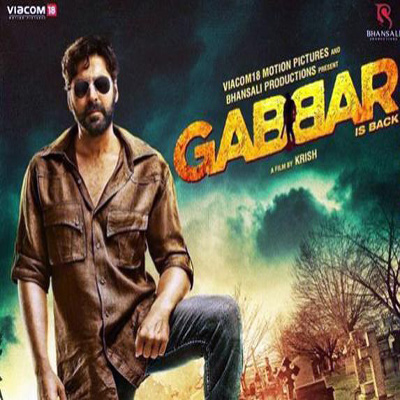
MUMBAI: Akshay Kumar’s oft repeated theme of anti-establishment Gabbar Is Back, has benefitted thanks to it being a kind of solo release for the audience starved of commercial mass film with a popular star this year so far.
The film will enjoy a four day weekend in many states while it has a three day holiday run in other states (May Day on 1 May and Buddha Purnima on 4 May). The film opened to average response, dropping further on Saturday.

The collections got better on Sunday ending its first three days with Rs 36.6 crore. The negative word of mouth seems to have caught up with the film, which will limit its prospects as the week progresses.
The other release of the week, Sabki Bajegi Band, remained a nonstarter with five to 10 occupants in the audience on the opening day.
Jai Ho! Democracy proves to be a major disaster managing to collect just about Rs 18 lakh in its first week.
Ishq Ke Parinde goes unnoticed causing heartburns to both, the makers as well as the exhibitors.
Kagaz Ke Fools, it seems, marks the end of Vinay Pathak kind of comedies. The film manages just about Rs 40 lakh for its first week’s run.
Mr X suffered due to its mediocre script and treatment and dropped to about a little less than 10 per cent of its first week figures in its week two. The film managed a bare Rs 2.4 crore to take its two week tally to Rs 20.95 crore.
Margarita With A Straw sustains on the lower side, though. The film collects Rs 1.75 crore in its second week, taking its two week tally to Rs 5.25 crore.
Ek Paheli Leela adds Rs 30 lakh in its third week to take its three week total to Rs 21.14 crore.
Dharam Sankat Mein has added Rs 25 lakh in its third week taking its three week tally to Rs 9 crore.
Detective Byomkesh Bakshy has collected Rs 40 lakh in its fourth week to take its four week total to Rs 27.08 crore.






Hindi
Government backs film production through DCDFC, co-production push
Scheme funds cinema, WAVES 2025 boosts global ties and industry growth.
MUMBAI: Lights, camera… policy action. As India’s screens glow brighter at home and abroad, the government is quietly scripting a bigger role behind the scenes funding films, fuelling collaborations and nudging the country closer to its “create for the world” ambition. At the centre of this effort is the Development, Communication & Dissemination of Filmic Content (DCDFC) scheme, a 100 per cent centrally funded initiative designed to support film production across the country. Through this scheme, the government provides direct financial backing to projects, aiming to strengthen both mainstream and alternative storytelling ecosystems while encouraging cinematic excellence.
The implementation runs through the National Film Development Corporation (NFDC), which plays a key role in facilitating film production, including regional cinema and documentaries. Beyond the screen, the scheme also feeds into the broader economy creating jobs for local technicians, artists and service providers, and strengthening grassroots production networks across states.
The push, however, is not limited to funding alone. India’s ambition to position itself as a global content powerhouse was on display at the World Audio Visual & Entertainment Summit 2025 held in Mumbai, which brought together creators, producers, startups and global stakeholders from over 100 countries. The summit acted as a convergence point for Indian storytelling and international capital, with OTT platforms, investors and technology leaders exploring partnerships in a rapidly evolving content economy.
Complementing this is the government’s focus on audio-visual co-production agreements, which effectively operate on a public-private partnership model. By enabling Indian and international producers to collaborate, these agreements are designed to bring in investment, global expertise and advanced filmmaking practices while also giving Indian stories a wider global footprint.
Support also extends to film culture and preservation. Grants are provided for domestic film festivals recommended by state governments, alongside curated film packages, masterclasses and workshops to nurture talent and audience engagement. The NFDC further collaborates with State Film Development Corporations, offering technical expertise across the filmmaking value chain and supporting the preservation of local film heritage.
Many states, in parallel, are encouraging the development of film infrastructure including production studios often through public-private partnership models, signalling a coordinated push to build a more robust audiovisual ecosystem.
The update was shared in Parliament by Ashwini Vaishnaw in response to a query from Thirumaavalavan Tholkappiyan, outlining a multi-layered approach that blends funding, infrastructure, policy and global outreach.
Taken together, the message is clear: India is not just telling more stories, it is building the machinery to tell them bigger, better and to the world.






