News Headline
‘Future scoping Indian private FM radio’-Apurva Purohit, CEO, Radio City 91.1 FM


For the radio industry, 2007 was a year that started off with several distinct lacunae; with concerns such as differentiation, measurement, talent and regulation top of mind for most broadcasters.
While we, at Radio City, took the lead to differentiate with ‘Whatte fun’ and a vibrantly melodious station sound, various other national brands realigned their vision and brand stance.
There’ve also been two developments greatly significant to the industry as a whole. The first would be the advent of Radio Audience Measurement (RAM) – a robust radio measurement system which we, along with TAM and a few other broadcasters took the lead to introduce. Since its presence in the industry, RAM has been an invaluable tool – both for the industry, planners and advertisers alike. It allows media planners to showcase the saliencies of using the medium by demonstrating the cost-benefit analysis. This would embolden planners to recommend radio to advertisers who seeing the merit of this research-backed proposition would in turn, enhance their spends on the medium.

The second would be the convergence of radio broadcasters across the nation under the aegis of the Association of Radio Operators of India (AROI). With the setting up of a high powered governing council from radio operators across the nation, we believe the AROI will emerge as a very strong entity which will work aggressively towards the progress and strengthening of this medium and industry in the year to come.
Thus with steps taken in the right direction in 2007, 2008 will see radio further on the rise!
Advertising
The numbers are gradually increasing and it is encouraging indeed. Rather than the pace of this growth, it is important that the growth be stable and sustained. Internationally, radio comprises seven-15 per cent of the overall advertising pie. In India, this number varies from three -3.5 per cent (approximately INR 500-550 crore) which clearly shows the potential of business yet to be explored.
This bodes very well indeed for an industry which is seeing daybreak through growth and a robust measurement system like RAM which justifies the revenues spent, to advertisers.
The future
The Indian private FM space is clearly booming. While Phase II is still rolling out, Indians in 91 cities stand to gain access to private FM as an entertainment option. Given the pace of this rollout, one can expect these stations to be ‘FM active’ by mid to late 2008.
While this happens, Phase III is round the corner with 97 FM radio frequencies on offer. Given that this wave would settle by mid to late 2008, one can expect these Phase III stations to unfurl by 2009-2010.
These numbers alone make the organic growth spurt of FM radio very obvious. This growth, coupled with robust radio measurement (RAM) and the easing of regulations will see FM radio as a medium of entertainment, become one of reckoning.
2008 will see Radio Cithy adding to our list of ‘firsts’. As a leading player in the radio space, we remain committed to deliver a sustained, unmatched melodious radio listening experience to our listeners across the nation. Providing originality to the medium through programming and music, based on robust research, is part of our plans for the next few months.
Frgmentation
Fragmentation is good – both for the medium and for the audience. While it offers the audience choice entertainment options, it also ensures that the players up the ante in securing their share of the pie.
We have witnessed the exact same phenomenon a decade or so ago in television. And what did that do to television? While for starters even smaller, niche channels started getting monitored, this added to their revenues by advertisers with niche propositions investing in them. And today, 50 per cent of advertising revenue in television is going on to segmented offerings today.
Look at the advertiser. By virtue of having segmented product offerings he himself needs segmented media vehicles for him to optimize media spends on his specific target group. Such an approach, contrary to a carpet bombing strategy, allows for higher return on investment (ROI).
We saw the lack of fragmentation or segmentation in radio as an opportunity. Vis-?-vis a carpet bombing strategy, it is intelligent business to be meaningfully relevant to a select audience. Which is why we took the lead this year and identified our distinct target audience SEC AB 25-44 years and it has worked marvelously for us.
FM Phase III
2008 comes with the likelihood of several industry expectations being addressed.
With Phase III and the further expansion of the coverage of FM radio, it is very likely that the Ministry will revisit pressing issues such as raising the FDI ceiling for radio broadcasting, allowing broadcasting of news and current affairs, allowing broadcasters to operate multiple frequencies in the same city among others.
The resolution of these issues is likely to open up the market and further enhance penetration of the medium across new and existing markets. This would also make Indian private FM radio more attractive to potential investors, encourage the influx of niche channels and contribute to the overall profitability of the business and the industry as a whole.
Innovation of formats
In the year gone by, radio as a medium has emerged from a supportive medium to a preferred medium to reach out to the masses. Radio by itself is a habit forming medium which creates a deep personal connect with listeners with the music and the c the obvious pull factors for the listener.
Thanks to the boom in Indian private FM by way of newer stations coming up across the country, the listener today is more evolved and highly sensitized to the medium. This makes it very important for any brand to engage him proactively in a manner which he can relate to, through value-added initiatives which are ‘meaningfully relevant’ to him.
The spectrum of options in addition to vanilla product promotions/ radio spots and contests, now also includes value-added propositions such as content integration, brand mentions woven in the RJ’s script and ground activation directly involving the listener.
Value added outdoor activation led initiatives create an additional point of interface between the listener and the FM station thereby bringing both meaningfully closer. In doing so, they help make the brand proposition tangible for the listener by creating a unique and memorable brand experience. It is this listener experience which is so invaluable and goes a long way in enhancing listener loyalty and recall.
Radio advertising – moving beyond the mundane
Innovations in radio advertising which are beyond the obvious, yet very relevant to the listener, create an excitement among the audience with a superlative impact on the advertiser’s business. Advertisers are certainly open to trying out new, innovative propositions. A value proposition which allows the advertiser enhanced benefits over a vanilla radio spot would always interest him. Our teams are known to excel in this domain by devising customized solutions after an in-depth understanding of the advertiser’s product offering and specific marketing needs.
2007 has seen its share of innovations in radio advertising. This is on the upswing and as radio branches out beyond the air-waves with on-ground activation, it only goes higher up the value chain of benefits – both to the listener and the advertiser.
Increasingly, radio is being seen as part of the 360 degree effort to engage the consumer through a mix of radio interactivity, activation and BTL promotions forming a very comprehensive and accountable option to the typical use of mass media.


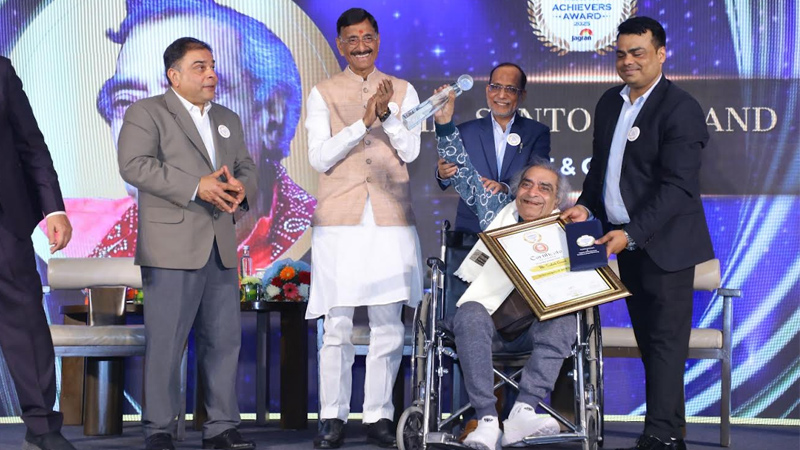
NEW DELHI: Hamdard Laboratories gathered a cross-section of India’s achievers in New Delhi on Friday, handing out the Hakeem Abdul Hameed Excellence Awards to figures who have left their mark across healthcare, education, sport, public service and the arts.
The ceremony, attended by minister of state for defence Sanjay Seth and senior officials from the ministry of Ayush, celebrated individuals whose work blends professional success with a sense of public purpose. It was as much a roll call of achievement as it was a reminder that influence is not measured only in profits or podiums, but in people reached and lives improved.
Among the headline awardees was Alakh Pandey, founder and chief executive of PhysicsWallah, recognised for turning affordable digital learning into a mass movement. On the sporting front, Arjuna Awardee and kabaddi player Sakshi Puniya was honoured for her contribution to the game and for pushing women’s participation onto bigger stages.
The cultural spotlight fell on veteran lyricist and poet Santosh Anand, whose songs have echoed across generations of Hindi cinema. At 97, Anand accepted the honour with characteristic humility, reflecting on a life shaped by perseverance and hope.
Healthcare honours spanned both modern and traditional systems. Manoj N. Nesari was recognised for strengthening Ayurveda’s place in national and global health frameworks. Padma shri Mohammed Abdul Waheed was honoured for his research-backed work in Unani medicine, while padma shri Mohsin Wali received recognition for his long-standing contribution to patient-centred care.
Education and social development also featured prominently. Padma shri Zahir Ishaq Kazi was honoured for decades of work in education, while former Meghalaya superintendent of Police T. C. Chacko was recognised for public service. Goonj founder Anshu Gupta received an award for his dignity-centred rural development initiatives, and the Hunar Shakti Foundation was honoured for empowering women and young girls through skill development.
The Lifetime Achievement Award went to former IAS officer Shailaja Chandra for her long career in public healthcare and governance, particularly in the traditional systems under Ayush.
Speaking at the event, Hamdard chairman Abdul Majeed said the awards were a tribute to those who combine excellence with empathy. “These awardees reflect Hakeem Sahib’s belief that healthcare, education and public service must ultimately serve humanity,” he said.
Minister Seth struck a forward-looking note, saying India’s young population gives the country a unique opportunity to become a global destination for learning, health and wellness by 2047.
The ceremony also featured the trailer launch of Unani Ki Kahaani, an upcoming documentary starring actor Jim Sarbh, set to premiere on Discovery on 11 February.
Instituted in memory of Unani scholar and educationist Hakeem Abdul Hameed, the awards have grown into a national platform that celebrates those building a more inclusive and resilient India. For one evening at least, the spotlight was not just on success, but on service with substance.






