News Broadcasting
Future. Female. Forward Season 2: Mumbai’s Leadership Circle unites women leaders for impactful change

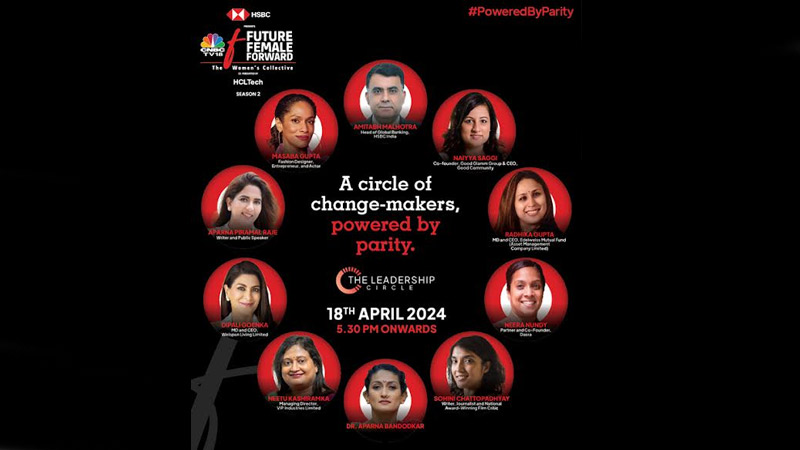
Mumbai: CNBC-TV18, a purpose-driven brand committed to fostering gender parity and empowering women leaders, proudly announces “Female. Forward Season 2: The Leadership Circle – Mumbai Edition,” presented by HSBC India. Following the resounding success of its Season 2 launch in New Delhi, this exclusive event is scheduled for April 18th, Thursday in Mumbai. It promises an evening of engaging dialogue and insightful activities aimed at creating a space for women leaders to Connect, Express & Evolve.
The Leadership Circle transcends the traditional boundaries of networking events, emerging as a perfect platform for people to engage while also being a circle to share insights and inspiring stories, thereby being a platform where decision-makers and key opinion leaders converge to catalyse real parity. Embracing an innovative approach, this chapter invites a select group of distinguished women leaders from diverse fields to share their personal journeys, challenges, and aspirations, setting the stage for meaningful dialogue and impactful collaboration.
The event will kickstart with an opening address by CNBC-TV18, managing editor Shereen Bhan and move ahead with insightful conversations, fireside chat and panel discussions. Gracing this exclusive gathering are Amitabh Malhotra, Head of Global Banking, HSBC India; Naiyya Saggi, Co-founder, Good Glamm Group & CEO, Good Community; Sohini Chattopadhyay, Writer, Journalist, and National Award-winning film critic; Radhika Gupta, MD and CEO of Edelweiss Mutual Fund (Asset Management Company Limited); Neera Nundy, Partner and Co-Founder, Dasra; Neetu Kashiramka, Managing Director, VIP Industries Limited; Dipali Goenka, CEO and MD, Welspun Living Ltd.; Aparna Piramal Raje, Writer and Public Speaker; Dr. Aparna Bandodkar and Masaba Gupta, Fashion Designer, Entrepreneur, and Actor.

Moderated by Bhan, the panel discussion with women trailblazers will delve into critical topics such as gender parity, women in the workforce, and fostering growth environments for future leaders. Following the panel discussion, attendees will engage in an interactive workshop/activity designed to deepen connections and inspire collaborative action. The event will culminate in a networking dinner with drinks, providing a platform for attendees to forge lasting connections and continue their conversations in a relaxed setting.
Being a partner on this initiative, Malhotra will throw light on ‘Championing Diversity and Inclusion’ at the workplace from the HSBC perspective through an insightful keynote.
Commenting on this initiative he said ” “We are proud to have collaborated with CNBC-TV18 for a cause that is important for HSBC India and has the support across the organisation. We understand that empowering women isn’t just about equality, it’s about driving innovation, growth, and success. Through initiatives like CNBC-TV18’s Future. Female. Forward – The Women’s Collective, we are committed to creating a more inclusive ecosystem where every voice is heard, and every talent is valued”
“”The idea of creating the Leadership Circle, is to encourage authentic conversations about what it takes to lead. It is also an opportunity for leaders to converge, not just to share their interests, but to collectively work towards creating a more inclusive and equitable future. Future. Female. Forward – The Women’s Collective comes a full circle, as it returns to Mumbai after the mega launch of our campaign in 2022. We are bringing together leaders who have had the courage to rise above constraints and create a niche for themselves in diverse areas. Each one of these leaders symbolise the change we want to see. The leadership circle will recognise and celebrate the “Audacity of Ambition” commented Bhan.
“At Future. Female. Forward, we firmly believe in the transformative potential of collective action and collaboration to foster meaningful change. This stands as a testament to this spirit, underlining our unwavering dedication to building an environment where women not only thrive but also emerge as trailblazers, inspiring others to follow suit. This event epitomises our mission to foster a culture of empowerment and inclusivity, where women’s voices are amplified, their leadership is celebrated, and their impact resonates far beyond the confines of boardrooms and workplaces,” added Network18 CEO-English and Business News Smriti Mehra.






News Broadcasting
Induction cooktop demand spikes 30× amid LPG supply concerns
Supply worries linked to West Asia tensions push households and restaurants to turn to electric cooking alternatives
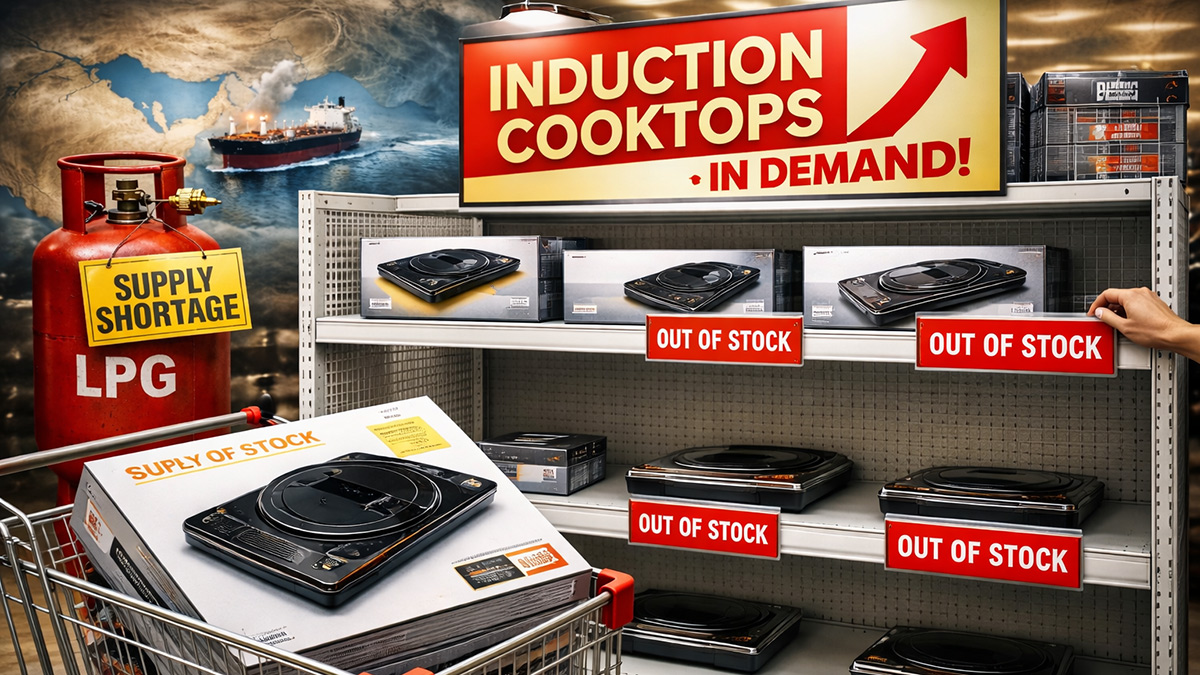
MUMBAI: As geopolitical tensions in West Asia ripple through global energy supply chains, the familiar blue flame in Indian kitchens is facing an unexpected challenger: electricity.
What began as concerns over the availability of liquefied petroleum gas (LPG) has quickly evolved into a technology-driven shift in cooking habits. Households across India are increasingly turning to induction cooktops and other electric appliances, initially as a backup but now, for many, a necessity.
A sudden surge in demand
Recent data from quick-commerce and grocery platform BigBasket highlights the scale of the shift. According to Seshu Kumar Tirumala, the company’s chief buying and merchandising officer, demand for induction cooktops has risen dramatically.
“Induction cooktops have seen a significant surge in demand, recording a fivefold jump on 10 March and a thirtyfold spike on 11 March,” Tirumala said.
The increase stands out sharply when compared with broader kitchen appliance trends. Most appliance categories are growing within 10 per cent of their typical demand levels, while induction cooktops have witnessed explosive growth as households rush to secure an alternative cooking option.
Major e-commerce platforms including Amazon and Flipkart have reported rising searches and orders for induction stoves. Quick-commerce apps such as Blinkit and Zepto have also witnessed stock shortages in major metropolitan areas including Delhi, Mumbai and Bengaluru.
What was once considered a convenient appliance for hostels, small kitchens or occasional use has suddenly become an essential addition in many homes.
A crisis thousands of miles away
The trigger for this shift lies far beyond India’s kitchens.
Escalating conflict in the Middle East has disrupted shipping routes through the Strait of Hormuz, one of the world’s most critical energy corridors. Nearly 85 to 90 per cent of India’s LPG imports pass through this narrow waterway, making the country particularly vulnerable to supply disruptions.
The ripple effects have been swift.
India currently meets roughly 60 per cent of its LPG demand through imports, and tightening global supply has already begun to affect domestic availability and prices.
Earlier this month, the price of domestic LPG cylinders increased by Rs 60, while commercial cylinders rose by more than Rs 114.
To discourage panic buying and hoarding, the government has also extended the mandatory waiting period between domestic refill bookings from 21 days to 25 days.
Restaurants feel the pressure
The strain is not limited to households. Restaurants, hotels and roadside eateries are also grappling with supply constraints as commercial LPG availability tightens under restrictions imposed through the Essential Commodities Act.
In cities such as Bengaluru and Chennai, restaurant associations report that commercial LPG availability has dropped by as much as 75 per cent, forcing many establishments to rethink their kitchen operations.
Some restaurants have reduced menu offerings, while others are rapidly installing high-efficiency induction systems, creating hybrid kitchens where electricity now shares the workload with gas.
For smaller eateries and roadside dhabas, the shift is less about sustainability and more about survival.
A potential structural shift
The government has maintained that there is no nationwide LPG crisis and has directed refineries to increase production to stabilise supply.
Nevertheless, the developments of March 2026 may already be triggering a longer-term behavioural shift.
For decades, LPG has been the backbone of cooking in Indian households. However, recent disruptions have highlighted the risks of relying on a single fuel source.
Increasingly, households appear to be hedging against uncertainty by adopting electric cooking options to guard against price volatility and delivery delays.
If the current trend continues, the induction cooktop, once viewed as a niche appliance, could emerge as a quiet symbol of India’s evolving kitchen economy.