Cable TV
FTC penalises Time Warner Cable $1.9 million for violating pricing rule


MUMBAI: Time Warner Cable (TWC) has agreed to pay a $1.9 million civil penalty to settle the Federal Trade Commission (FTC) charges as it allegedly violated the risk-based pricing rule by failing to send notices to subscribers.
TWC has been accused of demanding upfront payments or deposits from subscribers with negative credit reports, according to FTC. Under the rule, finalised in 2011, creditors have to notify the customers of higher charges that are based on less-than-favourable credit histories.
“Beginning Jan. 1, 2011, through at least March 5, 2013, TWC failed to provide consumers who paid a deposit or other pre-payment with a notice, as set forth in the Risk-Based Pricing Rule, that the deposit requirement was imposed based on information in the consumer’s credit report,” assistant U.S. attorney Ellen Blain wrote in the complaint that was filed Thursday at U.S. District Court for the Southern District of New York.

According to FTC, TWC, the second largest cable MSO in the US, is the first company to face charges after the pricing rule was amended in 2011.



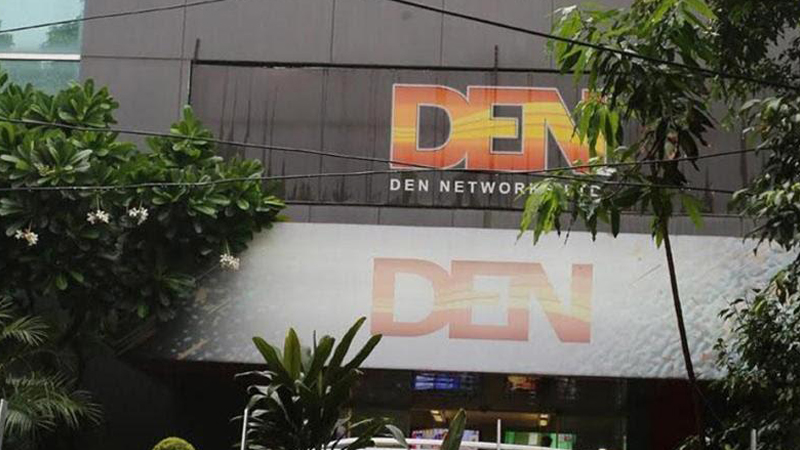
MUMBAI: When margins wobble, liquidity talks and in Q3 FY25-26, cash did most of the talking. Den Networks Limited closed the December quarter with consolidated revenue of Rs.251 crore, marginally higher than the previous quarter but down 4 per cent year-on-year, even as profitability stayed resilient on the back of strong cash reserves and disciplined cost control.
Subscription income softened to Rs.98 crore, slipping 3 per cent sequentially and 14 per cent from last year, while placement and marketing income offered some cheer, rising 15 per cent quarter-on-quarter to Rs.148 crore. Total costs climbed faster than revenue, up 7 per cent QoQ to Rs.238 crore, driven largely by higher content costs and operating expenses. As a result, EBITDA dropped sharply to Rs.13 crore from Rs.19 crore in Q2 and Rs.28 crore a year ago, pulling margins down to 5 per cent.
Yet, the bottom line refused to blink. Profit after tax stood at Rs.40 crore, up 15 per cent sequentially and only marginally lower than last year’s Rs.42 crore. A healthy Rs.57 crore in other income helped cushion operating pressure, keeping profit before tax at Rs.48 crore, broadly stable quarter-on-quarter despite the tougher cost environment.
The real headline-grabber, however, sits on the balance sheet. The company remains debt-free, with cash and cash equivalents swelling to Rs.3,279 crore as of December 31, 2025. Net worth rose to Rs.3,748 crore, while online collections accounted for 97 per cent of total receipts, underscoring strong cash discipline across operations, including subsidiaries.
In short, while Q3 showed signs of operating strain, the financial backbone remains solid. With zero gross debt, steady profits and a formidable cash war chest, the company enters the next quarter with flexibility firmly on its side proving that in uncertain markets, balance sheet strength can be the best growth strategy.






