News Headline
FTA market rides growth wave amid pandemic


Mumbai: Riding high on the launch of new channels, the advertising volumes and values of free-to-air (FTA) has grown by 25 to 30 per cent and is estimated to have a share of 25 to 30 per cent of the Rs 30,000 crore of total TV AdEx. This growth coupled with changes in viewership post the pandemic has charted the growth story of the FTA market during the pandemic.
Out of the 901 licensed private satellite TV channels, 574 are free to air, according to the Telecom Regulatory Authority of India (TRAI). The launch of new channels including Shemaroo MarathiBana, ShemarooTV, Dangal Kannada, Ishara TV, Sun Marathi, Filamchi, Azaad, Dhinchaak, Colors Cineplex Bollywood, Asianet Movies, Filamchi Bhojpuri have grown the advertising share of free TV.
“The first half of the year has been really good for FTA. The viewership had been very consistent in the early stages of 2021, with the demand peaking in the period before the second wave,” said MediaCom national director Srinivas Rao.

According to Enterr10 Media Network chief business officer Shrutish Maharaj the FTA genre has grown by 25-30 per cent both in terms of volumes and value. “Had the pandemic and some policy changes not hit the industry, the organic growth had the potential to be much better,” Maharaj added. FTA space has also seen a lot of action with multiple launches in Uttar Pradesh, Bihar, Maharashtra, West Bengal, Punjab etc.
Earlier only the big broadcasters were able to invest in original programming. However, that has changed over recent time, with a host of original programmes creating a vibrancy on FTA channels. “This is changing because FTA channels are no longer catering only to rural markets where viewers were playing catch-up. They now have significant penetration in urban markets as well,” said Maharaj. Some channels even look at a ratio of 40:60 of original programming to acquired content to be an ideal mix.
Traditionally, FTA channels tend to perform well in rural markets and have been mainly supported by FMCG advertisers who may contribute up to 70 per cent of the ad volumes. The reliance on FMCG spends is also believed to have constrained the growth of the FTA channels, as the category is mature.
Though the FMCG is still the largest spending category on FTA, the dependence of FTA on FMCG has reduced considerably with categories like services, healthcare, education, manufacturing and construction, telecom, media contributing significantly. There has been the advent of new categories and a few others have recorded phenomenal growth.
Some of these advertisers who came onboard include Amazon, Myntra, Flipkart, BYJU’S, Google, Facebook, indicating a shift towards the FTA audience which is discerning and dependable to drive the next phase of growth for them.
Since the core audience of FTA channels is mainly from the heartland, most broadcasters try to place their channels on DD Free Dish, the free DTH platform by Prasar Bharati. At a one-time cost of Rs 2,000, any viewer may watch up to 160 channels distributed on the platform at no recurring cost. It is estimated that there are 50 million DD Free Dish set-top-boxes in the country.
The advantage of being available on DD Free Dish is significant. Hindi general entertainment channel (GEC) The Q grew its client list by six times after launching on the free DTH platform, according to The Q chief executive officer Simran Hoon. “The Q has also not faced any problem of discounted ad rates like other FTA players post launching on DD Free Dish,” she added.
Depending on the market that FTA channel caters to, viewership may increase up to 50 gross rating points (GRPs) by solely being distributed on the platform.
“This is because DD Free Dish audience accounts for 30 per cent of the Hindi-speaking market,” pointed out Shemaroo TV, chief operating officer – broadcast business, Sandeep Gupta. “A channel can definitely survive just by being on DD Free Dish and not any other individual platform. It has a significant share of the audience in the core heartland markets such as Uttar Pradesh, Uttarakhand, Madhya Pradesh, Chhattisgarh, Bihar, and Jharkhand.”
The availability of channels on DD Free Dish also improves the performance of the channel in rural markets drastically, highlight media experts. However, the biggest issue is that the base size of DD Free Dish is low, leading to scale still being low. Hence, the advertiser interest in FTA channels available on DD Free Dish would depend on the markets the brand is targeting,” said MediaCom’s Rao.
At the end of the third annual e-auction that concluded in February, broadcasters bid as high as Rs 16.5 crore to be on DD Free Dish and Prasar Bharati made Rs 731.34 crore from the sale of 57 MPEG-2 slots.






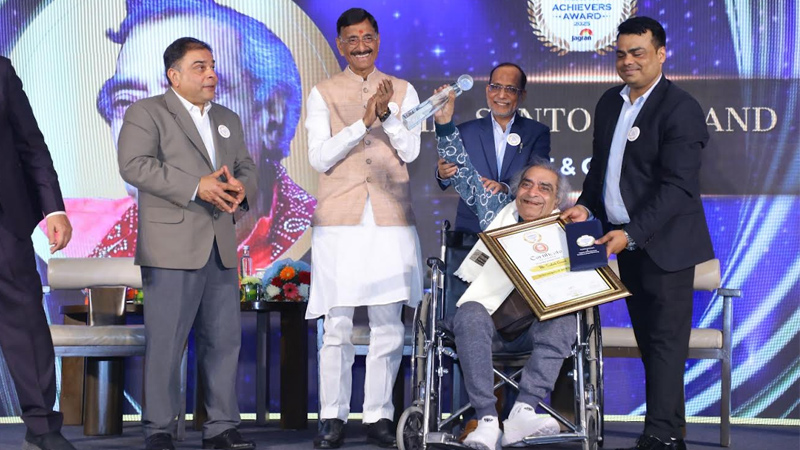
NEW DELHI: Hamdard Laboratories gathered a cross-section of India’s achievers in New Delhi on Friday, handing out the Hakeem Abdul Hameed Excellence Awards to figures who have left their mark across healthcare, education, sport, public service and the arts.
The ceremony, attended by minister of state for defence Sanjay Seth and senior officials from the ministry of Ayush, celebrated individuals whose work blends professional success with a sense of public purpose. It was as much a roll call of achievement as it was a reminder that influence is not measured only in profits or podiums, but in people reached and lives improved.
Among the headline awardees was Alakh Pandey, founder and chief executive of PhysicsWallah, recognised for turning affordable digital learning into a mass movement. On the sporting front, Arjuna Awardee and kabaddi player Sakshi Puniya was honoured for her contribution to the game and for pushing women’s participation onto bigger stages.
The cultural spotlight fell on veteran lyricist and poet Santosh Anand, whose songs have echoed across generations of Hindi cinema. At 97, Anand accepted the honour with characteristic humility, reflecting on a life shaped by perseverance and hope.
Healthcare honours spanned both modern and traditional systems. Manoj N. Nesari was recognised for strengthening Ayurveda’s place in national and global health frameworks. Padma shri Mohammed Abdul Waheed was honoured for his research-backed work in Unani medicine, while padma shri Mohsin Wali received recognition for his long-standing contribution to patient-centred care.
Education and social development also featured prominently. Padma shri Zahir Ishaq Kazi was honoured for decades of work in education, while former Meghalaya superintendent of Police T. C. Chacko was recognised for public service. Goonj founder Anshu Gupta received an award for his dignity-centred rural development initiatives, and the Hunar Shakti Foundation was honoured for empowering women and young girls through skill development.
The Lifetime Achievement Award went to former IAS officer Shailaja Chandra for her long career in public healthcare and governance, particularly in the traditional systems under Ayush.
Speaking at the event, Hamdard chairman Abdul Majeed said the awards were a tribute to those who combine excellence with empathy. “These awardees reflect Hakeem Sahib’s belief that healthcare, education and public service must ultimately serve humanity,” he said.
Minister Seth struck a forward-looking note, saying India’s young population gives the country a unique opportunity to become a global destination for learning, health and wellness by 2047.
The ceremony also featured the trailer launch of Unani Ki Kahaani, an upcoming documentary starring actor Jim Sarbh, set to premiere on Discovery on 11 February.
Instituted in memory of Unani scholar and educationist Hakeem Abdul Hameed, the awards have grown into a national platform that celebrates those building a more inclusive and resilient India. For one evening at least, the spotlight was not just on success, but on service with substance.






