News Broadcasting
From print to AI how news keeps up with times

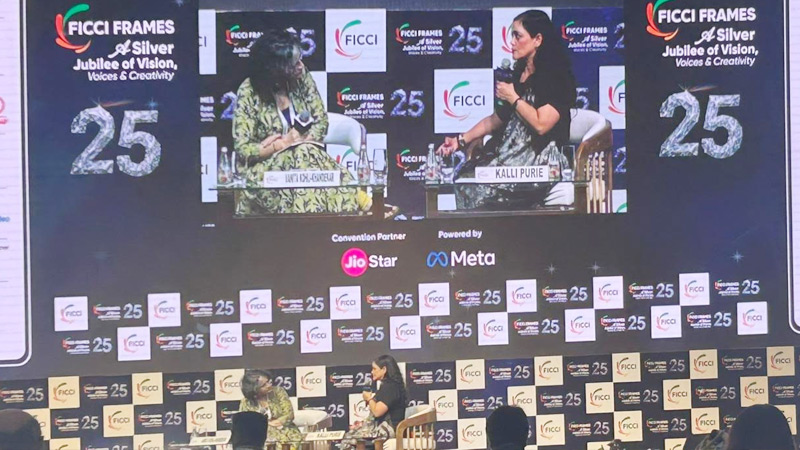
MUMBAI: Wake up, check your phone, catch a podcast, scroll a story, news never sleeps. At a lively session on “Credibility in the Age of Chaos & Media’s Role in Shaping India’s Identity,” India Today Group vice chairperson and editor-in-chief Kalli Purie joined Business Standard columnist and author Vanita Kohli-Khandekar, to explore how a 50-year-old brand stays relevant in a 24 by 7 media whirlwind.
Purie reflected on longevity and adaptation. “Fifty is the new 25. Men age, magazines don’t,” she said, highlighting how India Today has evolved from a fortnightly publication to producing over 120,000 content pieces every month across print, video, podcasts, social media, and live events.
Kohli-Khandekar added a sharp perspective on the challenge of capturing audience attention in a saturated media environment. “Where does news lie in this era of short stories, micro dramas, and podcasts? How does it stay relevant and profitable?” she asked, emphasising the need for integration across platforms to maintain trust and impact.

The discussion turned to technology and AI, where Purie revealed some pioneering initiatives. From AI anchors covering Bihar elections to AI-assisted translations and folk music storytelling, India Today has been embracing innovation to increase efficiency, reduce monotony, and explore new revenue streams. “AI is like a sandwich,” she quipped. “Human bread with AI in between. The human touch has to remain.”
Purie stressed that technology alone cannot replace credibility. “You are a primary source. People want news from a human perspective, on the ground. AI cannot tell that story… yet,” she said, hinting at a future where robots might cover hazardous assignments while humans oversee the narrative.
The session also highlighted India’s media identity in a global context. Purie noted, “People want sources from their own country. Digital imperialism is real, but Indian media has to assert its relevance.” Kohli-Khandekar added that 24 by 7 connectivity requires news organisations to adapt fast, integrate teams across platforms, and keep audiences engaged with stories that matter locally and globally.
The conversation showcased how a legacy brand like India Today balances tradition and innovation, human insight and artificial intelligence, local identity and global perspective. Purie’s parting thought summed it up perfectly: staying credible, creative, and connected is the ultimate headline.






News Broadcasting
News18 India launches Command Centre war explainer with Arya
New show shifts from debates to decoding global conflicts and impacts
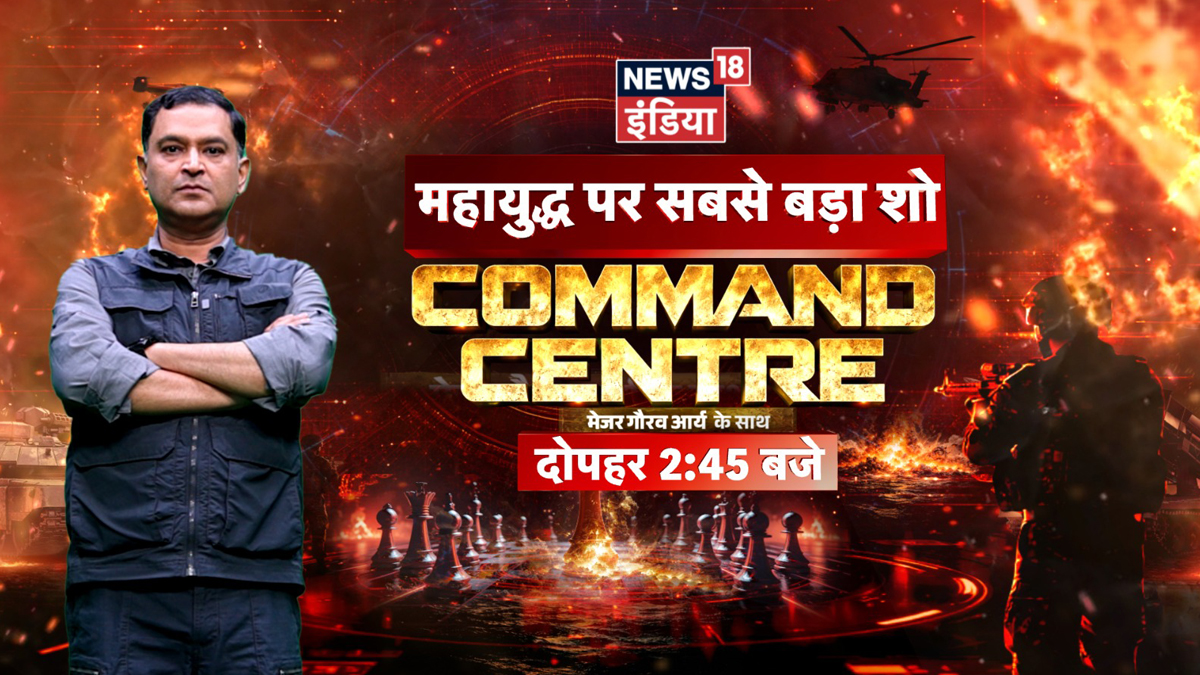
MUMBAI: News18 India has rolled out a new war-focused programme, Command Centre, featuring Gaurav Arya, as it looks to offer viewers a sharper, more grounded take on global conflicts amid rising tensions in West Asia.
Positioned as an “insider war room”, the show moves away from conventional panel debates and instead focuses on explaining military developments, decoding strategy and connecting global events to their everyday impact, from fuel prices to economic shifts.
The format leans heavily on visuals and data. The studio has been designed like a command hub, complete with large LED war maps, real-time graphics and an alert system to track developments as they unfold.
At the centre of it all is Arya, who brings his military background to simplify complex war strategies for viewers. His signature line, “Seedhi baat samjhiye”, anchors the show’s promise of clarity over noise.
News18 India managing editor Jyoti Kamal said, “Command Centre, featuring Major Gaurav Arya is designed to deliver accurate insights and a clear perspective on how evolving conflicts impact everyday life, from household budgets to national security. With expert voices analysing every development in real time, the show goes beyond headlines to decode what’s happening now, what it means, and what could come next.”
Echoing the intent, Gaurav Arya added, “In times of war, confusion is the biggest threat. With News18 India’s Command Centre, we are bringing viewers inside the war room, decoding strategies, tracking every escalation, and explaining, in the simplest terms, what it means for India and for every household. Seedhi baat samjhiye, this is where you understand not just what is happening, but what happens next.”
The weekday show will air in the afternoon slot and will also feature Gaurav Shukla, adding to its editorial depth.
With its mix of analysis, visuals and a clear focus on impact, the show reflects a broader shift in news consumption. Viewers are no longer just watching events unfold, they are looking to understand what those events mean for them.







