News Headline
From neighbourhood courts to national spotlight: Pickleball’s breakout year in India

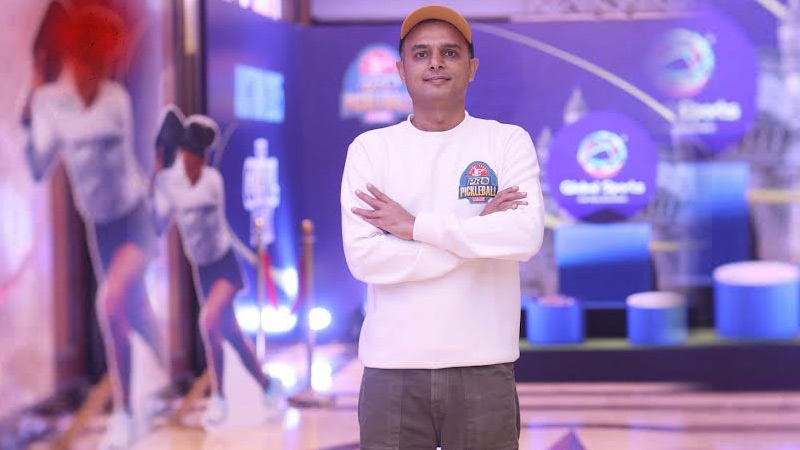
Hemal Jain, Chief Architect – Pickleball Growth at Global Sports Pickleball, is spearheading the sport’s meteoric rise in India. In this interview, he reveals how pickleball exploded in 2025, the surge of leagues and grassroots programs, skyrocketing sponsor interest, and the game’s bold push to become both a mass-participation sport and a professional powerhouse.
On pickleball’s rise from obscurity to one of 2025’s most talked-about sports — what changed?
Honestly, pickleball clicked in India because it’s such an easy, welcoming sport. People picked up a paddle once, and they were hooked. It started in housing societies and communities, and suddenly everyone, from kids to parents to grandparents, was playing together. At the same time, the ecosystem around the sport grew very quickly. Accessible infrastructure, marquee events like the Indian Pickleball Grand Slam, and more visibility in the media helped it break out of the niche zone. By 2025, pickleball had gone from “What is this sport?” to “Where can I play?”

On the pickleball’s future in India, both as a mass participation game and a professional pathway — how big can it get?
The future is huge. Pickleball is on track to become one of India’s biggest participation sports in the next few years. We’re already seeing massive growth in players, academies, and competitive circuits. On the professional side, leagues like the Global Sports Pro & Challenger League and high-stakes tournaments like the Grand Slam are giving players real pathways. We’re building everything – coaching standards, refereeing systems, talent development, school programs, analytics – so that young athletes can actually see a career in the sport. That’s where the transformation begins.
On making pickleball truly mainstream in India — what needs to fall into place next?
Definitely. Pickleball is well on its way to becoming mainstream. For that final push, three things matter most.
• First, continuous media visibility. People need to see the sport, hear the stories, and understand why it’s exciting.
• Second, broader brand involvement. Long-term sponsorships will help build stability in the ecosystem.
• Third, a strong grassroots pipeline. If schools, colleges, and communities adopt pickleball in a structured way, the mainstream moment will come sooner than later. It’s all about scale and we’re getting there.
On carving out space in a country dominated by cricket and football — how does pickleball differentiate itself?
We don’t want to compete with cricket or football. Instead, we want to create a sport that people across skill levels and age groups can actually play every day. That’s pickleball’s biggest strength. Cricket is India’s emotion, but pickleball has become India’s habit. It’s quick, social, and accessible. You don’t need a big ground or fancy equipment, just a court and a few players.
At GSP, we’re shaping pickleball also as entertainment and an everyday sport, besides developing the professional and competitive side to it. Through content, community engagement, leagues, and school programs, we want people to feel connected to it, not just as spectators, but as participants. That’s how a sport finds its place in people’s hearts.
On turning casual interest into long-term fan loyalty — what’s the strategy?
The key is to make people feel a part of the journey. We’re doing that by creating a structured calendar, telling great stories around players, and keeping the sport visible across digital platforms. When fans see consistent action – leagues, tournaments, rivalries and initiatives, they stay invested.
We’re also focusing on community engagement. If someone plays pickleball once and then follows their favourite player or team, that connection becomes long-term. We want to bridge the gap between “I like watching this” and “I feel part of this.”
On the kinds of brands and sponsors pickleball is attracting – which sectors are showing the strongest interest?
We have had a steady stream of sponsors across IPs, and continue to have a sustained association with them. Sponsors look for ROI, and they have been getting that. From the days of experimentation, the conversations now are much deeper and of a longer window.
We’ve been associated with diverse categories – hospitality, F&B, sportswear, health & fitness, automotive, fintech, lifestyle, and media platforms. Given the versatile appeal of pickleball, different categories and verticals find it an engaging fit to connect with their audience.
On engaging urban and rural audiences, as well as different age groups – how do strategies differ?
Absolutely. In urban areas, it’s about curated experiences – premium venues, influencer engagement, and organised tournaments. In rural and smaller towns, the focus is on accessibility – low-cost courts, grassroot level tie-ups, and training programs.
Age-wise, pickleball really cuts across segments:
• For kids, we’re building structured school programs.
• For youth, we’re focusing on competitive circuits and high-energy content.
• For adults and seniors, it’s a fitness and social sport.
The idea is to meet people where they are, and connect with the pickler in them.
On building pickleball as a family- and school-driven sport — what steps are being taken?
Families are already one of our biggest growth drivers. Pickleball is one of the rare sports where parents and kids can play together at the same level. In fact, recently we conducted a first-of-its-kind School Parents Pickleball Championship, where parents from top and diverse schools participated and had a blast, with their families cheering them on.
We’re setting up family play zones, community leagues, and holiday programs. Schools are a major priority and we’re working on coaching frameworks, easy-to-install courts, and inter-school tournaments so the sport becomes part of the curriculum.
On the sport’s financial momentum in 2025 – how strong has growth been across tournaments, sponsorships, coaching and equipment?
Well, one thing I can surely say is that 2025 has been a breakthrough year. The overall pickleball ecosystem – tournaments, sponsorship deals, equipment, coaching, and venue memberships has grown by more than 200%. For a young sport, that’s remarkable. And with the upcoming Pro & Challenger League and the Indian Pickleball Grand Slam ending the season with a bang, we expect 2026 to grow even faster. The momentum is real.





NEW DELHI: Hamdard Laboratories gathered a cross-section of India’s achievers in New Delhi on Friday, handing out the Hakeem Abdul Hameed Excellence Awards to figures who have left their mark across healthcare, education, sport, public service and the arts.
The ceremony, attended by minister of state for defence Sanjay Seth and senior officials from the ministry of Ayush, celebrated individuals whose work blends professional success with a sense of public purpose. It was as much a roll call of achievement as it was a reminder that influence is not measured only in profits or podiums, but in people reached and lives improved.
Among the headline awardees was Alakh Pandey, founder and chief executive of PhysicsWallah, recognised for turning affordable digital learning into a mass movement. On the sporting front, Arjuna Awardee and kabaddi player Sakshi Puniya was honoured for her contribution to the game and for pushing women’s participation onto bigger stages.
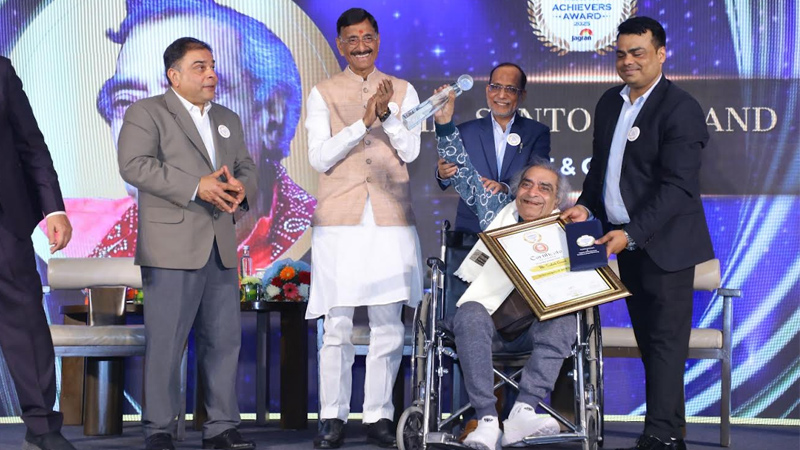
The cultural spotlight fell on veteran lyricist and poet Santosh Anand, whose songs have echoed across generations of Hindi cinema. At 97, Anand accepted the honour with characteristic humility, reflecting on a life shaped by perseverance and hope.
Healthcare honours spanned both modern and traditional systems. Manoj N. Nesari was recognised for strengthening Ayurveda’s place in national and global health frameworks. Padma shri Mohammed Abdul Waheed was honoured for his research-backed work in Unani medicine, while padma shri Mohsin Wali received recognition for his long-standing contribution to patient-centred care.
Education and social development also featured prominently. Padma shri Zahir Ishaq Kazi was honoured for decades of work in education, while former Meghalaya superintendent of Police T. C. Chacko was recognised for public service. Goonj founder Anshu Gupta received an award for his dignity-centred rural development initiatives, and the Hunar Shakti Foundation was honoured for empowering women and young girls through skill development.
The Lifetime Achievement Award went to former IAS officer Shailaja Chandra for her long career in public healthcare and governance, particularly in the traditional systems under Ayush.
Speaking at the event, Hamdard chairman Abdul Majeed said the awards were a tribute to those who combine excellence with empathy. “These awardees reflect Hakeem Sahib’s belief that healthcare, education and public service must ultimately serve humanity,” he said.
Minister Seth struck a forward-looking note, saying India’s young population gives the country a unique opportunity to become a global destination for learning, health and wellness by 2047.
The ceremony also featured the trailer launch of Unani Ki Kahaani, an upcoming documentary starring actor Jim Sarbh, set to premiere on Discovery on 11 February.
Instituted in memory of Unani scholar and educationist Hakeem Abdul Hameed, the awards have grown into a national platform that celebrates those building a more inclusive and resilient India. For one evening at least, the spotlight was not just on success, but on service with substance.






