International
From Bhojpuri to global bigwig: Abhay Sinha’s star turn at FIAPF

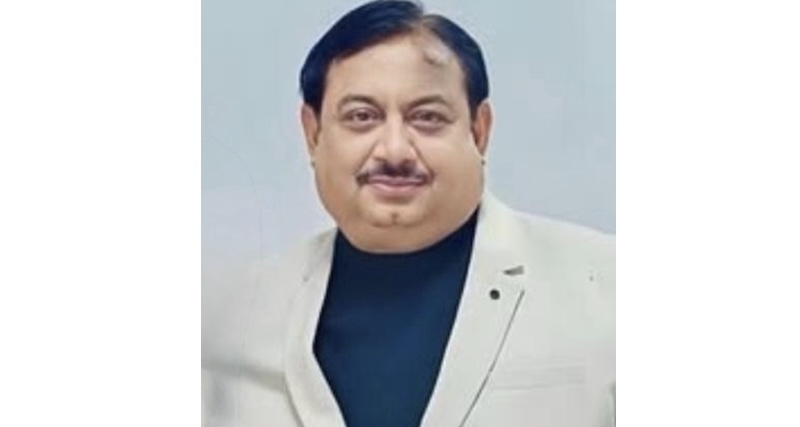
MUMBAI: Abhay Sinha, the Indian Motion Picture Producers’ Association (Imppa) president, has sashayed his way into a starring role on the global stage. He’s been unanimously elected vice-president of FIAPF (International Federation of Film Producers Associations), the apex body of of film producers from over 30 countries. The vote took place on 17 May, 2025, at the FIAPF Annual General Assembly in Cannes, France,
This isn’t just a proud moment for Immpa, which has been in the game since 1937, but for the entire Indian film industry. Under Sinha’s leadership, Imppa has become a veritable dynamo, championing Indian producers and filmmakers both at home and abroad. He’s been working tirelessly to ensure Indian content creators get the recognition they deserve.
One of Sinha’s greatest hits has been leading Imppa’s presence at the Cannes Film Festival for two years running. In 2025, over 40 Indian films and a legion of delegates graced the festival, putting India’s diverse cinema firmly in the global spotlight. He even graced the Bharat Pavilion with his wisdom, speaking on a panel about the Changing Paradigm of Film Screening: Theatres to OTT, Digital Platforms and Beyond. He’s truly got his finger on the pulse of where film viewing is headed.

But Sinha isn’t just about the glitz and glamour of international festivals. He’s been a driving force behind shaping better film policies across India. Think improved subsidy systems in Maharashtra, Bihar, Gujarat, Uttar Pradesh, Madhya Pradesh, and Uttarakhand. He’s also pushed for easier film certification and greater industry representation in national film bodies.
Ever the industry advocate, Sinha has tackled critical concerns like vrtual print fees (VPF), exhibition hurdles, and taxation reforms, aiming to lighten the financial load on producers and distributors. And he’s not one to shy away from a fight, having actively voiced concerns about the proposed 100 per cent tariff by the US on foreign entertainment content. He argues such tariffs are a real cliff hanger for cultural exchange and the global reach of Indian cinema, calling for fair trade policies to protect the creative and economic interests of Indian filmmakers.
Beyond his leadership roles, Sinha is also the founder of Yashi Films, a production powerhouse with over 150 feature films in various languages and more than 5,000 TV episodes under its belt. He’s also the mastermind behind the International Bhojpuri Film Awards (IBFA), the only global award platform for Bhojpuri cinema, which has travelled to multiple countries with the backing of Indian tourism bodies. These events have truly given regional Indian cinema and Bhojpuri artists a global stage.
Sinha’s election as FIAPF vice-president is a landmark moment, giving Indian producers a much stronger voice on the world stage and opening up a treasure trove of new opportunities for collaboration and growth. It seems the reel world just got a whole lot more exciting for India.


International
Russia-India cinematic spectacle Persimmon of My Love set for grand Moscow debut
Hindi cinema style musical revives Indo-Soviet cinema ties for today

MUMBAI: A new chapter in cross-border storytelling is set to unfold as Persimmon of My Love gears up for its premiere in Moscow on 1 April 2026, marking the first large-scale cinematic collaboration between Russia and India in decades.
Positioned as a modern nod to the cultural exchange that once brought Indian classics to Soviet audiences, the film blends Hindi cinema flair with Russian storytelling, aiming to rekindle a long-standing cinematic friendship.
Directed by Marius Weisberg, the musical comedy follows two brothers navigating a lively world of music, family and romance. The lead roles are played by Demis Karibidis and Mikhail Galustyan, with Karibidis also contributing as a screenwriter.
Shot entirely in India, the production leans heavily into Hindi cinema style spectacle. Filming took place across Mumbai studios and the cities of Udaipur and Jodhpur, whose architecture was used to create the fictional setting of Khurmada. A crew of over 350 worked on the project, with large-scale sequences featuring up to 1,000 extras.
The film also brings Indian creative talent into the mix. Dance sequences are choreographed by Jay Kumar, while music by Zurab Matua features songs in both Hindi and Russian, adding to its cross-cultural appeal.
Backed by TNT channel, MyWayStudio and the Russian Cinema Fund, the project reflects a broader push to strengthen cultural ties between the two countries.
With its mix of colour, comedy and cross-border collaboration, Persimmon of My Love is not just a film release but a reminder that cinema, much like music, travels well across borders.






