Movies
Fresh Covid wave chokes Bollywood, regional industries partially safe

NEW DELHI: After showing strong signs of flattening the curve, Covid2019 has again reared its ugly head in India. With more than 59,117 positive cases recorded on Thursday, infections of the deadly pathogen are climbing up steadily in the country, and experts are not ruling out the possibility of a second lockdown in the near future. With the pandemic returning with a vengeance, one sector which is bearing the brunt is the entertainment industry. Even though regional industries like Kollywood, Mollywood, and Tollywood are partially succeeding to bring audiences to theatres, Bollywood is struggling to keep its head above water.
People hesitant to visit theatres
Several studies have previously found that the SARS-CoV-2 virus has the capability to spread drastically in closed spaces, where ventilation is limited. Due to this factor, the Indian government ordered a shutdown of all cinema halls in the nation in the initial phase of the 2020 lockdown. After a few months, when cases in the country started declining, authorities gave permission to open theatres with limited capacity, and a few films were released for public screening.

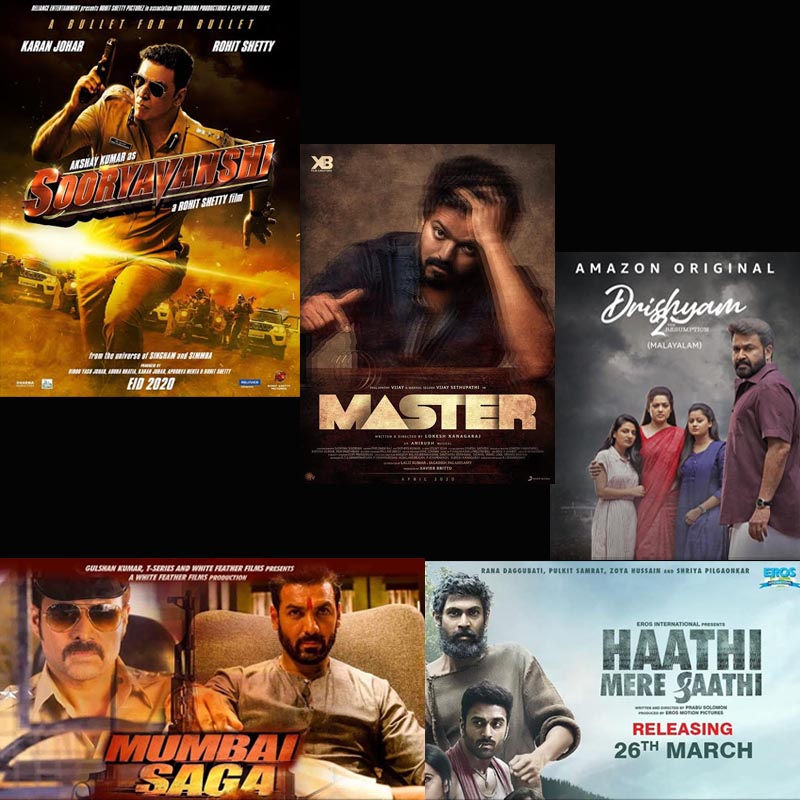
Some of the noted films that had theatrical releases post the Coronavirus outbreak were Bollywood films Roohi and Mumbai Saga, Mammootty's Malayalam film The Priest, Vijay's Master, and Telugu movies Krack, and Uppena.
Of these, south Indian flicks like Master, The Priest, and Krack managed to draw audiences to the theatres. However, Bollywood films failed to attract viewers, especially due to the rising caseloads in Maharashtra. Even though the John Abraham and Emraan Hashmi-starrer Mumbai Saga garnered positive reviews from all corners, the film managed to collect only Rs 2.85 crore on its opening day, followed by Rs 2.4 crore on the next.
Considering the pre-release hype generated by Mumbai Saga, the recent figures are not promising, especially at a time when Maharashtra is becoming the nation’s Covid epicentre.
Studios planning to postpone releases
With audiences a no-show in theatres, several top studios in the country are deferring the release of their films; some are opting for OTT premieres instead. Take for instance Drishyam 2, one of the most anticipated movies of the year which landed on Amazon Prime. Producer Antony Perumbabvoor’s decision paid off and the Mohanlal-starrer became a sensational hit on the OTT platform; in fact, it helped Amazon Prime Video expand its subscriber base with the release of this single movie.
As the second Covid2019 wave washes over India, notable Bollywood production houses are delaying the theatrical release of several films. It has been previously reported that Rana Daggubatti's Haathi Mere Saathi would come to theatres on 26 March 2021. But due to the rising number of cases, especially in Maharashtra, Eros International has pushed back the release of the Hindi version, while the release of the Telugu and Tamil versions will go as planned.
Meanwhile, Zee Studios has also announced that they have postponed the release of upcoming Punjabi movie Puaada starring Ammy Virk and Sonam Bajwa in the lead roles.
"Due to the rising cases of Covid2019 and new guidelines for cinemas, with weekend and night closures of theatres, we have decided to postpone our movie Puaada until further notice," said Zee Studios in a statement.
According to The Storytellers Fund managing partner Naveen Chandra, with 50 per cent occupancy limits and only 60 per cent theatres open pan India, there is no way big-budget films can recoup investments if they’re released now.
"The only option is to hold the film till market conditions make for a viable release. Those that cannot hold will try and negotiate a direct OTT deal to avoid further loss of their investment. But, audiences are hungry and waiting for good content to arrive at the theatres. So whenever the theatrical markets open fully, we should see some good collections at the box office,” stated Chandra.
Bollywood films suffering, regional movies relatively untouched
The decision to postpone movies by Zee Studios and Eros Entertainment comes at a time when Maharashtra accounts for nearly 60 per cent of the overall daily Coronavirus cases being reported in India. The state reported more than 28,000 cases in the past 24 hours. As most of the B-Town activities are centralised in Mumbai, industry experts believe that release of several other movies may also get pushed back if the second wave continues to wreak havoc.
Elara Capital vice president – research analyst (media & consumer) Karan Taurani has hinted that releases of big-budget outings like Sooryavanshi and Radhe may also get delayed if the recent spike in Covid cases carries on unabated.
"Makers of Sooryavanshi are planning to release the movie on 30 April. The condition in Maharashtra seems very heavy when it comes to the number of cases. And I think the marketing of the film will begin by the first week of April. So, until the first week of April, if the situation does not improve, there is a high likelihood that Sooryavanshi's release may also get postponed. If the situation persists until May, the release of movies like Radhe may also get affected. It is a very big blow to cinemas, as the industry is missing April-May months when big films used to get released," Taurani told Indiantelevision.com.
The media veteran also talked about the dream run of Vijay's Master in theatres amid coronavirus scare.
"When Master was released in January, things were different as the Coronavirus curve was showing signs of flattening. However, after the success of Master, no big movies were released in Tamil, and none of the small-budget Kollywood movies that hit the theatres during this time span made an impact. Some Telugu films made with a moderate budget did make their presence felt at the box-office," added Taurani.
He went on to mention that ever since the shutdown of cinema halls, the condition of theatre workers is very troubling, and it will take some time before things return to normal.







Hindi
YRF Entertainment appoints Saugata Mukherjee as head of content
Former SonyLIV content head to steer films and series at streaming arm
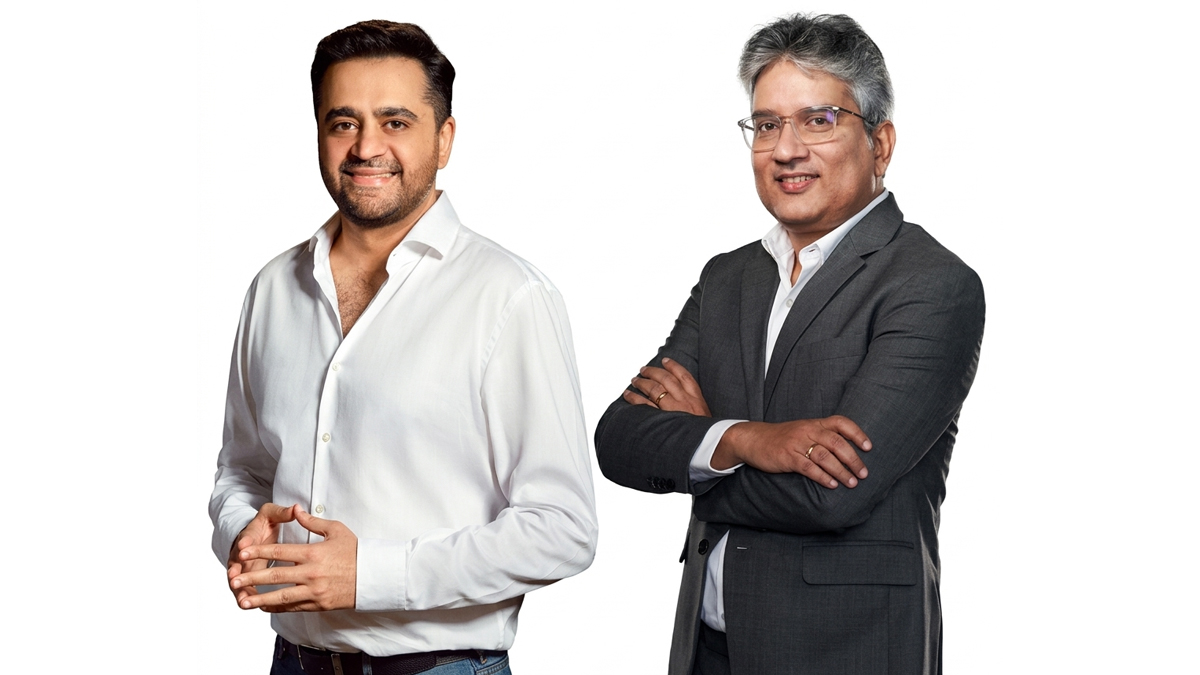
MUMBAI: YRF Entertainment, the streaming arm of Yash Raj Films, has appointed Saugata Mukherjee as head of content, signalling a strong push to scale its original films and series slate.
Mukherjee joins the company following a successful three-and-a-half-year stint at SonyLIV, where he served as executive vice president and head of content. In his new role, he will report to CEO Akshaye Widhani and lead the creative direction and commissioning strategy for YRF Entertainment’s growing slate.
The appointment comes on the back of YRF Entertainment’s recent global success with titles such as The Romantics, The Railway Men and Mandala Murders, which have helped position the studio as a serious player in the streaming space.
At SonyLIV, Mukherjee played a key role in shaping the platform’s identity as a premium content destination. Under his leadership, the service delivered acclaimed originals across genres, building a reputation for storytelling depth and creative risk-taking. His exit was described as “one of the harder goodbyes”, reflecting both the impact of his tenure and the strength of the team he leaves behind.
Mukherjee brings with him a wide-ranging career that spans publishing, television and streaming. Before SonyLIV, he led content initiatives at HBO Max under Warner Bros. Discovery, where he was instrumental in shaping the platform’s India strategy. His earlier roles include senior leadership positions at Hotstar and Star TV, where he worked on building original content pipelines and collaborating with top creative talent.
With a career that began in publishing at firms like HarperCollins and Pan Macmillan, Mukherjee’s journey reflects a deep-rooted understanding of storytelling across formats and platforms.
His move to YRF Entertainment comes at a time when the battle for streaming audiences is intensifying, with studios doubling down on high-quality originals to stand out in a crowded market.
For YRF, the appointment is more than just a leadership hire. It is a clear signal that the studio is ready to scale its streaming ambitions, with Mukherjee expected to play a central role in shaping its next chapter.






