DTH
Free Dish capacity to go up from 80 to 104 TV channels before year-end

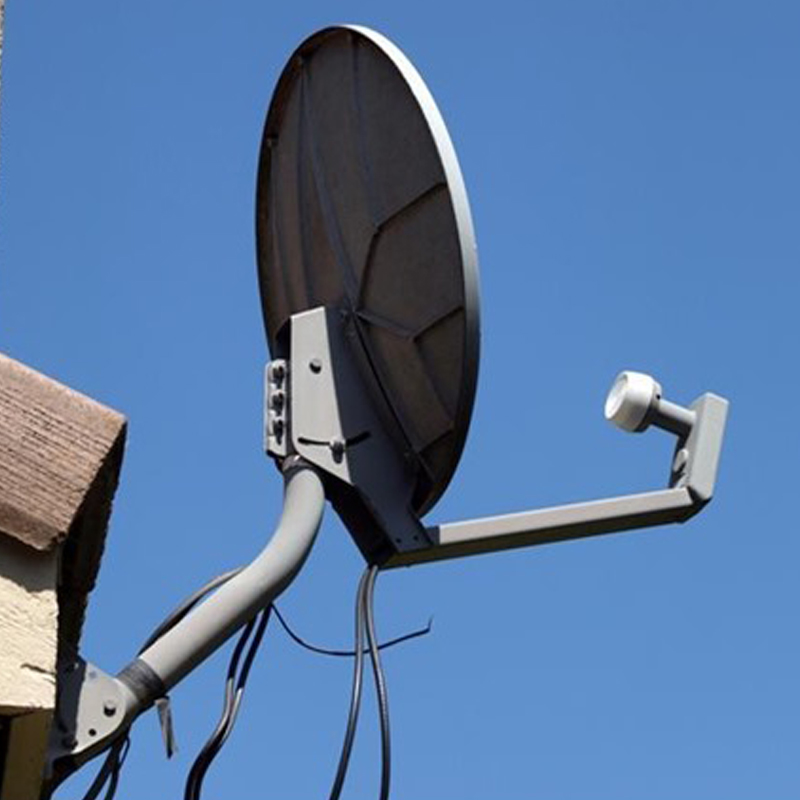
NEW DELHI: Free Dish, the country’s only free-to-air direct-to-home television platform, will increase its capacity to carry around 104 channels within the next few months.
A senior Doordarshan official told indiantelevision.com that the process of switching over from MPEG2 to MPEG4 had been completed and was being tested. This had already taken the headend capacity to 112.
Free Dish at present carries eighty television channels including its own, Lok Sabha and Rajya Sabha TV, and private channels, apart from 32 channels of All India Radio.

The official said the platform had been encrypted by adopting the Indian Conditional Access System (iCAS) developed by ByDesign India Pvt. Ltd. of Bangalore. But he clarified that the platform would remain free-to-air and the aim of iCAS was only to keep track of the number of households that were using Free Dish and keep a check on the quality of set top boxes.
(It is also learnt that Doordarshan is expected to issue an Expression of Notice within a month for manufacture of compatible STBs for Free Dish.)
Meanwhile, the official said Free Dish was also hopeful of re-launching Gyan Darshan on its platform shortly as the problems that the Indira Gandhi National Open University was facing when DD was forced to take the channel off-air have been ‘virtually sorted out’.
However, the official said no communication had been received from the Human Resource Development Ministry in this conection so far.
He denied reports that any channels of the Human Resource Development Ministry were currently under test transmission on Free Dish.
The official said DD was aware of the announcement by Human Resource Development Minister Prakash Jawadekar that 32 Direct to Home (DTH) Television Channels are to be launched by September for providing high quality educational content to all teachers, students and citizens across the country interested in lifelong learning.
DD was also aware that the HRD Ministry had acquired two transponders on G-SAT 15, which could possibly be used for this.
Meanwhile, the official said that all information on Free Dish was available on the ddindia.gov.in website and denied that Free Dish had established any separate website Freedish.in. When his attention was drawn to the website, he said attempts would be made to find out who was running the website which was clearly illegal.





DTH
Prasar Bharati’s WAVES earns Rs 2.9 crore in first year
Platform scales content, users but monetisation gaps limit revenue growth.
MUMBAI: Big waves, small ripples at least for now. When Prasar Bharati launched its OTT platform WAVES at the 55th International Film Festival of India in November 2024, it pitched a bold vision: a homegrown rival to global and domestic streaming giants, blending video, audio, gaming and commerce into a single digital ecosystem. Five months into FY2024–25, however, the platform’s revenue stands at just Rs 2.90 crore, a figure that underscores the gap between ambition and monetisation.
On paper, WAVES looks anything but modest. The platform has ingested 13,608 titles, totalling 9,495 hours of content, with over 13,000 titles already live. It has streamed more than 575 live events from the Mahakumbh Amrit Snan and the 76th Republic Day parade to the Hockey India League, Kabaddi World Cup and Mann Ki Baat while offering 74 live TV channels and 12 radio channels. With over 10 lakh registered users and more than 200 content partners onboarded, the scale resembles that of a fully operational streaming service rather than a pilot project.
The architecture supporting this scale is equally robust. Built under Prasar Bharati’s Central Archives vertical, WAVES runs on a cloud-based infrastructure with DRM, encryption and an integrated analytics dashboard. It includes dedicated units for content ingestion, quality control, publishing, graphics, marketing and billing, and is distributed across platforms such as OTTplay, Tata Play and BSNL. The offering extends beyond video to include audio-on-demand, e-games and even e-commerce via ONDC integration.
Yet, the numbers reveal a core disconnect. Despite its scale, WAVES generated just Rs 2.90 crore in a market where India’s OTT industry crossed Rs 23,000 crore in 2024. A key bottleneck lies in monetisation infrastructure: subscriptions cannot currently be purchased within the app and must be completed via an external website. In a mobile-first country where over 95 per cent of OTT consumption happens on smartphones, this extra step creates friction that most users are unlikely to overcome.
Ironically, content is not the problem, it is the platform’s biggest strength. Prasar Bharati holds one of the world’s richest broadcast archives, including 45,154 hours of digitised Akashvani programming and 35,723 hours from Doordarshan. For WAVES alone, over 3,800 hours of archival content have been made OTT-ready, including classics such as Ramayan and Shaktimaan, alongside rare cultural recordings and historical broadcasts.
There are early signs that this library holds commercial potential. Revenue from archival content licensing rose sharply to Rs 3.38 crore in FY24, up from Rs 67 lakh the previous year. Meanwhile, free digital platforms continue to drive massive reach, the PB Archives Youtube channel clocked 119.78 million views and added 4,02,000 subscribers in FY2024–25, crossing 1.7 million in total, while DD News has over 5.84 million subscribers.
That, however, presents a strategic dilemma. While free distribution builds scale, it also conditions audiences to expect content at zero cost making it harder to transition to paid models. WAVES, designed as a hybrid AVOD-SVOD platform with advertising and subscription layers, is yet to fully crack this balance.
The broader challenge is not technological but strategic. In an ecosystem dominated by platforms offering seamless payments, aggressive pricing and high-budget originals, WAVES is still bridging the gap between being a content repository and a commercially viable product.
For now, the platform reflects both promise and paradox. It has the scale, the content and the infrastructure but until monetisation catches up, WAVES remains less a revenue engine and more a digital showcase of what India’s public broadcaster could become.






