Hardware
Fox-Samsung to licence metadata for HDR to content cos & STB makers


MUMBAI: 20th Century Fox, the parent company of Star India, Panasonic Corporation and Samsung Electronics have announced a new partnership to create an open, royalty-free dynamic metadata platform for High Dynamic Range (HDR) through an associated certification and logo program, tentatively called HDR10+.
Together, the three companies will form a licensing entity that will begin licensing the HDR10+ platform in January 2018. The entity will license the metadata broadly to content companies, ultra-high definition TVs, Blu-ray disc players/recorders and set-top box manufacturers, as well as SoC vendors, royalty-free with only a nominal administrative fee.
“As leaders in home entertainment content and hardware, the three companies are ideal partners for bringing HDR10+ into the homes of consumers everywhere,” said Jongsuk Chu, Senior Vice President of the Visual Display Business at Samsung Electronics. “We are committed to making the latest technology available in our TVs and are confident that HDR10+ will deliver premium quality content and enhance the way you experience television programs and movies in the home.”

HDR10+ is a cutting-edge technology, building upon the benefits of HDR televisions, which offers the best possible viewing experience for next generation displays. HDR10+ provides unprecedented picture quality on all displays with brightness, color, and contrast automatically optimized for each scene. In previous iterations, static tone mapping applied a fixed enhancement across an entire piece of content. With HDR10+ dynamic tone mapping, every scene is individually enhanced to bring to life vibrant visuals and achieve unprecedented picture quality. This new enhanced visual experience will allow consumers to see pictures that match the intention of filmmakers.
“HDR10+ is a technological step forward that optimizes picture quality for next generation displays,” said Danny Kaye, Executive Vice President at 20th Century Fox and Managing Director of the Fox Innovation Lab. “HDR10+ provides dynamic metadata, which precisely describes every scene to deliver unprecedented picture quality. Working in partnership with Panasonic and Samsung through the Fox Innovation Lab, we are able to bring new platforms like HDR10+ to the market that more accurately realize the vision of our filmmakers beyond the theater.”
There are several key benefits for partners who wish to adopt the platform for their HDR10+ compliant products. HDR10+ offers system flexibility, allowing a variety of partners, including content creators, content distributors, TV manufacturers and device makers, to incorporate this platform and improve the viewing experience for audiences. The HDR10+ platform was designed to allow for future development and innovation in order to deliver a more powerful technology in the years to come.
“Panasonic has a long history of working with industry leaders to develop lasting technical formats. We are delighted to work together with 20th Century Fox and Samsung to develop a new HDR format, which will bring consumers so many benefits,” said Yuki Kusumi, Executive Officer at Panasonic. “By offering considerable HDR picture quality improvements across a wider range of TVs while accelerating the amount of premium HDR content available, we expect HDR10+ to quickly become the defacto HDR format.”






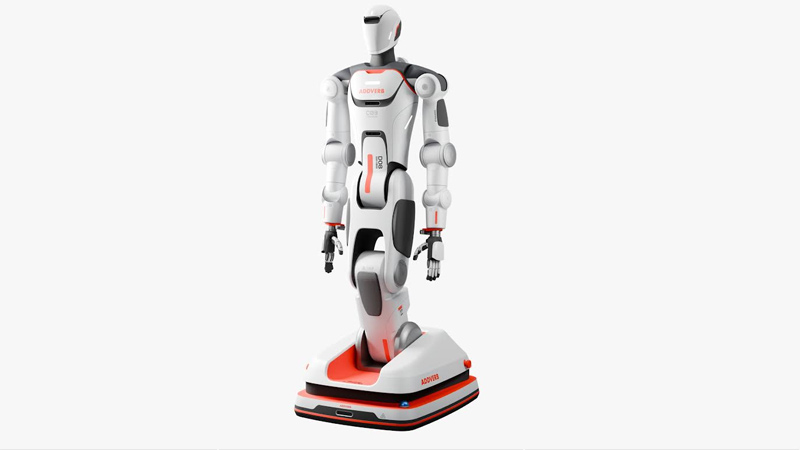
MUMBAI: Addverb has taken a decisive turn on the road to humanoid automation, unveiling its first wheeled humanoid robot, Elixis-W, at LogiMAT India 2026 in Mumbai. Built and manufactured in India, the robot signals the company’s push to make so-called physical AI a practical presence on the factory floor rather than a futuristic concept.
Unlike traditional fixed automation, Elixis-W is designed to move, think and work alongside people in dynamic industrial settings. The robot combines adaptive wheeled mobility with dual arms, each fitted with five-fingered dexterous hands, allowing it to handle tasks that demand precision as well as flexibility.
At its core sits a Physical AI-ready architecture, supported by dual Nvidia Jetson Orin and Thor computing units. This setup is intended to give the robot the ability to perceive, plan and adapt to changing environments, rather than simply follow pre-programmed routines.
According to Addverb CEO and co-founder Sangeet Kumar, the humanoid reflects the company’s long-standing belief in human-robot collaboration. He said the robot is designed to take on repetitive, risky or physically demanding tasks, freeing human workers to focus on higher-value decision-making roles.
Alongside the humanoid, Addverb also showcased two new intralogistics solutions. The Cruiser 360, a four-way pallet shuttle, is aimed at high-density storage environments where space and speed matter. The FlowT, an autonomous forklift, is designed to move materials safely in busy warehouses and factory spaces.
Visitors also saw Trakr, the company’s quadruped robot, navigating the exhibition floor, offering a glimpse of how legged machines could assist in future warehouse and industrial operations.
Addverb, which began as a warehouse automation specialist, has steadily expanded its global footprint across the United States, Europe, Australia and Asia. Its client list includes Reliance, HUL, PepsiCo, Maersk, Mondial Relay and DHL.
With the launch of Elixis-W, the company is steering towards a future where robots are not just bolted to the floor, but rolling, reasoning and working shoulder to shoulder with people on the shopfloor.







