Connect with us

News Headline

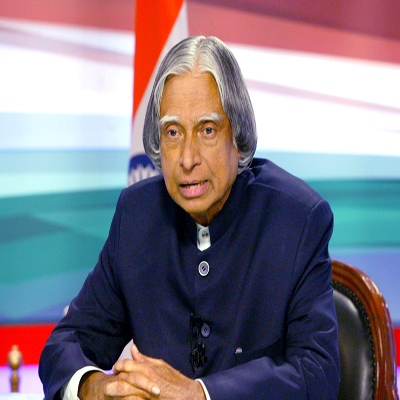
Former Indian President and renowned space scientist APJ Abdul Kalam passes away

Published

on

NEW DELHI: Former Indian President APJ Abdul Kalam, one of the country’s foremost aerospace scientists, passed away in Shillong this evening. He was 83 years old.
 
Kalam was rushed to the hospital earlier in the day when he collapsed while giving a public lecture at Indian Institute of Management (IIM) Shillong. His condition was said to be critical and was kept under observation in the ICU.
 
It is reported that he suffered a cardiac arrest during the lecture and was admitted at the Bethany Hospital.
 
Kalam was born on 15 October, 1931 and served as the 11th President of India from 2002 to 2007. He received several prestigious awards, including the Bharat Ratna. After serving a term of five years as President, he returned to civilian life of education, writing, and public service.
 
Born and raised in Rameswaram, Tamil Nadu, he studied physics and aerospace engineering in 1960.
 
Kalam spent the next four decades as a scientist and science administrator, mainly at the Defence Research and Development Organisation (DRDO) and Indian Space Research Organisation (ISRO) and was intimately involved in the India’s civilian space programme and military missile development efforts. He thus came to be known as the Missile Man of India for his work on the development of ballistic missile and launch vehicle technology. He also played a pivotal organizational, technical and political role in India’s Pokhran-II nuclear tests in 1998, the first since the original nuclear test by India in 1974.
 
Kalam started his career by designing a small helicopter for the Indian Army, but remained  unconvinced with the choice of his job at DRDO. Kalam was also part of the INCOSPAR committee working under Vikram Sarabhai, the renowned space scientist. In 1969, Kalam was transferred to ISRO where he was the project director of India’s first indigenous Satellite Launch Vehicle (SLV-III), which successfully deployed the Rohini satellite in near earth’s orbit in July 1980. 
 
Kalam first started work on an expandable rocket project independently at DRDO in 1965. In 1969, he received the government’s approval and expanded the programme to include more engineers.
 
During the period between the 1970s and 1990s, Kalam made an effort to develop the Polar Satellite Launching Vehicle (PSLV) and SLV-III projects, both of which proved to be success.
 
In the 1970s, a landmark was achieved by ISRO when the locally built Rohini-1 was launched into space, using the SLV rocket. In the 1970s, Kalam also directed two projects, namely, Project Devil and Project Valiant, which sought to develop ballistic missiles from the technology of the successful SLV programme.
 
Kalam’s research and educational leadership brought him great laurels and prestige in the 1980s, which prompted the government to initiate an advanced missile programme under his directorship. Kalam and Dr V S Arunachalam, metallurgist and scientific adviser to the Defence Minister, worked on the suggestion by the then Defence Minister, R Venkataraman on a proposal for simultaneous development of a quiver of missiles instead of taking planned missiles one after another. Venkataraman was instrumental in getting the cabinet approval for allocating Rs 388 crores for the mission, named Integrated Guided Missile Development Programme (IGMDP) and appointed Kalam as the chief executive. 
 
Kalam played a major part in developing many missiles under the mission including Agni, an intermediate range ballistic missile and Prithvi, the tactical surface-to-surface missile, although the projects have been criticised for mismanagement and cost and time overruns.
 
Kalam was the chief scientific adviser to the Prime Minister, and the Secretary of DRDO from July 1992 to December 1999. 
 
In 1998, along with cardiologist Soma Raju, Kalam developed a low cost coronary stent, named the “Kalam-Raju Stent”. In 2012, the duo, designed a rugged tablet computer for health care in rural areas, which was named the “Kalam-Raju Tablet”.
Click to comment

Leave a Reply

Your email address will not be published. Required fields are marked *

Awards

Hamdard honours changemakers at Abdul Hameed awards

Published

on

NEW DELHI: Hamdard Laboratories gathered a cross-section of India’s achievers in New Delhi on Friday, handing out the Hakeem Abdul Hameed Excellence Awards to figures who have left their mark across healthcare, education, sport, public service and the arts.

The ceremony, attended by minister of state for defence Sanjay Seth and senior officials from the ministry of Ayush, celebrated individuals whose work blends professional success with a sense of public purpose. It was as much a roll call of achievement as it was a reminder that influence is not measured only in profits or podiums, but in people reached and lives improved.

Among the headline awardees was Alakh Pandey, founder and chief executive of PhysicsWallah, recognised for turning affordable digital learning into a mass movement. On the sporting front, Arjuna Awardee and kabaddi player Sakshi Puniya was honoured for her contribution to the game and for pushing women’s participation onto bigger stages.

Advertisement

The cultural spotlight fell on veteran lyricist and poet Santosh Anand, whose songs have echoed across generations of Hindi cinema. At 97, Anand accepted the honour with characteristic humility, reflecting on a life shaped by perseverance and hope.

Healthcare honours spanned both modern and traditional systems. Manoj N. Nesari was recognised for strengthening Ayurveda’s place in national and global health frameworks. Padma shri Mohammed Abdul Waheed was honoured for his research-backed work in Unani medicine, while padma shri Mohsin Wali received recognition for his long-standing contribution to patient-centred care.

Education and social development also featured prominently. Padma shri Zahir Ishaq Kazi was honoured for decades of work in education, while former Meghalaya superintendent of Police T. C. Chacko was recognised for public service. Goonj founder Anshu Gupta received an award for his dignity-centred rural development initiatives, and the Hunar Shakti Foundation was honoured for empowering women and young girls through skill development.

Advertisement

The Lifetime Achievement Award went to former IAS officer Shailaja Chandra for her long career in public healthcare and governance, particularly in the traditional systems under Ayush.

Speaking at the event, Hamdard chairman Abdul Majeed said the awards were a tribute to those who combine excellence with empathy. “These awardees reflect Hakeem Sahib’s belief that healthcare, education and public service must ultimately serve humanity,” he said.

Minister Seth struck a forward-looking note, saying India’s young population gives the country a unique opportunity to become a global destination for learning, health and wellness by 2047.

Advertisement

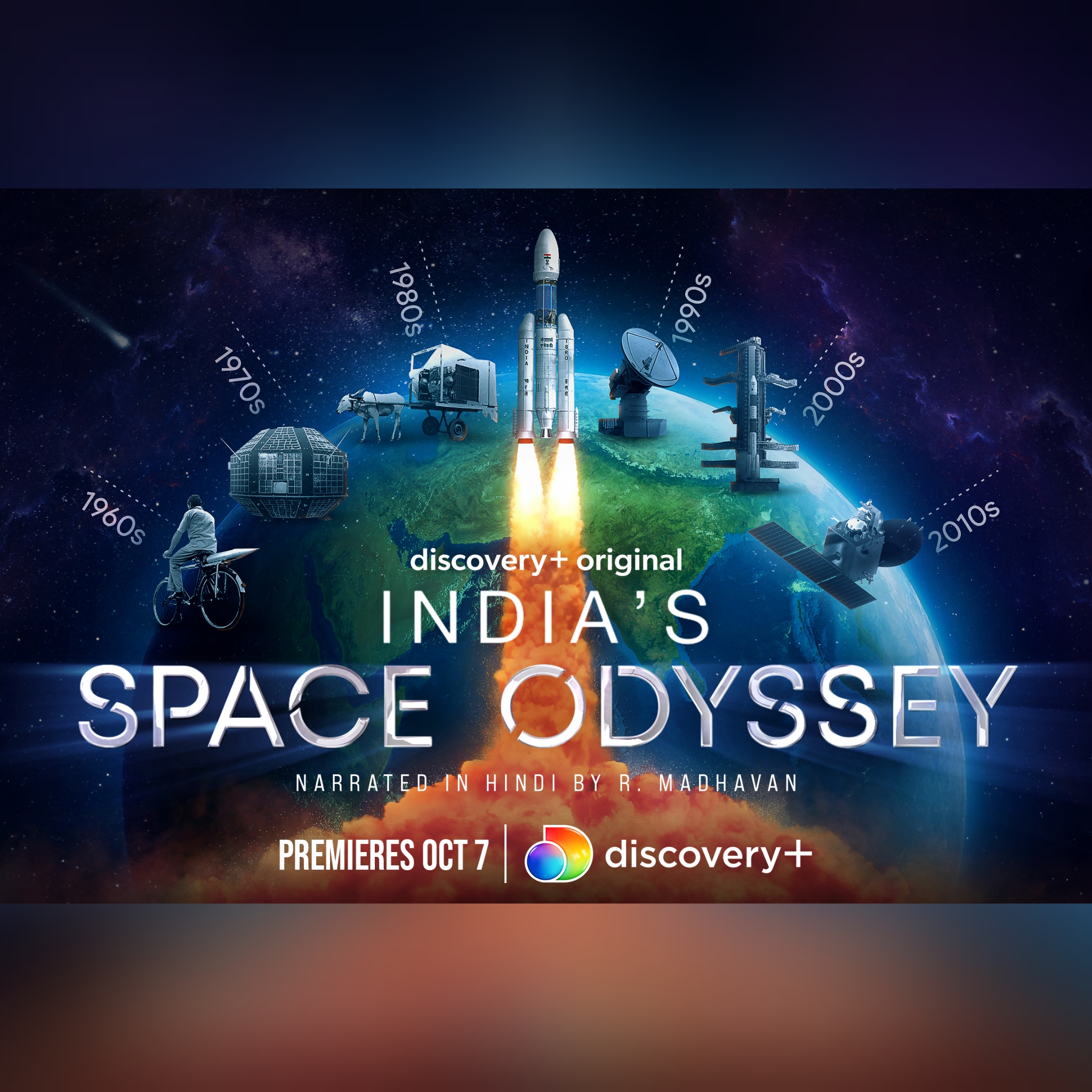
The ceremony also featured the trailer launch of Unani Ki Kahaani, an upcoming documentary starring actor Jim Sarbh, set to premiere on Discovery on 11 February.

Instituted in memory of Unani scholar and educationist Hakeem Abdul Hameed, the awards have grown into a national platform that celebrates those building a more inclusive and resilient India. For one evening at least, the spotlight was not just on success, but on service with substance.


 

Advertisement
Continue Reading

Advertisement News18
Advertisement All three Media
Advertisement Whtasapp
Advertisement Year Enders

Copyright © 2026 Indian Television Dot Com PVT LTD

This will close in 10 seconds

×