News Broadcasting
Former I&B minister Pramod Mahajan dead

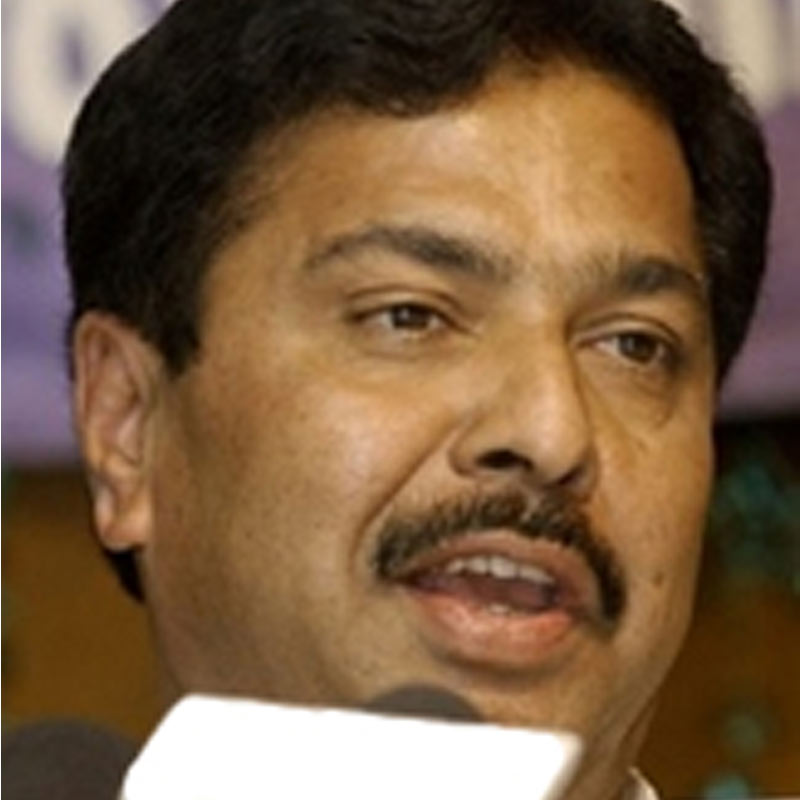
NEW DELHI: Senior BJP leader and former information & broadcasting (I&B) minister Pramod Mahajan passed away this afternoon at Mumbai’s Hinduja Hospital following multiple organ failure.
Mahajan, who was shot and grievously wounded by his youngest brother Pravin on the morning of 22 April after an argument at the BJP leader’s apartment in Mumbai’s upscale Worli area, had remained in a critical condition ever since the attack 12 days ago.
The 56-year-old former I&B minister had three bullets lodged in his body and suffered what ultimately proved fatal damage to his liver, pancreas and intestines. Mahajan is survived by his wife and a son and daughter.
Hinduja Hospital has been virtually under media seige these past days with television crews stationed there 24/7. Mahajan’s condition, which has had blanket coverage across all news channels, began deteriorating rapidly since yesterday and officials anounced his demise at 4:10 pm this evening.

It was on Mahajan’s watch that Star India in 1998-99 made its first concerted effort to get a direct-to-home (DTH) broadcast service going with its ISkyB venture. Mahajan had in end-1998 indicated that DTH clearances would come within two-and-a-half months.
Doordarshan’s news channel is also a brain child of Mahajan, who floated the idea in 1999. The idea of starting such a channel was mooted immediately after the BJP came to power in March 1998. Mahajan gave the green signal for starting the channel after he became I&B minister in December.
It was also Mahajan who got the idea to upgrade the facilities of Kashmir DD centre to counter Pakistani propaganda unleashed by Pakistan’s state broadcaster PTV in 1999-2000. Though a dedicated Kashmir channel was started with the help of private broadcasters when Arun Jaitley became the I&B minister after Mahajan in 2000, the former had sanctioned a $100m package for the upgradation of DD Kashmir’s centre.
After Mahajan was shifted to the telecom ministry, holding also the infotec portfolio, he expressly scotched an idea of merging the telecom and I&B ministry to form an ICE ministry for the proposed convergence era.
It is not wise to make one out of three important ministries of telecom, information and broadcasting and information technology, especially in view of the amount of work involved and number of employees associated, Mahajan had said in his capacity as information technology & communication and parliamentary affairs minister, while opposing a merger of the three ministries.
The media savvy Mahajan was also the brain behind the “India Shining” campaign that his party, which was then ruling at the Centre, used unsuccessfully to fight the last general elections in 2004.


News Broadcasting
WITT Summit 2026 concludes in New Delhi
Babar Azam’s comical diving attempt goes viral as league introduces anti-dew measures.
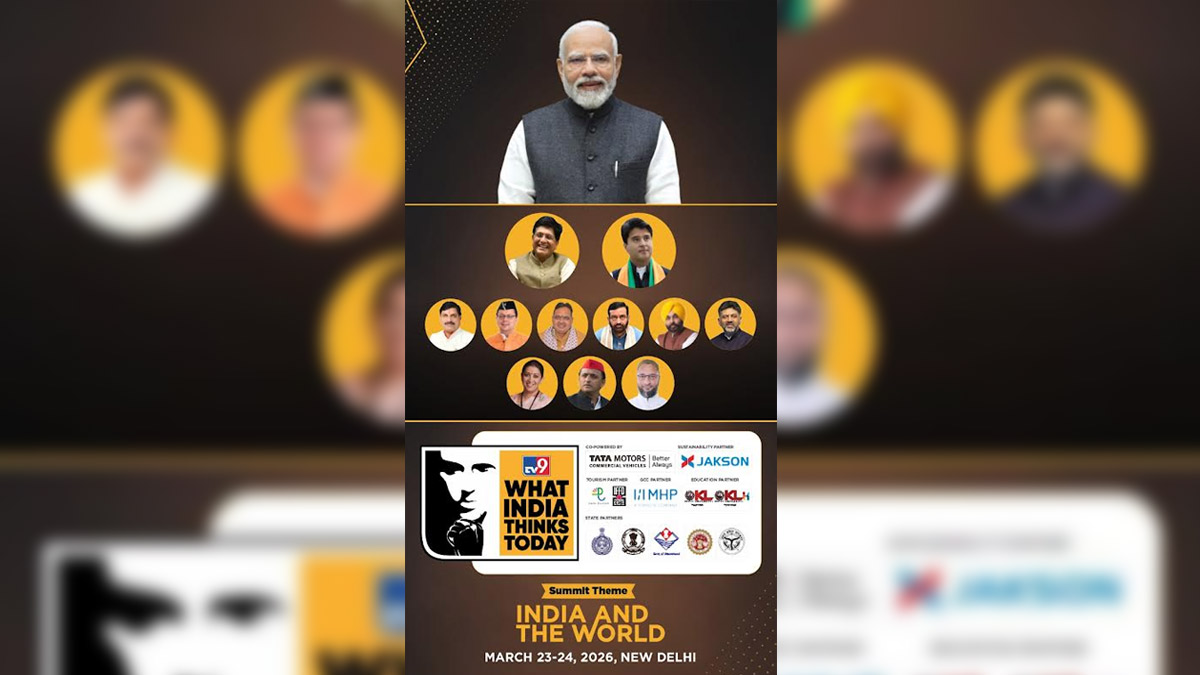
MUMBAI: The WITT Summit just wrapped up with enough big ideas to fill a policy playbook because when India’s leaders, thinkers and icons gather under one roof, even the conversations hit sixes. The eighth edition of TV9 Network’s flagship What India Thinks Today (WITT) Summit 2026 concluded on Saturday after two days of dynamic discussions at its New Delhi venue. India’s largest multi-domain public policy and culture summit brought together political leaders, policymakers, sports icons, artists and technology innovators to examine the forces shaping contemporary India and its global standing.
Prime minister Narendra Modi delivered the keynote address on the theme “India and the World” for the third consecutive year. In a wide-ranging speech, he addressed the ongoing conflict in West Asia, calling for restraint and compassion while highlighting India’s continued development trajectory despite global turmoil.
The summit featured candid conversations with state leaders. Telangana Chief Minister A. Revanth Reddy articulated a people-first governance model and contrasted it with other development approaches. Madhya Pradesh Chief Minister Mohan Yadav declared that Left-wing extremism had been effectively eliminated in his state and highlighted preparations for the upcoming Kumbh Mela. Punjab Chief Minister Bhagwant Mann defended his government’s record, citing the closure of 19 toll plazas and creation of the Sadak Suraksha Force. Karnataka Deputy Chief Minister D.K. Shivakumar expressed confidence in Congress prospects in Assam and addressed recent allegations against him.
On geopolitics and national security, Union Minister Jyotiraditya Scindia outlined India’s ambition to become a builder of trusted digital infrastructure for the world, citing the rapid 5G rollout and village-level 4G connectivity.
Cricket received significant attention. Former India captain Sourav Ganguly praised player freedom and trust as hallmarks of great leadership and named MS Dhoni as the greatest captain due to his World Cup successes. India women’s team bowling coach Aavishkar Salvi credited the BCCI and Women’s Premier League for building a pipeline of world-class talent behind the team’s recent ODI World Cup triumph.
The summit also hosted the inaugural AI² Awards 2026, celebrating the convergence of human creativity and machine intelligence in storytelling and content creation. Poet and kathavachak Kumar Vishwas delivered a nuanced take on India’s concept of Dharma and criticised the recent arrest of an 80-year-old Shankaracharya. Veteran lyricist Sameer Anjaan and storyteller Neelesh Misra reflected on changing music trends and artistic responsibility in the wake of a recent controversy involving Nora Fatehi.
In a country where conversations often run as deep as the Ganges, the WITT Summit proved once again that when leaders, thinkers and storytellers come together, the real winner is public discourse lively, layered and refreshingly unafraid to tackle the big questions shaping India’s tomorrow.








