News Broadcasting
Foreign news agencies come under government scan

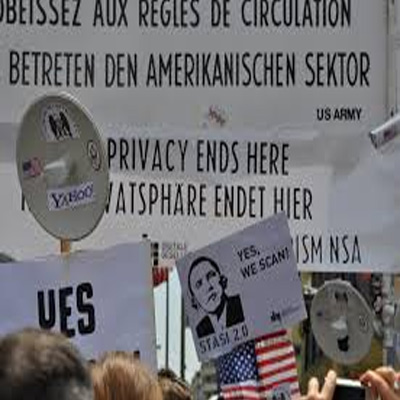
NEW DELHI: After the turn of KU-band DTH, print media and satellite uplinking, it’s the turn of foreign news agencies to be under the scanner of the government.
The coalition Indian government is now seeking to review the policy that guides the operation of foreign news agencies in India and whether they should be allowed to directly supply Indian news to Indian clients and others.
The information and broadcasting ministry has called for opinions and suggestions on continuation or modification of the policy. The existing policy is governed by a Cabinet decision of 1956, which is also based on the recommendations of the First Press Commission.
According to the Cabinet decision, communication facilities should be granted to foreign news agencies only where distribution of news within the country is to be effected through an Indian news agency owned and managed by Indians, which would have full and final authority in the selection of foreign news for distribution and which would also be in a position to supply Indian news in a reasonable volume to the foreign news agencies with which it has a working arrangement.

This decision has been the yardstick for examining requests of foreign news agencies to operate in India. However, foreign news agencies were allowed direct distribution of financial news by selected clients for their own use and not for further reproduction and publication.
Opinions and suggestions are to be sent to the secretary, I&B ministry, ‘A’ Wing, Shastri Bhawan, New Delhi 110001. The responses could also be sent by e-mail at pibnic@sb.nic.in.
Considering the amount of debate that goes on whenever any government seeks to go in for a policy change or its review, this move may be laudable, but is sure to take time. And with elections in some states round the corner later this year and the general elections due next year, a decision on the operation of foreign news agencies in India seems unlikely during the tenure of this government.






News Broadcasting
CNN-News18 to host Fury in the Gulf conclave on West Asia crisis
Three-hour summit to unpack geopolitical fallout and impact on India
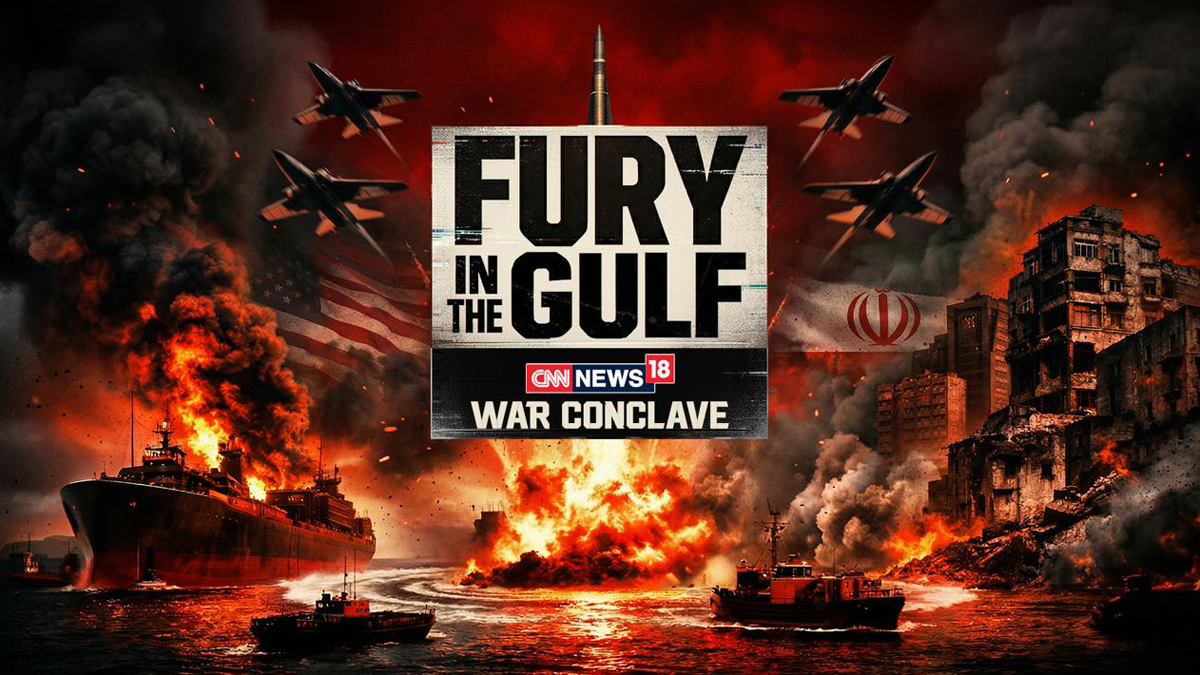
MUMBAI: CNN-News18 is set to host a special three-hour broadcast, Fury in the Gulf – War Conclave, on April 7, aiming to decode the escalating West Asia crisis and its far-reaching implications for India.
Scheduled from 4:00 PM to 7:00 PM, the conclave comes at a time when tensions between Iran and the United States are reshaping global geopolitics and triggering economic uncertainty. With India’s deep energy ties, trade links and large diaspora in the Gulf, the developments carry significant domestic relevance.
Built around the theme ‘Conflict, Consequences, and The Future,’ the programme will feature six curated sessions combining one-on-one interviews and panel discussions. The focus is to cut through the clutter and offer viewers a clearer understanding of the fast-evolving situation.
Key sessions include ‘Diplomacy in Times of War’ featuring Shashi Tharoor, and ‘World After the Iran Conflict’ with voices such as Ram Madhav, Reuven Azar, representatives from the European Union and the Iranian Deputy Envoy. Another session titled ‘Another Dunkirk?’ will bring together K. J. S. Dhillon and Jitin Prasada among others.
CNN-News18 editorial affairs director Rahul Shivshankar said, “In times of war, clarity becomes the most powerful tool. Fury in the Gulf – War Conclave brings together credible voices to address the questions and confusion that arise amid an overwhelming influx of information.”
He added that the initiative is aimed at delivering “facts, perspective, and insight” at a time when misinformation can easily cloud public understanding.
Echoing the sentiment, CNN-News18 CEO– English and business news Smriti Mehra said the conflict marks a defining global moment, with consequences that extend well beyond the region. She noted that the conclave seeks to present the crisis with “depth, nuance and responsibility” so audiences can better grasp its real-world impact.
As geopolitical tensions continue to dominate headlines, the conclave positions itself as an attempt to bring order to the noise, offering viewers a structured, insight-led look at a complex and rapidly shifting global situation.






