News Broadcasting
Focus TV network is on the right track: CEO Neeraj Sanan


KOLKATA: Barely five months after NE Bangla rebranded itself to Focus Bangla due to a change of ownership, gossip has been doing the rounds that the Bengali News channel’s survival is a big question mark. For starters, its chief editor Biswa Majumdar has left for rival ETV Bangla as senior editor. Then the channel has yet to rake in the money and sources say that it was preparing to hand out pink slips and employee compensations.
However, when Focus Network group CEO Neeraj Sanan was contacted, he firmly asserted that any talk of the channel being shut down was baseless. In fact, he says there is no question of pulling down the shutters. “We are pretty bullish and are correcting everything that was wrong. We have just invested in a seven storied building in Odisha which will function as our office,” he says. “We have taken 30,000 square feet of space in Noida and our Agartala operations have restarted,” he says. “We are investing further: increments are slated to be handed out to our Bengal channel staff over the next couple of days and I will be personally going to Kolkata for the same.”

But even then media expert Swaraj Mukherjee told indiantelevision.com that “the Jindals are still negotiating with an NRI buyer to sell Focus Bangla but so far that’s in limbo.”
Sanan rubbishes all this as corridor talk. He says a new chief editor will be hired soon to replace Majumdar at Focus Bangla.
Although 2013 wasn’t a very productive year for Bengali channels, Ethical Media Trust (EMT) that owns the Focus News network is looking at actively investing in its six channels. The Trust has Matang Singh, who was the former owner of the network that was erstwhile called as Positiv TV, as the majority shareholder with several others pumping in money as well.
The Harvard educated Sanan admits that cash flows and revenue inflows could be better, but he points out that “they are at significantly better as compared to the zero levels they were earlier. Eventually, things will really look up.”
In an earlier interview with indiantelevision.com, Sanan had said that the network’s aim is to have an honest channel without any worry about the money required to run it.
(Updated on 4 August 2014 at 16:00 hours)



News Broadcasting
Kamlesh Singh receives Haldi Ghati Award from MMCF
India Today Group editor honoured for three decades of journalism at Udaipur ceremony.
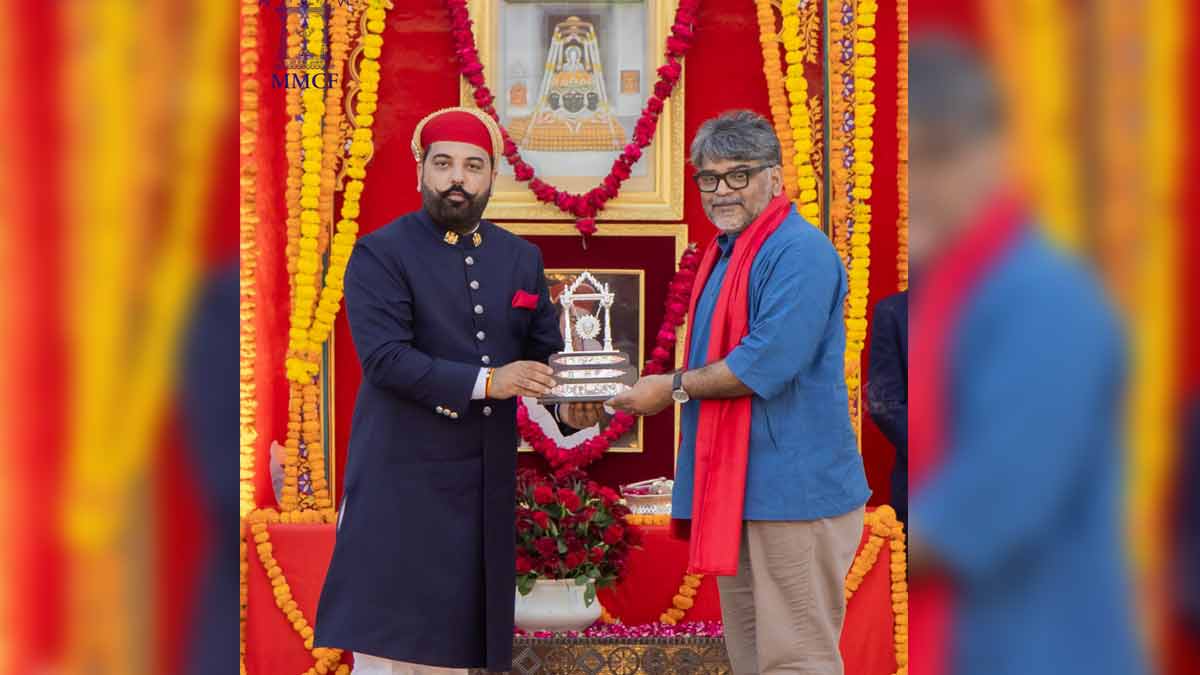
MUMBAI- Kamlesh Singh just turned a lifetime of sharp words into a shiny shield because when journalism wakes up a society, even the Maharana of Mewar wants to pin a medal on it.
The Maharana of Mewar Charitable Foundation (MMCF) conferred its prestigious Haldi Ghati Award on Kamlesh Singh, a senior editor at the India Today Group, during a ceremony in Udaipur on 15 March 2026. The national award, instituted in 1981-82, recognises “work of permanent value that initiates an awakening in society through the medium of journalism.”
Singh, who leads several editorial initiatives including Aaj Tak Radio, the Teen Taal community and The Lallantop, was presented the honour by Lakshyaraj Singh Mewar, Managing Trustee of MMCF. The citation highlighted his three decades of contributions to Indian media, innovations in digital journalism, mentoring young reporters, and his popular podcast persona “Tau” on Teen Taal, which fosters thoughtful public discourse.
The Haldi Ghati Award, named after the historic Battle of Haldighati symbolising valour and resilience, is one of four national awards given annually by MMCF. Past recipients include Tavleen Singh, Piyush Pandey and Raj Chengappa.
Other honourees this year included Padma Vibhushan Pt Hari Prasad Chaurasia, Vedamurti Devvrat Rekhe, Treeman of India Marimuthu Yoganathan, Vir Chakra Capt Rizwan Malik, and US-based researcher Molly Emma Aitken, who received the Colonel James Tod Award for contributions to understanding Mewar’s spirit and values.
In an era where headlines often shout louder than substance, the MMCF quietly reminded everyone that real journalism isn’t about noise, it’s about the quiet, persistent work that stirs society awake, one thoughtful story at a time.







