News Broadcasting
FM players fear community radio interference


MUMBAI:They may be as different as chalk and cheese in their outlook and content.
But the proposed entry of short range community radios is not being viewed too kindly by private FM operators in the country. The Indian government recently announced its plans to revolutionize radio broadcasting in the country by allowing low power radio stations in major localities. 5000 such stations will shortly spring up across the country, with educational institutions being given the first go ahead for the venture.
Star India Radio CEO John Catlett feels that while the government move is directed by good intentions, it will only add to the clutter of frequencies available in say, a city like Mumbai. The low cost community FM radio centers with a five kilometer range are to be set up without any license fee, as per a draft cabinet proposal currently doing the rounds. The stations can be set up with an initial investment of Rs 500,000 to 1000,000. India’s spare spectrum capacity is to be utilized for allowing these stations to come up.

The catch however is that while these stations can provide entertainment, they cannot solicit commercials and have to be funded jointly by individuals or by organizations. Catlett says that while the community stations are not a threat to commercial stations who by their very nature are market oriented, the new entrants could add to the confusion about the identities of channels and frequencies – a problem that stations are trying hard to overcome. Catlett says the private FM operators are planning to come together on an industry platform to speak collectively to the government on the issue and to convince the powers that be of the practical difficulties of the proposal.
While private FM is available in four metros and 19 FM bands are being broadcast, community radio is expected to literally throw open the floodgates to at least 5,000 neighbourhood stations that will start airing niche content from early next year. As soon as the Union cabinet gives clearance, the wireless planning and coordination department of the telecom ministry will step in, allocating the frequencies for every neighbourhood radio centre.




News Broadcasting
CNN-News18 to host Fury in the Gulf conclave on West Asia crisis
Three-hour summit to unpack geopolitical fallout and impact on India
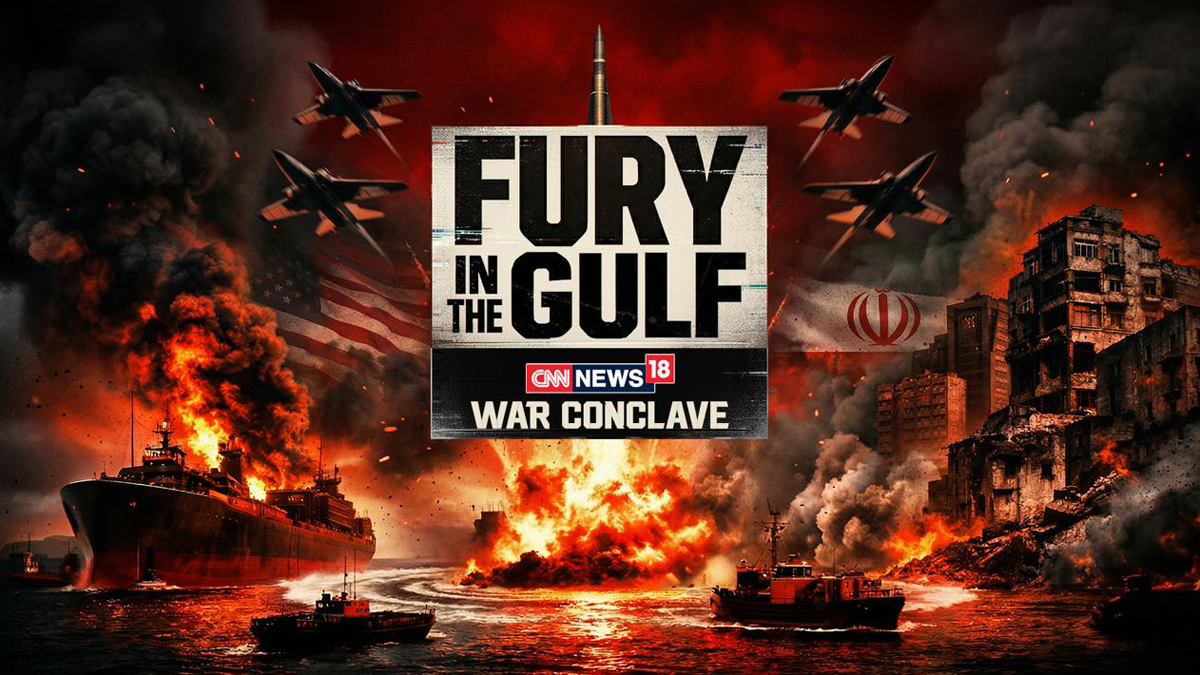
MUMBAI: CNN-News18 is set to host a special three-hour broadcast, Fury in the Gulf – War Conclave, on April 7, aiming to decode the escalating West Asia crisis and its far-reaching implications for India.
Scheduled from 4:00 PM to 7:00 PM, the conclave comes at a time when tensions between Iran and the United States are reshaping global geopolitics and triggering economic uncertainty. With India’s deep energy ties, trade links and large diaspora in the Gulf, the developments carry significant domestic relevance.
Built around the theme ‘Conflict, Consequences, and The Future,’ the programme will feature six curated sessions combining one-on-one interviews and panel discussions. The focus is to cut through the clutter and offer viewers a clearer understanding of the fast-evolving situation.
Key sessions include ‘Diplomacy in Times of War’ featuring Shashi Tharoor, and ‘World After the Iran Conflict’ with voices such as Ram Madhav, Reuven Azar, representatives from the European Union and the Iranian Deputy Envoy. Another session titled ‘Another Dunkirk?’ will bring together K. J. S. Dhillon and Jitin Prasada among others.
CNN-News18 editorial affairs director Rahul Shivshankar said, “In times of war, clarity becomes the most powerful tool. Fury in the Gulf – War Conclave brings together credible voices to address the questions and confusion that arise amid an overwhelming influx of information.”
He added that the initiative is aimed at delivering “facts, perspective, and insight” at a time when misinformation can easily cloud public understanding.
Echoing the sentiment, CNN-News18 CEO– English and business news Smriti Mehra said the conflict marks a defining global moment, with consequences that extend well beyond the region. She noted that the conclave seeks to present the crisis with “depth, nuance and responsibility” so audiences can better grasp its real-world impact.
As geopolitical tensions continue to dominate headlines, the conclave positions itself as an attempt to bring order to the noise, offering viewers a structured, insight-led look at a complex and rapidly shifting global situation.






