Hindi
Five Indian films to be screened at Hollywood CineFest

NEW DELHI: Indian films After Ever After by Rakesh Kumar has been selected for the Hollywood International CineFest being held this month.
In addition, Akshay Prem Vyas’s debut feature Kaaya (Hindi) and Nilesh Batra’s Rainbow Fields (Asamese) are competing in the Best Feature (Foreign) category. The festival, scheduled to be held on Saturday and Sunday, at AMC Sunset 5, 8000 Sunset Blvd, Los Angeles, received over 400 submissions.
The lineup includes World Premieres of After Ever After & Easy Money and the North America Premieres of Before The Fall (Cambodia’s entry to 2017 Oscars) & Sam Heughan’s Emulsion.

In Rakesh Kumar’s debut feature After Ever After, the protagonist, Nik Patel struggles to cope with the terminal illness of his nine-year-old daughter. A chance encounter with an Alzheimer patient helps him come to terms with the harsh realities of life.
Based on his personal experiences, the film is a story of human endurance against insurmountable odds. Rakesh Kumar was born in the northern state of Bihar and, for him, life never was a fairytale — as we understand it.
“All human beings are born fighters and true fighters pick up the sword even when defeat is nearly certain,” Rakesh said.
The 2017 line up includes films from America, UK, India, France,China, South Korea, Cambodia and Hong Kong.
Hollywood International CineFest was founded with the goal of connecting independent film-makers with distributors.




Hindi
Zee5 and Applause Entertainment team up for whodunnit ‘Everybody Loves Sohrab Handa’
Rajat Kapoor directs star-studded murder mystery streaming from 10 April.
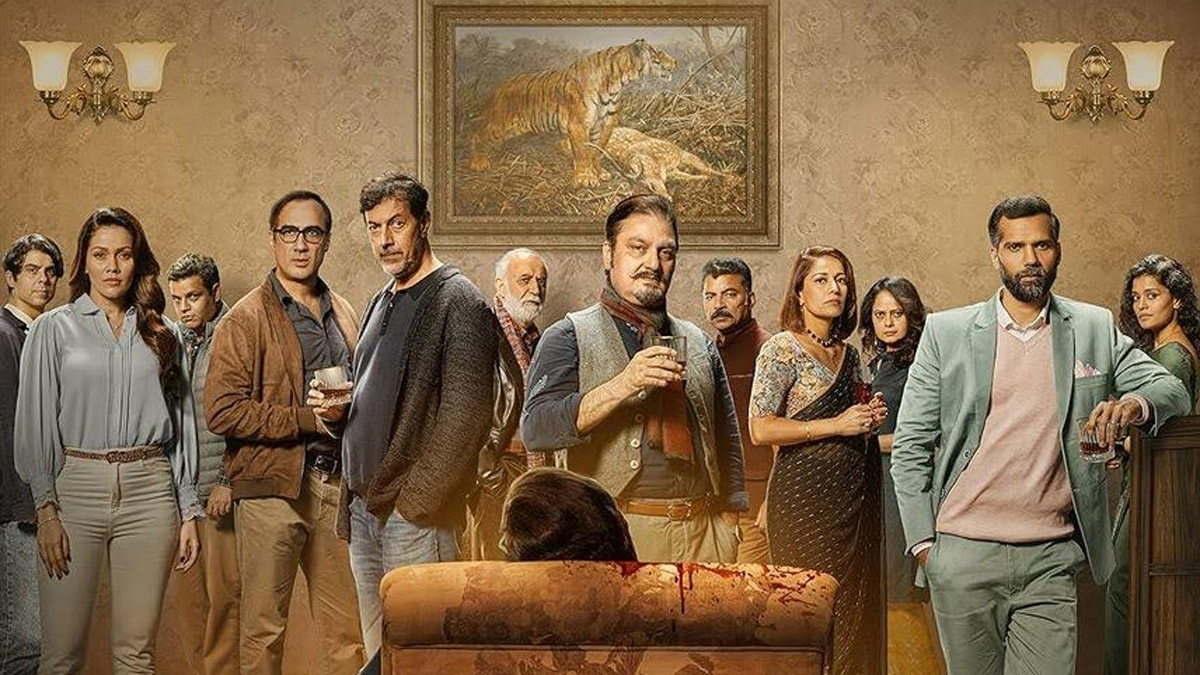
MUMBAI: Zee5 is serving up another killer collaboration and this time, the murder mystery comes with a generous side of dark humour and family dysfunction. The streaming platform has partnered with Applause Entertainment and Mithya Talkies to bring Everybody Loves Sohrab Handa, a fresh, twisted whodunnit written and directed by acclaimed filmmaker and actor Rajat Kapoor. The film will stream exclusively on Hindi Zee5 from 10 April.
The movie reimagines the classic murder mystery genre with a contemporary, darkly comic edge. It revolves around a group of friends and family who smile, drink, and celebrate together until the silence snaps and long-buried secrets spill out. The stellar ensemble cast includes Vinay Pathak, Ranvir Shorey, Waluscha De Sousa, Saurabh Shukla, Chandrachoor Rai, Neil Bhoopalam, Koel Purie, Palomi Ghosh, and Rajat Kapoor himself.
This latest offering continues the successful partnership between Zee5 and Applause Entertainment, which has previously delivered diverse hits such as Mithya, Bloody Brothers, and Jab Khuli Kitaab.
&TV Business Head of hindi Zee5 and chief channel officer Kaveri Das said, “Our collaboration with Applause Entertainment has consistently delivered distinct, high-impact storytelling. Everybody Loves Sohrab Handa is a natural progression, reinforcing our focus on genre-led content with a compelling whodunnit premise and a strong ensemble cast.”
Applause Entertainment business head for movies Sunil Chainani added, “This film adds yet another compelling layer to our slate with Rajat Kapoor’s unmistakable voice.”
Rajat Kapoor shared, “What interested me was not just the mechanics of a whodunnit, but the emotional violence that precedes physical violence. These are people who smile at each other, but there’s so much that is not said.”
The film promises razor-sharp writing, layered performances, and simmering tension, inviting viewers not just to solve the crime but to unravel the complex relationships at its heart.
If you love a good murder mystery served with wit and emotional depth, Everybody Loves Sohrab Handa looks set to be your next addictive watch. Mark your calendars, the whodunnit drops on Hindi Zee5 from 10 April.







