DTH
First Indian Digital TV Honours celebrates digitisation’s leading practices


NEW DELHI: It was a day when the stalwarts of the Indian cable, broadcast and direct to home television industry converged to witness the best or leading practices of the industry being recognised at indiantelevision.com’s first ever Indian Digital TV Honors (IDTH). The event, held at the Lalit Hotel in Delhi late last eveing saw 15 professional/initiatives/organisations getting a citation for evolving best practices during phase I and phase II of digitisation over the past 18-24 months, ever since digital addressable system (DAS) was mandated by the government.
An advisory panel comprising 13 professionals from broadcast, cable TV, consulting and technology , along with the editorial team of indiantelevision.com, helped finalise the honoraries after a tough round of discussion for over a month on the merits and demerits of those being sought to be honoured for their great work and innovations.

The event was attended by close to 200 professionals from the cable, DTH and broadcast industry and the regulatory body.
The evening was anchored by Indian Television Dot Com Founder, CEO and editor-in-chief Anil Wanvari along with TV actor Prerna Wanvari who hosted the two hour long proceedings.
The First Indian Digital TV Honours, which were powered by leading Indian MSO DEN Networks began with Tata Sky being honoured for its obsessive focus on consumer service and product quality. The direct to home operator (DTH) has for long being spoken of excelling in the area of customer services, and this honour only further supported that perception.
India’s oldest DTH operator Dish TV was honoured for its dervish like focus on its financial health and for protecting and creating shareholder value. The citation was received by CEO RC Venkateish, who shared the fact that he has to answer to public and other shareholders regularly, making it imperative for the company to be bottom line focused.
“We have been generating free cash flow for quite sometime, and probably are the only Indian DTH company to do so,” said Venkateish. “Things could be better if we could rationalise content costs which are still way too high.”
Videocon d2h was recognised for its technological innovations and for the use of indigenous set top boxes which the group’s sister organisation manufactures indiegenously
Additionally MSO Hathway Cable & Datacom was honoured for its pioneering push into broadband internet services, way before anyone else in the business. “With over 400,000 users we have gained a lot of experience which will only further help us as we move forward. Consumers are demanding a lot more bandwidth as they are guzzling a lot more online content,” said Hathway CFO G. Subramaniam. “We will be the best company providing the broadband internet service in the future.”
Tata Sky was also recognised for its its Value Added Services (VAS) which it says is helping lure subscribers to them.
DEN Networks, which had in 2013 attracted an investment of $160 million from Goldman Sachs at a time when every other MSO was being turned away, was honoured for becoming a beacon for the cable TV sector in the area of raising capital. Elated with the honour, DEN Network CFO Rajesh Kaushal said, “This is a very cash guzzling business and so there is a lot of investment and infrastructure that is needed. We have enough capital with us to see us through Phase I, II and III of DAS.”
The Indian Broadcasting Foundation (IBF) was recognised for its marketing and promotional campaign to encourage the smooth spread of digitisation. Almost every channel aired the commercial several times a day to push the message and educate consumers about digitisation and set top boxes. The same was recognised by the Indian Digital TV Honours advisory committee.
“We wanted to incite consumers through the ad campaign. We had aired the promos for at least eight times a day on 150 channels,” said IBF secretary Shailesh Shah while receiving the honour. Leading broadcaster Star India was also recognised for its strategy to invest big money in sports. Sports TV worldwide is a big driver of pay TV and Star India’s early initiative to invest big money is only going to see a similar play being played out here. And this in turn will likely encourage the process of digitsation.
SitiCable Network was honoured for fostering Local Cable Operator (LCO) partnerships and being the first ones to give carriage fee revenue share to the LCOs. “We believe that LCOs are an integral part of the cable TV ecosystem and that is the reason we have given them the access to our subscriber management system and also are sharing the carriage fee revenue with them,” informed SitiCable COO Anil Malhotra.
It was in 2013 that Doordarshan owned DTH service DD Direct Plus was rechristened as Freedish. The DTH player which introduced several innovations for its consumers in the year was recognised for catering to the needs of Indian consumers through Freedish. “Freedish is the most profitable venture of Prasar Bharti. Broadcasters are changing their business model for us, which is welcome change,” said Doordarshan additional director general Ranjan Thakur while receiving the honour.
Two industry leaders have put their shoulder to the wheel and have played a major role in promoting digitsation over the past 18-24 months and have themselves invested heavily in it: Hathway Cable’s Raheja family led by Viren Raheja and DEN Networks’ founder Sameer Manchanda. “If you have patience, scale and execution one can excel in this field which holds a lot of scope. Cable will grow exactly how mobile grew in India, but you will have to wait minimum for five years to see results,” opined Manchanda. “You have to have the passion to see your belief in cable TV come true.”
The evening also saw Seven Star Digital Network being honoured for effectively managing digitisation as an independent operator. Honours were also given to Ministry of Information and Broadcasting and Telecom Regulatory Authority of India for their push in making India a digitised nation. Most of industry has begun hearing of the Maharashtra Cable Operators Federation (MCOF), which represents the interests of the last mile owner. In time, if it does manage to facilitate a feasible formula on revenues and shares with MSOs, then it stands a strong chance to be honoured in next year’s Indian Digital TV Honours.
More power to the industry’s elbow!




DTH
DD Free Dish e-auction revenue dips to Rs 642 crore as slot sales fall
Revenue dips as revised norms reshape bidding in 94th round
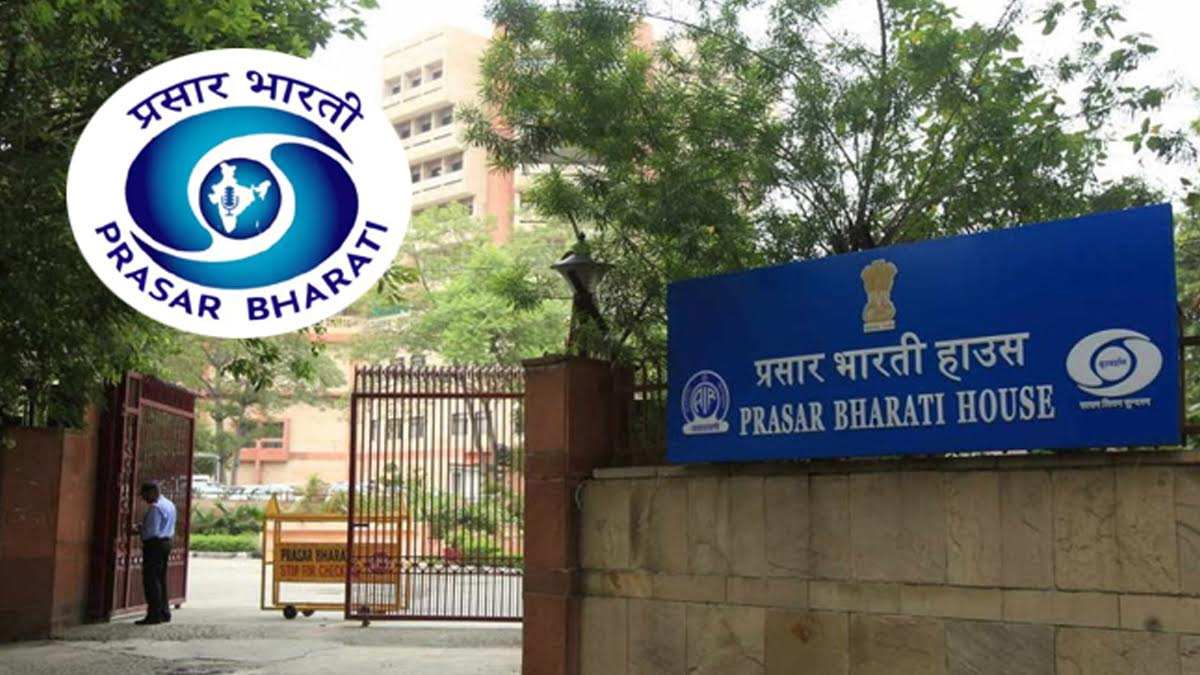
NEW DELHI: Prasar Bharati’s DD Free Dish has closed its 8th annual, and 94th overall, e-auction for MPEG-2 slots with total collections of Rs 642 crore for the period April 1, 2026 to March 31, 2027.
That is lower than last year’s Rs 780 crore haul, with 55 slots sold compared with 61 in FY25–26. The softer topline reflects both a slimmer inventory and a recalibrated auction framework.
This was the first auction conducted after amendments to the e-auction methodology, including tighter eligibility norms and a revised reserve price structure for MPEG-2 slots. The stated aim was greater transparency and more serious participation. The immediate outcome appears to be more measured bidding in certain categories.
Day one set the tone. Eight slots were sold, six in the premium Bucket A+ and two in Bucket A. The strong early action in A+, which typically houses Hindi GECs and movie channels, reaffirmed the enduring appeal of mass Hindi programming on the platform.
Among the broadcasters securing slots in the initial rounds were Zee Entertainment Enterprises, Sony Pictures Networks India, Viacom18’s Colors network, Sun Network and Shemaroo Entertainment. Their continued presence signals that, despite the pull of digital platforms, Free Dish remains a strategic must have for legacy networks chasing scale in price sensitive markets.
The final bouquet of 55 channels leans heavily towards Hindi news, movies, devotional fare, Bhojpuri and regional programming.
In Hindi news, familiar heavyweights such as Aaj Tak, ABP News, India TV, News18 India, Republic Bharat and Zee News made the cut. Entertainment and movie offerings include Colors Rishtey, Star Utsav, Dangal TV, Sony Pal, Shemaroo TV, Goldmines, B4U Movies and Zee Biskope. Devotional viewers will find Aastha, Sanskar and Sadhna Gold among the selected channels.
Regional representation includes Sun Marathi, Fakt Marathi, PTC Punjabi and GTC Punjabi.
Equally telling were the absences. Broadcasters such as Big Magic, Filamchi Bhojpuri, India News, Bharat Express, Movieplex Maithili, TV9 Marathi, Shemaroo Marathibana, Zee Chitra Mandir and Satsang did not participate. The pullback is particularly visible across Marathi, Bhojpuri, Maithili and spiritual programming. Industry observers point to the revised reserve prices, tighter eligibility norms and a reassessment of commercial viability as possible factors.
DD Free Dish continues to beam into over 40 million homes, largely in rural and semi urban India. For advertisers and broadcasters alike, it offers efficient access to Bharat markets where pay TV penetration remains uneven and OTT subscriptions are limited.
The moderation in revenue this year may be read as a pause rather than a retreat. Fewer slots, a reworked auction playbook and evolving broadcaster strategies have clearly shaped outcomes. Yet premium Hindi entertainment retains its pull, and the platform’s mass reach remains hard to ignore.
As the FY26–27 line-up settles in, the mix of winners and walkaways will define the private satellite channel landscape on DD Free Dish for the year ahead.