High Court
Finally, US court orders south Asian pirate Jadoo TV to shut down

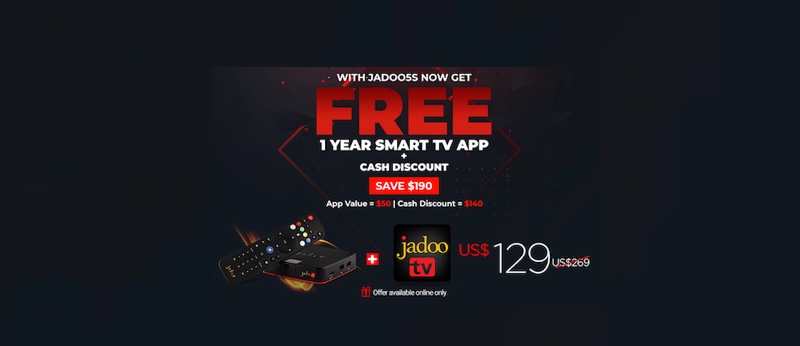
MUMBAI; While Jadoo is a character we all recall very fondly from the Hrithik Roshan film Koi Mil gaya, the service called Jadoo has been one of the most hated in the world of pay TV. Especially by south Asian broadcasters and platforms in the US.
Jadoo TV was one of the most popular providers of pirated south Asian content to global audiences and it distributed its service through Jadoo set-top boxes and its mobile application way back in the previous decade. Many had tried to have it shuttered, but most had failed.
However, yesterday, the International Broadcaster Coalition Against Piracy (IBCAP) announced that a long-running lawsuit against Jadoo TV. and its US-based CEO, Sajid Sohail, has resulted in a final judgment of $24,969,911 and a permanent injunction against Jadoo TV and Sohail individually. Jadoo TV also agreed to permanently cease all operations worldwide by 22 December 2024.
Earlier in the case, the court granted summary judgment on all claims against Jadoo TV and Sohail, finding them liable for direct, contributory and vicarious copyright infringement. In that ruling, the court determined that. Sohail was personally liable as the guiding spirit behind the infringement of IBCAP member works.
The court’s s announcement yesterday follows years of protracted litigation dating back to November 2018, when IBCAP member Dish Network initially filed the case.

The final judgment entered against Jadoo TV and Sohail is unique in that it not only recognizes significant statutory damages for registered works ($14,550,000), but also a significant monetary award for unregistered works ($10,419,911). Notably, as part of a separate settlement agreement, Jadoo TV and Sohail agreed to transfer all Jadoo TV customer lists to Dish, transfer all Jadoo TV trademarks and domain names to Dish , and pay Dish $1,500,000 by 25 February 2025.
“This final judgment and settlement marks the culmination of a six-year legal battle against one of the most popular South Asian services offering pirated content, Jadoo TV, and its CEO, who was found personally liable for the damages caused by his and his company’s copyright infringement,” said IBCAP executive director Chris Kuelling, “Today’s announcement sends a strong message that the end of the road for a pirate IPTV service is a significant monetary payment and loss of your entire business.”
Dish had filed the case in in 2018 when Jadoo set-top boxes were widely available online and in retail stores throughout South Asian communities worldwide, including the US and Canada.
The case was coordinated by IBCAP and brought by IBCAP member Dish Network only after Dish and IBCAP sent numerous notices of copyright infringement.
The lawsuit included claims for direct, contributory and vicarious infringement against Jadoo TV and Sohail for airing certain IBCAP member content to which it did not have rights. Evidence for the case was obtained and provided by the IBCAP lab. Prosecution of the case and settlement negotiations were executed by Dish’s outside litigation counsel, Hagan Noll & Boyle, LLC.






High Court
Delhi HC blocks illegal IPL 2026 streams, backs JioStar rights
Court orders swift takedowns, expands crackdown on piracy apps
NEW DELHI: In a timely move ahead of the cricketing season, the Delhi High Court has granted interim relief to JioStar India Private Limited, clamping down on illegal streaming of the TATA Indian Premier League 2026.
The court passed ex parte ad interim injunctions in two separate suits, restraining rogue websites and mobile applications from broadcasting IPL matches without authorisation. The tournament is set to begin on 28 March, making the timing of the order particularly significant.
Recognising JioStar’s exclusive digital and broadcast rights for the IPL cycle from 2023 to 2027, the court observed that unauthorised streaming would infringe its statutory and proprietary rights, potentially causing irreparable losses.
In one case, the court directed several identified websites to immediately stop hosting or streaming IPL content. It also issued a dynamic injunction, allowing JioStar to flag new infringing platforms in real time, which must then be blocked swiftly by domain registrars and internet service providers.
In a parallel order, the court turned its attention to piracy through mobile apps, particularly Android-based platforms distributing content via APK files. A broader dynamic+ injunction was granted, extending to future variants, mirror links and related interfaces, signalling a tougher stance on evolving piracy tactics.
The court also directed domain name registrars to suspend offending domains and share registrant details, including KYC and payment information. Internet service providers and telecom operators have been instructed to block access within strict timelines, in some instances within 36 hours. Both the Department of Telecommunications and the Ministry of Electronics and Information Technology have been asked to facilitate enforcement through necessary notifications.
Noting the fast-changing nature of digital piracy, the court emphasised the need for real-time enforcement tools to keep pace with anonymous and constantly shifting networks. It also underlined the commercial impact of piracy on legitimate rights holders.
The ruling reinforces the judiciary’s firm stance on protecting intellectual property in the digital age. For viewers, it is a reminder to stick to official platforms as the IPL season kicks off under tighter watch.






