Cable TV
Final phase STB seeding is 35% even as deadline nears

NEW DELHI: Even as the country has set a deadline of 31 March this year for full digitisation of cable TV, a Parliamentary Committee has been told that only 35 per cent seeding of set-top boxes (P-IV) has been achieved in rural India though the Parliament was told last week that 66.79 per cent (P III & IV) seeding had been achieved in the last two phases minus Tamil Nadu.
Admitting that digitisation in the first phase is total minus Chennai, the Parliamentary Standing Committee on Information Technology which also examines issues relating to the information and broadcasting ministry has been told that digitisation has also not been done in one city – Coimbatore – of Phase II in view of court cases though the other 37 cities having more than one million population and spanning 14 states and one union territory had been covered.
The committee recommended that the I and B Ministry follow up the issue of financial and technical viability in rural and remote areas, promote and increase share of iCAS (Indian Conditional Access System) to leverage ‘Make in India’ programme, popularise Doordarshan Free Dish in small town/cities/rural and remote areas, address the legitimate concerns of domestic STB producers and rigorously pursue interoperability of STB with the Telecom Regulatory Authority of India.

The committee therefore expressed the hope that the I and B Ministry will be able to meet the targets of cable TV digitisation as almost all the pending cases have now been dismissed and there is no stay in any case except in case of Chennai and Coimbatore.
Cable TV Digitisation in Phase III and Phase IV areas was to be achieved by 31 December 2015 and 31 December 2016 respectively, now extended to 31 January 2017 and 31 March 2017.
Interoperability: TRAI working with IIT Bombay
It was told that technical interoperability, as envisaged in the existing Direct to Home Guidelines has so far not proved to be effective due to various techno-commercial issues. The TRAI has decided to collaborate on the issue of technical interoperability with the Department of Electrical Engineering of Indian Institute of Technology, Bombay (IIT-B).
To ensure commercial interoperability TRAI has notified tariff orders and this has been challenged by a couple of DTH operators in the Telecom Disputes Settlement and Arbitration Tribunal and the matter is sub judice.
The Committee was given to understand that after the roll out of iCAS in January 2016, about 10 million STBs have been installed by multi-system operators out of which about 300,000 are with iCAS, which gives a market share of about 3%.





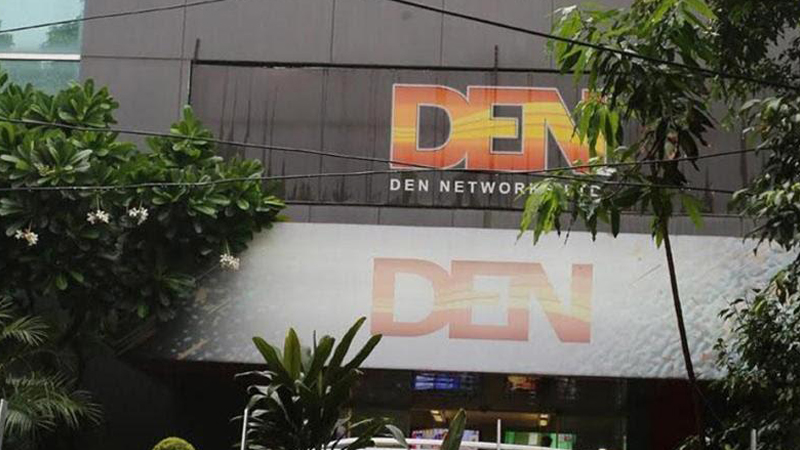
MUMBAI: When margins wobble, liquidity talks and in Q3 FY25-26, cash did most of the talking. Den Networks Limited closed the December quarter with consolidated revenue of Rs.251 crore, marginally higher than the previous quarter but down 4 per cent year-on-year, even as profitability stayed resilient on the back of strong cash reserves and disciplined cost control.
Subscription income softened to Rs.98 crore, slipping 3 per cent sequentially and 14 per cent from last year, while placement and marketing income offered some cheer, rising 15 per cent quarter-on-quarter to Rs.148 crore. Total costs climbed faster than revenue, up 7 per cent QoQ to Rs.238 crore, driven largely by higher content costs and operating expenses. As a result, EBITDA dropped sharply to Rs.13 crore from Rs.19 crore in Q2 and Rs.28 crore a year ago, pulling margins down to 5 per cent.
Yet, the bottom line refused to blink. Profit after tax stood at Rs.40 crore, up 15 per cent sequentially and only marginally lower than last year’s Rs.42 crore. A healthy Rs.57 crore in other income helped cushion operating pressure, keeping profit before tax at Rs.48 crore, broadly stable quarter-on-quarter despite the tougher cost environment.
The real headline-grabber, however, sits on the balance sheet. The company remains debt-free, with cash and cash equivalents swelling to Rs.3,279 crore as of December 31, 2025. Net worth rose to Rs.3,748 crore, while online collections accounted for 97 per cent of total receipts, underscoring strong cash discipline across operations, including subsidiaries.
In short, while Q3 showed signs of operating strain, the financial backbone remains solid. With zero gross debt, steady profits and a formidable cash war chest, the company enters the next quarter with flexibility firmly on its side proving that in uncertain markets, balance sheet strength can be the best growth strategy.






