Hindi
Film tourism identified as niche area

NEW DELHI: The Government says it has identified ‘Film Tourism’ as a Niche Tourism product but no specific spots have been identified in the country by the Ministry of Tourism to attract foreign film makers to shoot their films on such locations.
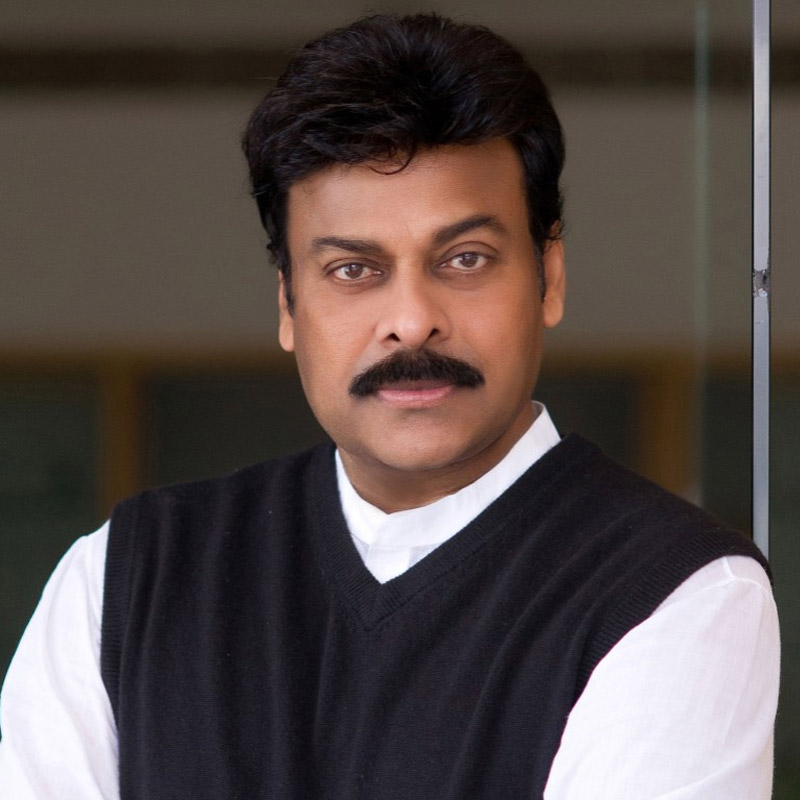
However, the Tourism Ministry has requested State Governments/Union Territory Administrations to recognise the potential of Film Tourism and constitute special bodies/cells to facilitate filming in the States/Union Territories, Tourism Minister Dr. K. Chiranjeevi has told Parliament.
Meanwhile, in the recently concluded 43rd International Film Festival of India, filmmakers from India and overseas urged the government to urgently devise a system of “Single Window Clearance” for granting shooting permissions to foreign and Indian filmmakers at different locales in the country.

Taking part in a press meet, Robyn Kershaw, producer of the Australian film “Save Your Legs”, Pranesh Sahni (Line Producer of “Slumdog Millionaire”) and curator of Incredible India and noted Journalist Ratnottama Sengupta said it takes a lot of time and effort to get the scripts cleared and get necessary permissions from more than 30 odd central, regional and local authorities before a film shooting begins.
Robyn Kershaw, who made the film Save your legs based on the theme of cricket madness and the link between Australia and India, feels that concurrent permissions should be allowed in case single window is not possible.
Narrating his own experience, Pranesh Sahni said the delay in granting of permission hurts both the filmmakers and the Government as the latter loses the revenue and a chance to showcase Indian diversity. He said that Kolkata authorities were more liberal in the grant of permission for the shoot of Save Your Legs and therefore he would like to explore more shooting sites in that state than any other. But he said the crew in India is an asset for foreign filmmakers due to their professional approach and grasp over the subject and they are much more in demand in foreign countries also.
Ratnottama Sengupta said India has plenty to offer like its large coastlines, sea-beaches, snow-covered mountains, forests and the River Ganges with its civilisation links, but the government must wake up to the needs of filmmakers to have Incredible India on the Screen and liberalise its permit system.
India has had filmmakers from overseas coming and shooting here, but the numbers are not substantial. Ashton Kutcher had shot in August at Safdarjang Tomb, Hauz Khas, Taj Mahal, for the titular role of Jobs, in the movie on the Apple founder Steve Jobs, who came to India in 1974 seeking spiritual enlightenment. Earlier, Julia Roberts came to shoot for Eat, Pray, Love (2010), about the recently-divorced modern woman’s quest for self-discovery. Kate Winslet shot for Holy Smoke (1999), the satirical look at religious zealots.
The City of Joy (1992) had Patrick Swayze as a doctor who searches for spiritual enlightenment after the loss of a patient – and discovers that poverty cannot rob people of joie de vivre. Siddhartha (1972) had iconic photographer Sven Nykvist travelling from the ashrams at Rishikesh to palaces of Bharatpur, as the born-rich Shashi Kapoor seeks a meaningful way of life in harmony with himself. And Slumdog Millionnaire told the story of Jamal Malik whose success on a TV quiz show arouses suspicions of the game show host. It swept the Oscars with the resilience of the youth from the Dharavi ghettos who learnt from adversity and precarious situations in life.
India has also been the stage for Octopussy (1983). For the German love triangle, The Tiger of Eshcnapur (1959), Fritz Lang indulged the stereotypes of Indian maharaja, white-skinned Eurasian dancer, and German architect. World War II film Sea Wolves (1980) had Gregory Peck, Roger Moore and David Niven launch a covert attack against a German merchant ship transmitting information from neutral Portugal’s territory in Goa.
Richard Attenborough shot Gandhi in 1982. When Jean Renoir filmed The River (1951) the love story proved seminal to the launching of Satyajit Ray, among others. A Passage to India (1984), David Lean’s film questioned the clash of civilisations in British India. The library of Merchant-Ivory titles couldn’t have been shot anywhere else, as also Mira Nair, Deepa Mehta, and Gurinder Chadha.


Hindi
Remembering Gyan Sahay, the lens behind film, television and advertising
From a puppet rabbit selling poppadums to Hindi cinema, he framed it all.
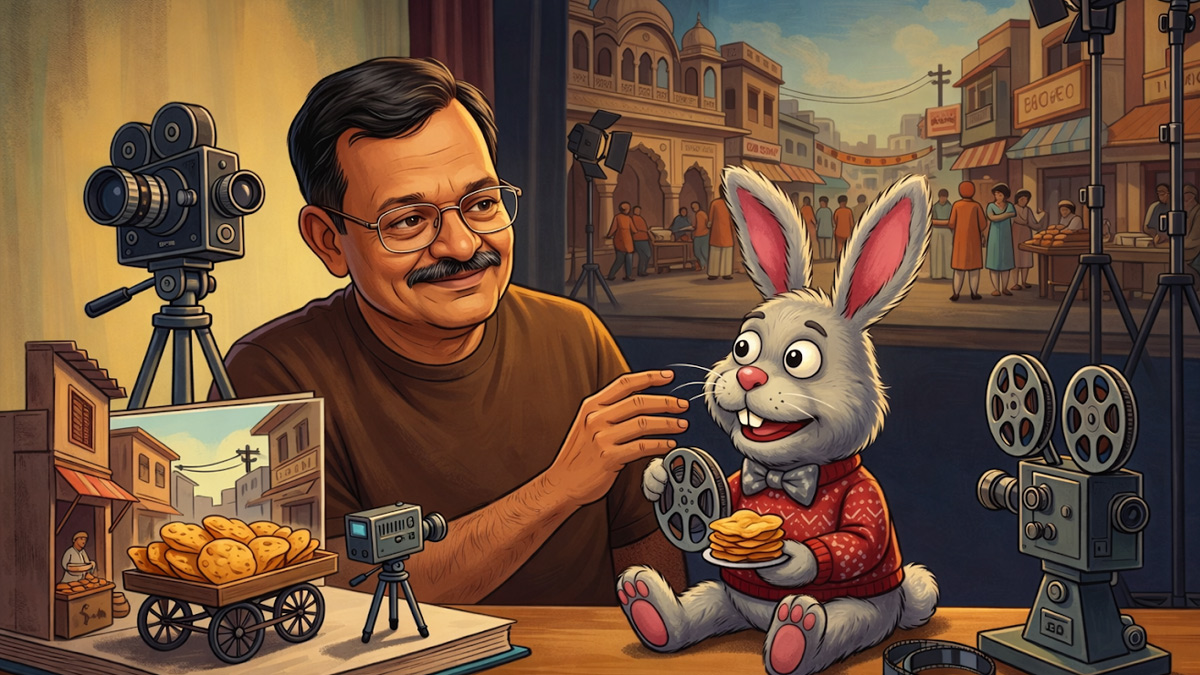
MUMBAI: There are careers, and then there are canvases. Gyan Sahay, the veteran cinematographer, director, and producer who passed away on 10 March 2026 in Mumbai, had one of the latter. Over several decades in the Indian film and television industry, he turned lenses, lights, and the occasional puppet rabbit into something approaching art.
A graduate of the Film and Television Institute of India (FTII) in Pune, Sahay built his reputation as a director of photography across a career that stretched from the early 1970s all the way to the digital age. He was the kind of craftsman who understood that a well-composed shot is not merely a technical achievement but a quiet act of storytelling.
For most Indians of a certain age, however, Sahay will forever be the man behind the rabbit. His direction of the iconic long-running television commercial for Lijjat Papad, featuring its now-legendary puppet bunny, gave the country one of its most cheerfully persistent advertising images. It was the sort of work that sneaks into the national subconscious and takes up permanent residence.
His big-screen credits as cinematographer include Anokhi Pehchan (1972), Pagli (1974), Pas de Deux (1981), and Hum Farishte Nahin (1988). In 1999, he stepped behind a different kind of camera altogether, making his directorial debut with Sar Ankhon Par, a drama that featured Vikas Bhalla and Shruti Ulfat, with a cameo by Shah Rukh Khan for good measure.
On television, Sahay was particularly prized for his command of multi-camera production setups, a skill that made him a go-to technician for large-scale shows and reality programmes. In an industry that has never been especially patient with complexity, he was the calm hand on the rig.
In later life, Sahay turned teacher. He participated regularly in masterclasses and Digi-Talks, often hosted by organisations such as Bharatiya Chitra Sadhna, sharing hard-won wisdom on cinematography, the comedy of timing in a shot, and the sweeping changes brought by the shift from celluloid to digital. He was also said to have been involved in a project concerning a biographical film on Infosys co-founder N.R. Narayana Murthy.
Tributes from the film industry poured in following the news of his passing, with colleagues remembering him as a senior cameraman who served as a rare bridge between two entirely different eras of Indian cinema. That is, perhaps, the finest thing one can say of any craftsman: he kept up, and he brought others along with him.