Hindi
Film industry bodies FFI & FWICE to boycott IFFI


NEW DELHI: The Film Federation of India (FFI) and the Federation of Western India Cine Employees (FWICE) have jointly decided not to participate in the International Film Festival of India (IFFI) next month “as a mark of protest against the step-motherly treatment meted out” to the organisations.
In fact, the FWICE has issued a missive to cine artistes to not participate in the festival being held from 20 to 30 November and organised by the Directorate of Film Festivals, which is a media wing of the Information and Broadcasting Ministry.

A press note issued by FFI president J P Chowksey said, “The producers, however, will not be restrained from entering their films at the Festival as it is not our intent to hamper the functioning of the festival.”
It added that this “non-cooperation is also to extend moral support to the writers and film makers who have returned their awards. Though some members insisted on totally boycotting the festival, we are only resorting to the Gandhian way of Asahyog Andolan.”
FFI has been the Government’s “umbilical link to the Indian film industry. Ever since one can remember, it has been customary for the Government to consult FFI before taking any decisions that could have adverse repercussions on the existing relationship and the business of film making.”
The released added that till the turn of the 21st century and, perhaps, a major portion of its first decade the Government regularly turned to the Federation in all matters concerning films including festivals and international cultural relations. Inadvertent oversights were quickly seen to and always remedied to mutual satisfaction.
“Unfortunately what was once a strong bond gathering strength for over half a century or so is being severely tested, strained and threatened in the second decade of the 21st century. Today, FFI is either being ignored and sidelined. Without prejudice, it is our belief, that the top echelon in the Government is not fully conversant with the ground realities and is being misguided, or biased by information acquired by superficial research, information and from over-zealous, self-seeking individuals – at times from non film trade bodies,” the note said.
Referring to the present year and “the current heartburn,” the FFI said it had no representation in the IFFI Steering Committee for the first time in history.
This added to the callous, insulting behaviour meted out to the FFI president and vice president at IFFI 2014 has been a great source of embarrassment and shame, the note said. “As if this was not enough, the FFI president’s speech at the inaugural function was subjected to scrutiny. For over four decades FFI has been treated as a partner in IFFI/Filmostsav.”
The Government used to set up various committees – technical, theatrical, function et al – which always included FFI delegates to guide and advise on various activities of the festival. The FFI is unaware of any such committees now, if they exist.
“This smacks of Government’s total apathy towards FFI. A Ministry official took exceptional delight in harassing FFI’s representatives in connection with handing over the invites,” the note said.
In a hurriedly called Film Industry Coordination Committee Meeting by the Festival Directorate on 27 October attended by FFI members, members of the FWICE – an important component of AIFEC, and the Indian Film and Television Directors Association (IFTDA), “ire and resentment was expressed on the Government’s callous attitude towards film industry members which also included cine employees.”
In the last festival, a group of 200 cine employees were taken to attend the festival on invitation of the Festival Director in the Film Industry Coordination Committee Meeting. On landing in Goa, the group was not even given delegate passes to attend the festival. There was no reply to subsequent correspondence sent to the DFF by IFTDA.
“A festival that is meant to celebrate film ignores the film makers: inadequate number of invitations for events; sometimes even none. Seating is in far flung corners of the auditorium; while choice seats are given to non-film, administrative and other staff not connected with film making. This has been a sore point for last few years,” the note added.






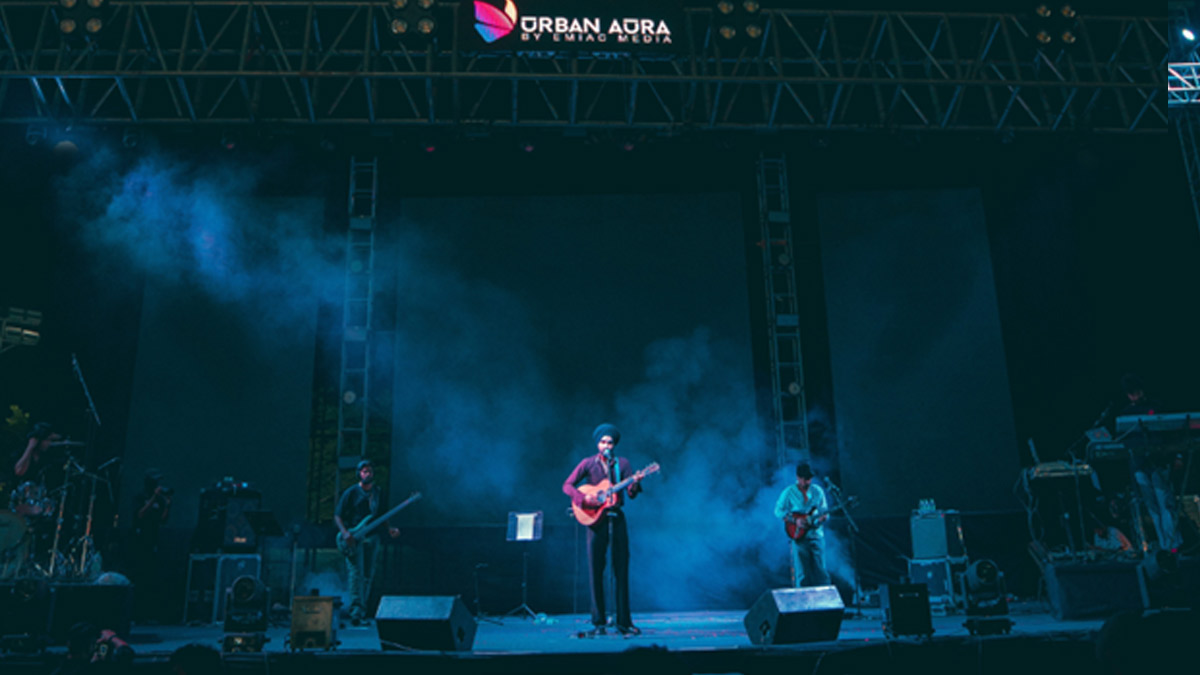
In a music industry that often rewards speed, spectacle, and instant recall, Navjot Ahuja’s journey feels refreshingly different. His story is not built on noise. It is built on patience, discipline, emotional honesty, and a quiet commitment to becoming better with every passing year. After 14 years of struggle, learning, performing, and writing, Navjot stands today as an artist whose success has not changed his centre. If anything, it has only made his purpose clearer.
For Navjot, music has never been about chasing fame alone. It has always been about expression. It is about writing more truthfully, singing more skillfully, understanding himself more deeply, and becoming a kinder human being in the process. That rare clarity is what gives his journey its beauty.
Where It All Began: A Writer Before a Singer
Indian singer and songwriter Navjot Ahuja’s musical journey began in the most familiar of places: school assemblies. But even then, what was growing inside him was not only the desire to sing. It was the need to write.
Long before he saw himself as a performer, he had already discovered the emotional release that writing offered him. For Navjot, words became the first true channel for feeling. Songwriting came before singing because writing was the only way he could let emotions flow through him fully. That inner pull shaped his artistic identity early on.
Like many young musicians, he sharpened his craft by creating renditions of popular songs.
Those experiments became his training ground. But the turning point came in 2012, when he wrote his first original song. That moment did not just mark the beginning of songwriting. It marked the beginning of self-definition.
A Calling He Did Not Chase, But Accepted
What makes the latest Indian singer-songwriter Navjot’s story especially compelling is the way he describes his relationship with music. He does not frame it as a career he aggressively pursued. In his own understanding, music was not something he chose. It was something that chose him.
There was a time when he imagined a very different future for himself. He wanted to become a successful engineer, like many young people shaped by ambition and conventional expectations. But life had a different script waiting for him. During his college years, around 2021, music entered his life professionally and began taking a firmer shape.
That shift was not driven by image-building or industry ambition. It came from acceptance. Navjot embraced the fact that music had claimed him in a way no other path could. That sense of surrender continues to define the artist he is today.
An Artist Guided by Instinct, Not Influence
Unlike many singers who speak openly about idols, icons, and musical role models, Navjot’s creative world is built differently. He does not believe his music comes from imitation or inherited influence. He listens inward.
He has never considered himself shaped by ideals in the traditional sense. In fact, he admits that he does not particularly enjoy listening to songs, especially his own. His decisions as a songwriter and singer come from instinct. He writes what feels right. He trusts what his inner voice tells him. He positions his music according to what he honestly believes in, not what trends demand.
That creative independence gives his work a distinct emotional sincerity. His songs do not feel calculated. They feel alive.
The Long Years of Invisible Struggle
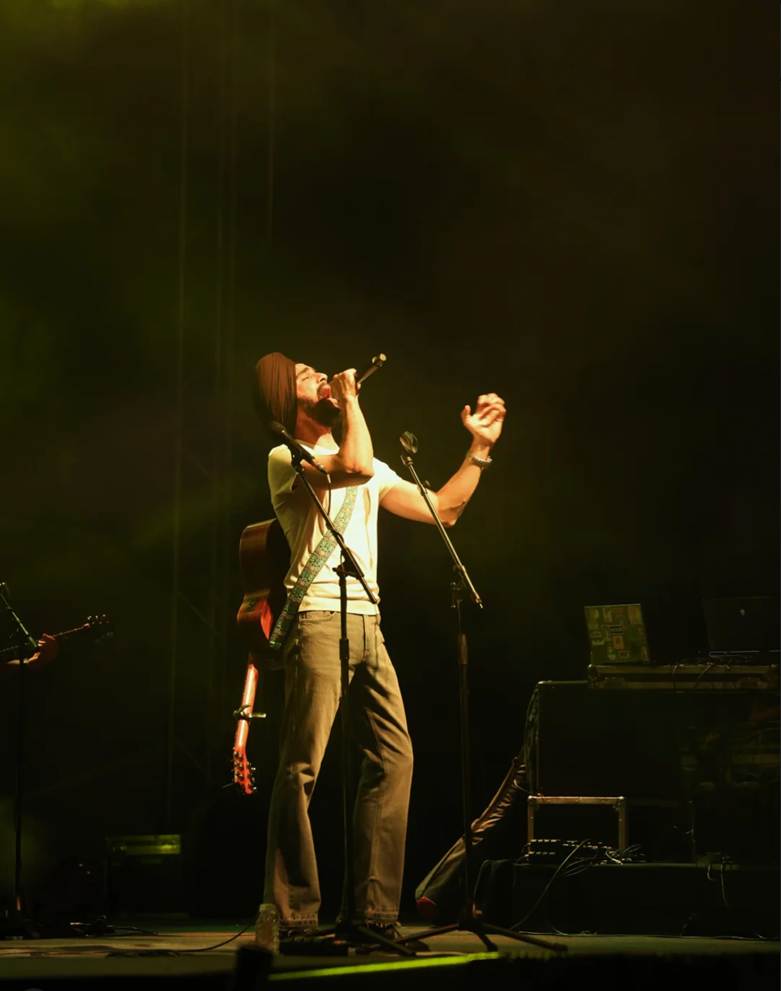
Every artist carries a chapter of struggle, and Navjot’s was long, demanding, and deeply formative. One of the biggest challenges he faced was building continuity as the best new indian singer songwriter in an era where musical collaboration is increasingly fluid.
For emerging singers, especially those trying to build with a band, consistency can be difficult. Instrumentalists today have more opportunities than ever to freelance and perform with multiple artists. While that growth is positive and well deserved, it can make things harder for singers who are still trying to establish a steady team and sound around their work.
For Navjot, one of the most difficult phases came during 2021 and 2022, when he was doing club shows almost every day. It was a period of relentless performance, but not always personal fulfillment. He was largely singing covers because clubs were not open to original songs that audiences did not yet know.
For a new Indian singer and songwriter, that can be a painful compromise. To perform constantly and still not have the freedom to share your own voice requires not just resilience, but restraint.
“Khat” and the Grace of Staying Unchanged
After 14 years of effort, Navjot’s new love song Khat became a defining milestone. Professionally, he acknowledges that the song changed how society viewed him as a musician. It strengthened his place in the public eye and altered his standing in meaningful ways.
Yet personally, he remains unchanged.
That is perhaps the most striking part of his story. Navjot says his routine is still the same. His calm is still the same. His writing process is still the same. He does not want success or failure to interfere with the purity of his art. For him, emotional detachment from public outcomes is essential because the moment an artist becomes too attached to validation, the writing begins to shift.
His joy comes not from numbers, but from the attempt. If he has tried to improve his skill today, if he has written his heart out more honestly than before, then he is at peace.
Growth, Not Glory, Remains the Real Goal
Even now, Navjot is not consumed by labels such as singles artist, performer, or digital success story. His focus remains deeply personal. He wants to sing better. He wants to play instruments better. He wants to understand himself more. And he wants to become a kinder person.
That is what makes Navjot Ahuja’s journey so moving. It is not simply the story of a musician finding recognition. It is the story of an artist who continues to grow inward, even as the world begins to look outward at him. In an age obsessed with applause, Navjot reminds us that the most meaningful success often begins in silence, honesty, and the courage to remain true to oneself.






