Hindi
Film Facilitation Guide issued for permission to shoot in India


NEW DELHI: A Film Facilitation Guide has been prepared by the Information and Broadcasting ministry as part of its single single-window Film Facilitation Unit for persons wanting permissions to shoot in India.
The guide is for both shooting of feature films/reality TV show and / or commercial TV serials by foreign film makers in India. The guide also has an application form and has detailed documents that should accompany the form. A demand draft of $ 225 (equivalent Indian Rupees) has also to be submitted.
The Film Facilitation Office (FFO) was set up with a view to promote and facilitate film shootings by foreign film makers in India. The functions of the Office would include acting as a facilitation point for the film producers in assisting them to get requisite permission, disseminate information on shooting locations and the facilities available with the Indian film industry for production/post production and work closely with state governments in assisting them to set up similar facilities. The FFO is housed in and operated by National Film Development Corporation office in Delhi.

The permission to shoot will normally not take more than three weeks to process. The permission letter issued by the government will facilitate permission from other local authorities, which may, in some cases, need to be obtained directly from these authorities.
In case any living personality is portrayed in the film as a character, the script has to be shared with that personality or his/her legal heirs, before beginning the shooting, and obtain a ‘No Objection’ to prevent any legal hassles or suits.
If the film is a co-production, a copy of the agreement between the company and the Indian party indicating the role of each party, its responsibilities and liabilities, must accompany the application.
If a film requires shooting in the scenic but sensitive areas of Jammu & Kashmir, the North Eastern India or border belts, and/ or Restricted/Protected Areas etc., the application will be considered for specific approval in consultation with the Home ministry. In such cases, more time may take for processing the application.
The details can be submitted also to the Indian missions in the country from where the filmmaker is applying, indicating intention to shoot in India. The mission will issue visas in the normal course.
An expert from a panel constituted by the FFO will scrutinize the script. If considered necessary, to facilitate the shooting, a liaison officer may be attached to a film shooting team. Where a liaison officer is so attached to the shooting team, the government will bear his expenses.
In exceptional cases, the filmmaker may need to show the completed film to a representative of the government, in India or in an Indian mission abroad, before its release anywhere in the world with a view to ensure that the film has been shot in accordance with the scrutinized script and that the film has nothing objectionable from the point of view of presentation of a correct and balanced perspective on the topic covered.
During the shooting of the film if it is felt that any material changes or deviation from the approved script are necessary, permission may be taken from FFO before shooting these scenes.
At the time of receiving permission for shooting in India from the FFO, an undertaking will also have to be submitted, the text of which is on the website mib.nic.in




Hindi
ZEE5, Applause announce new film Everybody Loves Sohrab Handa
Rajat Kapoor’s dark comedy thriller to stream on ZEE5 from April 10
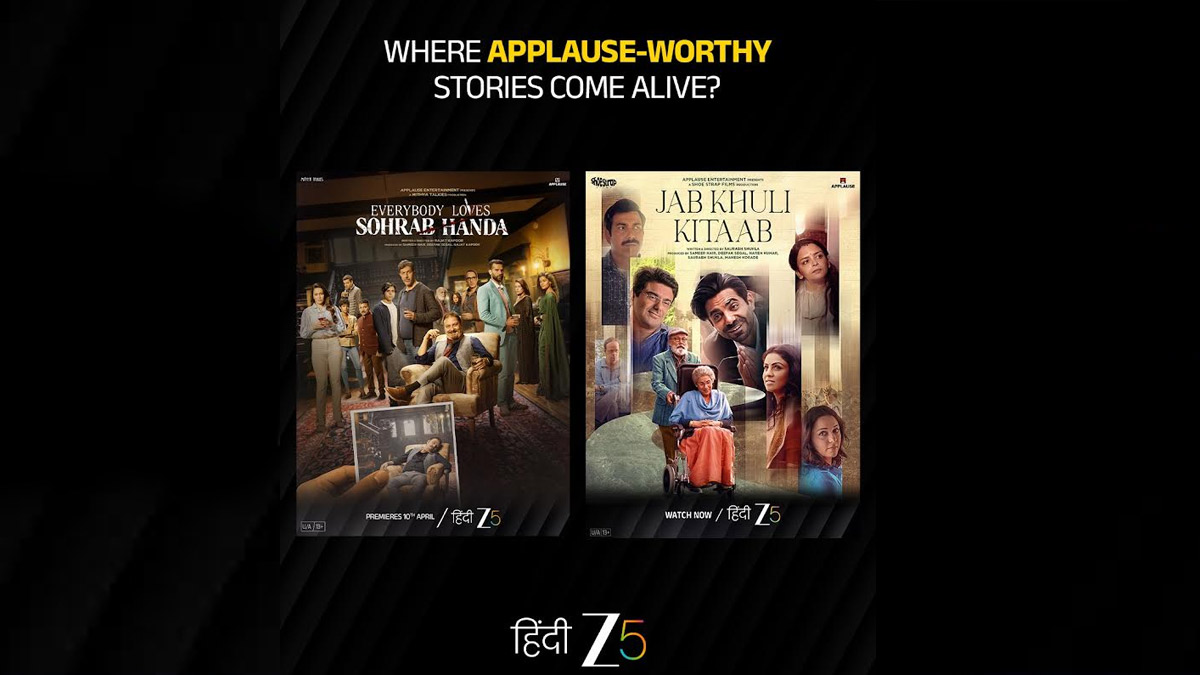
MUMBAI: ZEE5 and Applause Entertainment have announced their next direct-to-digital collaboration, Everybody Loves Sohrab Handa, a darkly comic whodunnit set to stream from April 10.
Produced in association with Mithya Talkies and written and directed by Rajat Kapoor, the film marks the latest addition to a growing slate of genre-diverse titles from the two partners. Their previous collaborations include dramas, psychological thrillers and dark comedies, with this outing leaning into a layered murder mystery.
The film features an ensemble cast including Vinay Pathak, Ranvir Shorey, Waluscha De Sousa and Saurabh Shukla, among others. The narrative promises a mix of satire, strained relationships and hidden tensions, inviting viewers to look beyond the crime to the dynamics that lead up to it.
ZEE5 business head hindi and chief channel officer Andtv Kaveri Das said, “Our collaboration with Applause Entertainment has been instrumental in building a strong slate with titles such as Bloody Brothers, Mithya and Jab Khuli Kitaab. Everybody Loves Sohrab Handa is a natural progression, aligning with our focus on genre-led content that resonates with audiences.”
Applause Entertainment business head movies Sunil Chainani said, “This collaboration with ZEE5 continues to stand out for its diversity of genres and narrative styles. Everybody Loves Sohrab Handa adds a sharp, darkly comic whodunnit to that mix, driven by Rajat Kapoor’s distinct voice.”
Sharing his creative approach, Rajat Kapoor said he was drawn to the emotional layers behind the genre. “I was interested not just in the mechanics of a whodunnit, but the emotional violence that precedes physical violence. These are people who appear close, yet carry unspoken tensions that eventually surface.”
The partnership between ZEE5 and Applause continues to build on a shared focus on distinctive storytelling, with each project exploring a different tone and genre.
With its mix of humour, tension and ensemble storytelling, the film aims to offer more than just a mystery. It promises a closer look at the secrets people keep, and the consequences when they finally come to light.






