Hindi
Ficci to commemorate 100 years of Indian cinema at MEBC

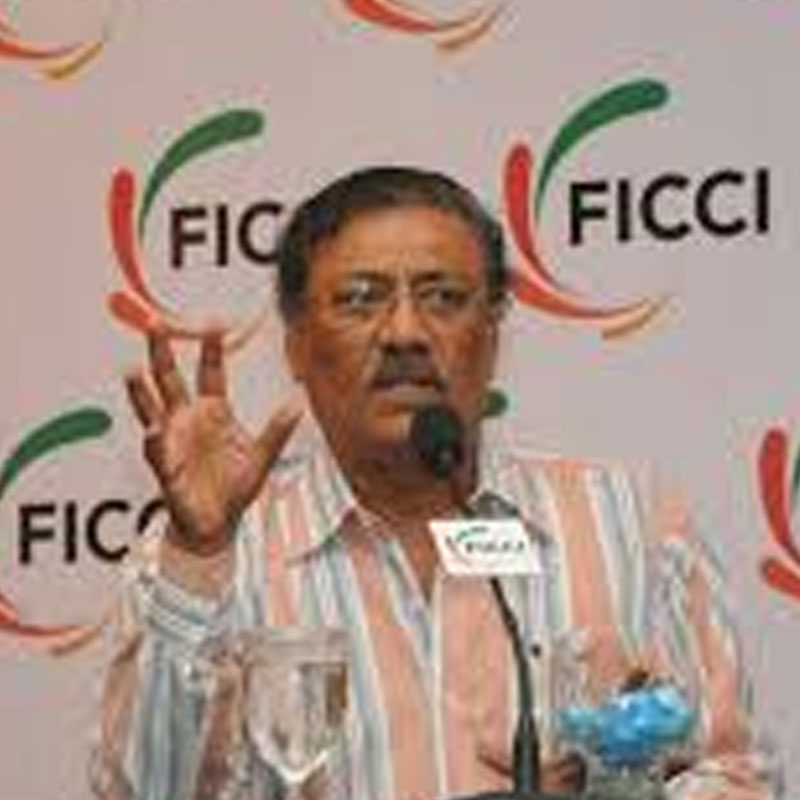
MUMBAI: The Federation of Indian Chambers of Commerce and Industry (Ficci) will commemorate the glorious and landmark occasion of 100 years of Indian cinema and deliberate upon the crucial and critical road ahead for films, broadcast digitization and content at the fourth edition of the annual Media and Entertainment Business Conclave (MEBC).
Apart from rapidly evolving into one of the leading platforms for the sector in the country, MEBC has sessions by industry stalwarts on subjects related to the entire canvas of the media and entertainment industry.
MEBC 2012 will bring about focused sessions on Digitization for the broadcast industry, celebrate 100 years of cinema with stalwarts like Kamal Haasan, Rajnikant, Mohanlal, Dileep, Jairam, Mamoothy and other stalwarts from the Indian industry. Oscar-award winning producer of The Lord of the Rings Trilogy, Barrie Osborne will also grace the occasion with his presence.

The production part of films will be looked at closely in workshops and masterclasses such “A 360 degree approach to producing a global film by Barrie Osborne.
A very important discussion on Making films and managing them effectively in the digital era will be discussed by leading filmmakers such as Santosh Sivan, Priyadarshan, film maker Unnikrishnan. And to give the digital perspective to film marketing for the first time they will be joined by the Asia Pacific Director for Content Partnerships in Google, Mr Gautam Anand.
The other sessions where hand-on approach to the nitty gritties of film-making and screenwriting will be focused upon are : VFX session on Making of Harry Potter and the Deathly Hallows, Master class on post production of Harry Potter and the Deathly Hallows (Part 2) will be conducted by Nicolas Aithadi, Renowned VFX Supervisor from Hollywood and Digital Filmmaking workshop with RED, which focuses on removing the myth of complexity from acquisition to post when shooting with RED through hands-on demos.
Special session titled on Digital Sound Technology titled ‘Story of Sound‘ will take the attendees through the Story of advancement in audio technology and will get a chance to hear from the Dolby cinema experts on the ‘Story of Sound‘ and the evolution of cinema sound from different sound formats to the new ground breaking Dolby Atmos.
The session will have sound experts like Resul Pokutty winner of Academy awards Making of Enthiran – The Robot by Srinivas Mohan will see renowned VFX supervisor taking attendees through the journey of the making of the complex graphics and special effects of Enthiran, will also cover the basics of Computer Graphics (CG) and 3D Stereoscopic vision (S3D) along with the history and concepts of 3D stereoscopy and usage areas and how CG is used in industries like Print, Education, Electronic Media (Film, TV, Mobile) etc.
For those wanting to learn the rudiments of the craft of screenplay writing from the experts in the field, Ficci has planned a 2 -day Screen writing workshop by Dr Kamal Haasan, Singeetam Srinivasa Rao, Rohan Sippy and Saurabh Shukla and Anurag Kashyap.
For an overall understanding of the sector, there will be exhaustive presentations on the Taxation and regulatory landscapes and an overview of the current state of the sector as detailed in the FICCI Deloitte report which will be released at the conclave.





Hindi
India’s telecom subscribers cross 1.32 billion in February 2026
Broadband base swells past 1.06 billion as Jio and Airtel tighten grip on the market.
MUMBAI: India’s telecom sector is ringing in steady growth once again adding millions of new connections every month while the race for broadband supremacy continues to heat up like a fiercely contested cricket match. According to the latest data released by the Telecom Regulatory Authority of India (TRAI) on 1 April 2026, the total telephone subscriber base in the country reached 1,321.31 million at the end of February 2026. This marked a net addition of 7.31 million subscribers during the month, translating into a monthly growth rate of 0.56 per cent.
Wireless subscribers (including mobile and Fixed Wireless Access) stood at 1,273.31 million, registering a net addition of 6.97 million and a growth rate of 0.55 per cent. Within this, urban wireless connections grew to 730.75 million (growth 0.70 per cent), while rural wireless subscribers reached 542.56 million (growth 0.35 per cent).
Wireline subscribers, though much smaller in scale, showed slightly faster growth. The total wireline base increased to 47.99 million, with a net addition of 0.34 million and a monthly growth rate of 0.70 per cent. Urban areas continued to dominate wireline connections with a share of 89.41 per cent.
Overall tele-density in India improved to 92.66 per cent. Urban tele-density stood at 150.68 per cent, while rural tele-density edged up to 60.02 per cent.
The broadband subscriber base crossed a significant milestone, reaching 1,059.05 million at the end of February 2026. This reflected a healthy net addition of 6.33 million subscribers and a monthly growth rate of 0.60 per cent from January’s figure of 1,052.72 million.
Segment-wise, mobile wireless access continued to drive the majority of growth with 996.52 million subscribers. Fixed Wireless Access (including 5G FWA) added 16.51 million, while wired broadband stood at 46.02 million.
Reliance Jio Infocomm Ltd. maintained its commanding lead with 519.64 million broadband subscribers. Bharti Airtel Ltd. followed with 364.14 million, Vodafone Idea Ltd. with 129.36 million, Bharat Sanchar Nigam Ltd. with 28.70 million, and Atria Convergence Technologies Ltd. with 2.38 million.
Together, these top five players command a massive 98.60 per cent share of the total broadband market.
In the wireless (mobile) segment, private operators continued to dominate with 92.59 per cent market share, leaving public sector undertakings (BSNL and MTNL) with just 7.41 per cent.
Out of the total 1,257.29 million wireless (mobile) subscribers, 1,177.60 million were active on the peak Visitor Location Register (VLR) date, representing an impressive 93.66 per cent activity rate. Bharti Airtel led in this metric with 99.42 per cent of its subscribers active.
Meanwhile, 14.47 million subscribers submitted requests for Mobile Number Portability (MNP) in February, indicating healthy competition and customer churn across zones.
While urban areas still lead in absolute numbers, rural connectivity is slowly catching up. Rural wireless tele-density stood at 59.46 per cent, compared with the much higher urban figure of 142.32 per cent.
Fixed Wireless Access using 5G technology also showed promising traction, growing to 11.93 million subscribers. Reliance Jio and Bharti Airtel are the primary players driving this segment.
The data paints a picture of a maturing yet still rapidly expanding telecom ecosystem. With total telephone subscribers now well past the 1.32 billion mark and broadband users comfortably above 1.06 billion, India continues to solidify its position as one of the world’s largest and most dynamic digital markets.
From bustling city streets to remote villages, more Indians are staying connected than ever before proving that when it comes to telecom, the country’s appetite for growth shows no signs of hanging up anytime soon.






