Event Coverage
FICCI FRAMES: Legitimate screens, stricter laws, best practices for IPR

MUMBAI: A National Intellectual Property Rights policy is a healthy prescription for the creative industry that seeks to provide an enabling framework for monetisation, protection and enforcement of copyright, but this can only succeed if there is robust law enforcement in addition to more punitive provisions.
This was the gist of “Own, Convert and Protect Intellectual Property as a Driver of Innovation and Growth” at the FICCI FRAMES 2017.
It is equally necessary for creative minds to understand their intellectual property rights globally, and constant amendment of relevant laws, apart from better co-ordination among all stakeholders in the media ecosystem.

Solstrat Solution advisor S Rama Rao in his special address that set the tone of the discussion explained the difference between tangible and intangible assets such as intellectual property, which, he said was a human right with legal entitlement. He quoted Article 27 Para 3 of the United Nations Charter which underlined the significance of IP.
However practically, the creative industry’s on lack of understanding of the value of IPR combined with inadequate enforcement mechanism and an inconsistent regulatory framework that stands in the way of the industry’s growth aspirations.
Saikrishna & Associates senior partner Ameet Datta moderated a discussion where four participants gave their views on different aspects of IPR in India and globally.
Among the leading lights of the industry who elucidated on the blueprint for translating policy into practice, the Paris-based International Federation of Film Producers Associations (FIAPF) chief representative Benoit Ginistry said a robust law-enforcement system needed to be in place to ensure intellectual property rights are protected.
Lauding the Indian IPR laws, he said it was a positive step. Globally, he said, IP laws needed to be updated. Ratification and implementation of the laws was important, and technical performance measures (TPM) needed to be secured, he said.
Ginistry suggested that one needed to protect investments and licences, and one needs to go beyond the copyright laws. India must join anti-piracy groups and campaigns in Europe, Japan and South Korea.
Whether administrative measure or enforcement was vital to control IPR violation because of proliferation of streaming sites, MPA V-P Asia-Pacific Hank Baker half-jokingly commented that the world today does not allow the creator the leisure of creating and sharing creativity at will. “People are inclined to steal somebody else’s work,” Baker regretted.
Appreciating the Indian government efforts and laws to protect IP, Baker said that around 42 countries were following “Best Practices” (also including site blocking and watermarking) in the creation and protection of IP. “The shelf life of a movie is a few weeks, but as soon as it is released, a cat and mouse game begins,” Baker complained. Decrying the existence of a transnational pirate network, he said that the ecosystem and the legal framework must be prepared to deal with any IP infringement.
Baker was sad that the industry had never been as vulnerable as it was now. Censorship and limited number of screens to showcase new films were the other impediments. “People want to see when they want to see – no matter what,” Baker said matter-of-factly. There needs to be wider approach to support the industry.
Reiterating the United States’s US$ 250 billion annual loss owing to violations, US consul-general to Mumbai Thomas L Vajda said IPR was a huge priority as the world was moving to a knowledge economy. Giving information about the formation of an IP working group two years ago, Vajda said US government was working with a number of state governments in India including Maharashtra towards protection of IPs. For the sake of IP protection, he said co-operation of different sectors was needed. “It’s not just the role of police to help protect IPs, different ministries must be involved in protect original content,” Vajda said.
Vajda supported the ideas of spurring more innovation, protecting ideas and promoting more investments, but “a genuine intent is important.”
Speaking about the protection of music IPs, Sony Music Entertainment president – India and Middle East Shridhar Subramaniam said IP laws had been gradually tweaked and a lot of finesse achieved. Although happy about the national policy and amendment to copyright laws in the last couple of years, Subramaniam said he was unhappy about the (monetary) value loss owing to violations by hiding behind safe harbour laws. The primary intent of the laws was to protect the interest of the creator, he added.
Effectively checking piracy was a court-driven process, he said. Other measures that were being taken were blocking pirate sites and taking down rogue apps, Subramaniam said.
The Sony Music executive recommended expanding the scope of licencing vis-à-vis radio, broadcasting and internet. He suggested trying and passing on benefits of innovation to the users. National registry and documentation help grow businesses, he felt, but lamented that there was no control over piracy originating from neighbouring markets.
Music was tech-enabled consumption, Subramanian said, adding that there was a need to foster an environment of licencing. “Our input cost is not regulated,” he said. Although music legitimately belongs to the rights holders, some were using methods disguised as innovation. While ranking the federal states, Subramaniam opined, one could consider IP-friendliness as one of the primary criteria for selection.







Event Coverage
Anime India announces Amazon MX Player as co-presenting partner for Anime India Kolkata 2026
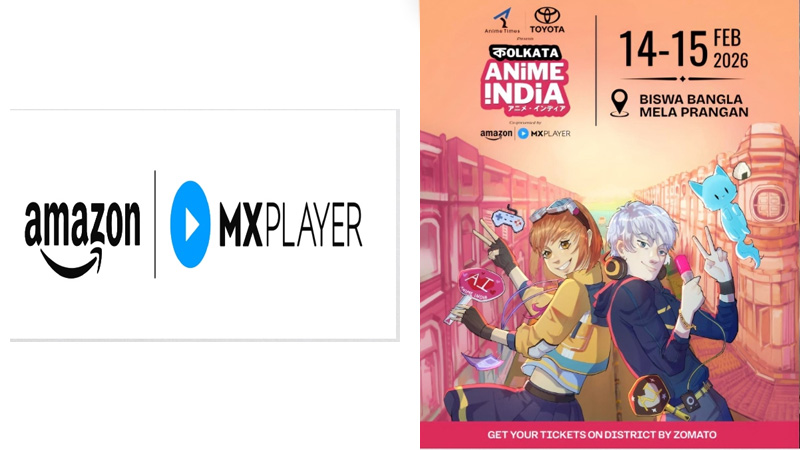
MUMBAI: Riding high on the success of its blockbuster Mumbai debut, Anime India is accelerating its nationwide expansion with the announcement of Amazon MX Player as the co-presenting partner for Anime India Kolkata. The partnership marks a significant step forward in the festival’s mission to deliver large-scale, accessible, and fan-first anime experiences across the country.
Scheduled for 14 and 15 February 2026 at the iconic Biswa Bangla Mela Prangan, Anime India Kolkata will launch the first regional chapter of what is set to be a year-long, multi-city tour. As the curtain-raiser for the 2026 circuit, the Kolkata edition aims to fuse the energy of global Japanese pop culture with India’s fast-growing community of anime, manga, and pop-culture fans.
A household name in digital entertainment, Amazon MX Player brings unmatched reach and cultural relevance to the Anime India platform. With its expanding focus on anime and youth-driven content, Amazon MX Player’s involvement as co-presenting partner reinforces Anime India’s vision of making anime culture more inclusive breaking barriers of language, geography, and accessibility to connect with fans nationwide.
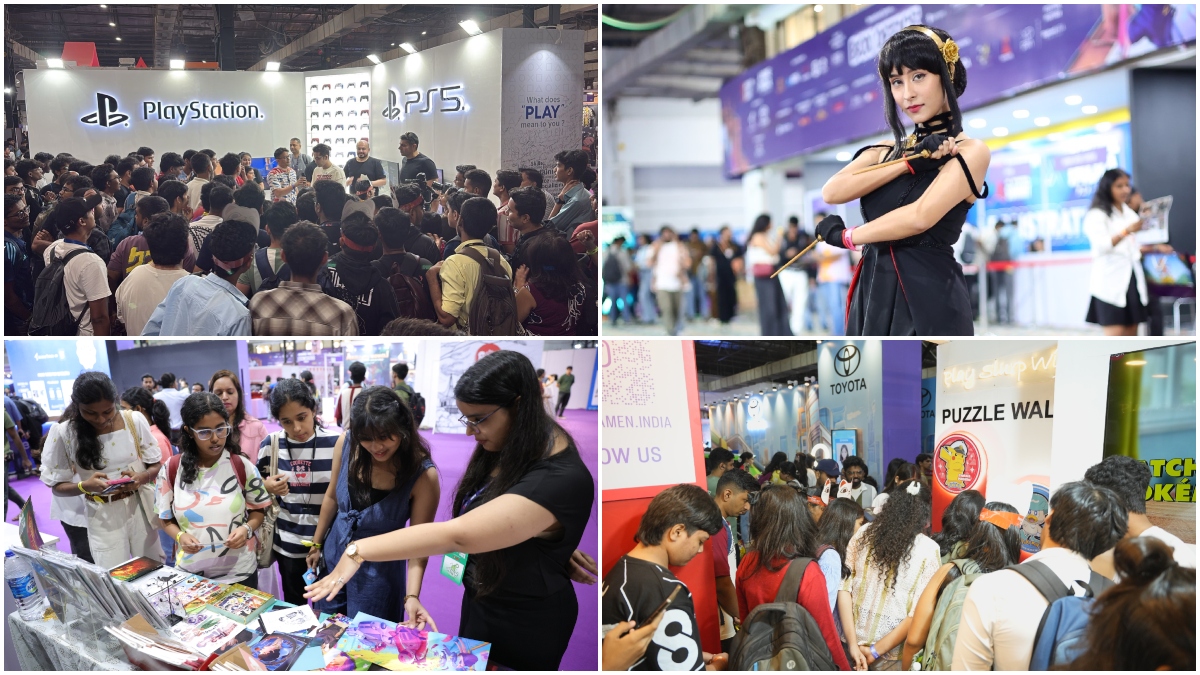
Anime India Kolkata 2026 will showcase cosplay competitions, interactive zones led by the Indian Gunpla Community, India-39 Vocaloid Community, The Japan Curry, and Adda-o-Otaku by The Otaku Guild. Fans can join tournaments across fighting games, Pokémon VGC, and more. Acclaimed Japanese director Susumu Mitsunaka (Haikyu!!) will attend as guest of honour, appearing in panels and live sessions. Positioned as an immersive celebration of fan culture and industry collaboration, the Kolkata edition marks the beginning of Anime India’s nationwide expansion.
Sharing their perspective on the partnership, Amazon MX Player director Aruna Daryanani expressed, “Anime in India has evolved from a niche interest into a mainstream cultural movement, driven by an increasingly engaged and passionate fanbase. At Amazon MX Player, our focus is on expanding access by bringing anime to audiences across the country for free and in multiple local languages. Our association with Anime India reflects our commitment to supporting the growth of anime in India and deepening connections with fans, while continuing to build Amazon MX Player as a trusted destination for free, high-quality entertainment.”
“Anime India Kolkata is a celebration of how anime has grown beyond entertainment into a powerful cultural and creative force. By bringing fans, creators, and industry leaders onto one shared platform, the festival is helping define the future of pop culture in India,” said Anime India co-founder and director Neha Mehta.
The debut edition of Anime India 2025 in Mumbai attracted over 29,000 fans, quickly cementing its status as a landmark celebration of anime and Japanese pop culture. Riding on this overwhelming response, the Kolkata chapter is projected to draw more than 40,000 visitors across two days, positioning it as one of the biggest anime conventions ever held in eastern India.
Anime India is focused on bringing together fans from across the country to create a truly pan-India celebration of anime, manga, cosplay, gaming, and Japanese culture. With plans to expand into four key metropolitan hubs in 2026—east (Kolkata), north (Delhi), west (Mumbai), and south (Hyderabad)—the festival seeks to deliver globally benchmarked experiences while supporting and uplifting creators, artists, and fan communities throughout India.








