GECs
Ficci-FPGI seminar discusses freedom of trade in films


MUMBAI: The global entertainment industry generates $1.2 trillion revenue every year. However, the Indian industry – which contributes in a big way to the global market – generates only $5 billion revenue.
Why is our industry constantly in crisis? Most importantly, how can it get more dynamic and become a part of the world platform?
To seek answers to these questions among others, Ficci (Federation of Indian Chambers of Commerce and Industry) and FPGI (Film Producers Guild of India) together organised a seminar ‘Freedom to Trade in the Changing Business Environment’ as a part of their Frames 2004 Knowledge Series in Mumbai today.
The seminar attempted to delineate the various rights of a film which can lead to multiple revenue streams in the industry. It also examined the role of associations in the industry.

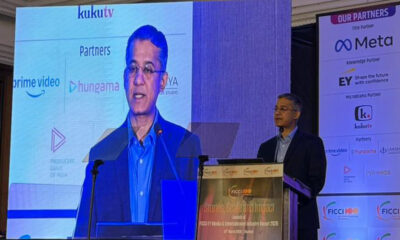
In his introductory speech, Ficci chairman Yash Chopra said, “While releasing a film, though the producer should have complete rights on revenue streams that can be generated from it, the associations concerned often put bindings on him.” Chopra termed these restrictions as being against the spirit of ‘free trade’.
Another aspect highlighted during the discussions was the lack of planning in the film industry. The mentality of the distributors, producers and exhibitors pulling each other down – “the crab mentality” as Ficci’s co-chairman Kunal Dasgupta put it – has to change, if the entertainment industry has to rise, it was pointed out.
While discussing the ‘Synergy between television and film industry’ Dasgupta envisaged a future where
“movies won’t be restrained to cinema halls. Plasma TV is becoming as cheap as Rs 45,000. With that coming around, home viewing will be a different experience.” Dasgupta was of the view that free trade in the film industry is no more an option but is imperative. Releasing every film on pay per TV, DVD, Pay TV and cable should become legal, he maintained.
Predicting a television and broadband revolution in the near future, Dasgupta opined, “Films should now be dealt with and marketed on television like other TV soaps or even consumer products.” Cross-media promotion is becoming a very important part of business, he said.
Summing up, FPGI president Amit Khanna stressed on some issues that he said needed addressing on a war footing:
* Geographical dispensation for industry
* Freedom of trade: People contributing most to the kitty should lay down rules
* Full fledge marketing initiative should be encouraged
* Interaction between the serious players of the business should increase.






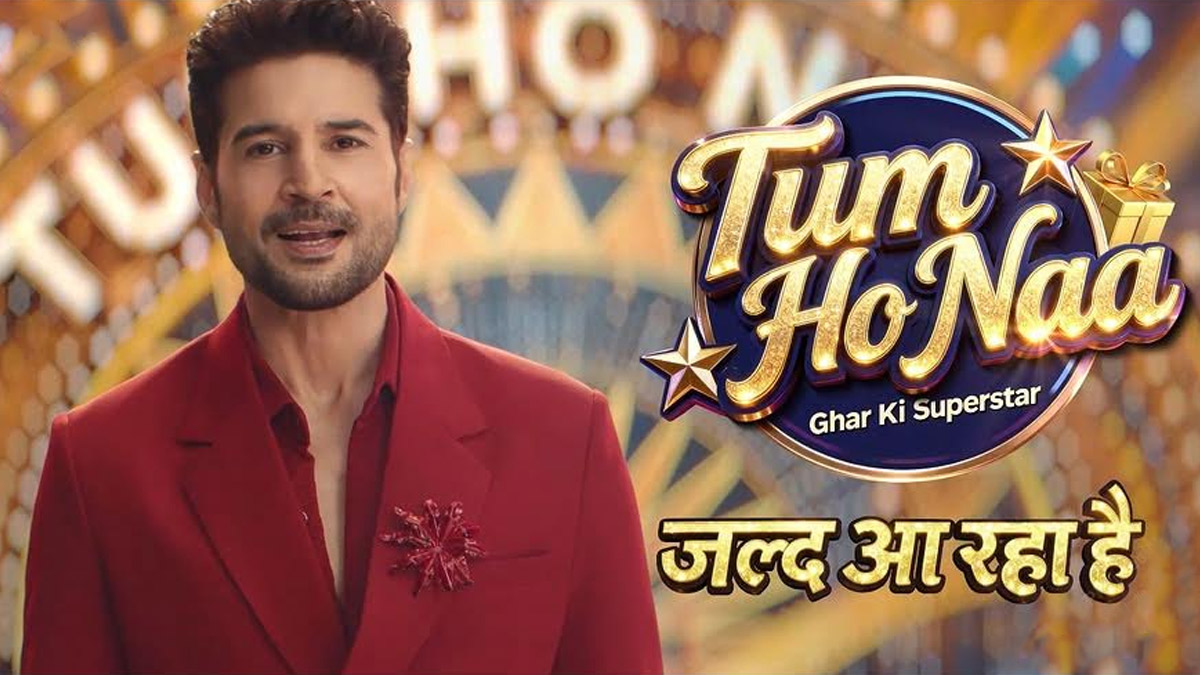
MUMBAI: Lights, camera… connection because this time, the game isn’t just about winning, it’s about who’s with you. Sony Pictures Networks India is gearing up to launch a new reality game show, Tum Ho Naa, expanding its unscripted slate with a format that promises both emotion and engagement.
The show will premiere soon on Sony Entertainment Television and stream on Sony LIV, with Rajeev Khandelwal stepping in as host. Known for his measured screen presence and selective choices, Khandelwal’s return to television adds a layer of familiarity and credibility to the upcoming format.
While specific details of the gameplay remain under wraps, the positioning suggests a reality format that leans as much on emotional resonance as it does on competition, an increasingly popular blend in Indian television, where audiences are gravitating towards content that offers both stakes and storytelling.
Khandelwal, reflecting on his return, noted that his choices have often been guided by instinct rather than convention, describing Tum Ho Naa as a project that feels “close to the heart”. His association also signals Sony’s continued focus on anchoring new formats with recognisable faces who bring both relatability and depth.
The launch comes at a time when broadcasters are doubling down on original non-fiction formats to drive appointment viewing, even as digital platforms expand parallel reach. By placing the show across both linear television and OTT, Sony appears to be aiming for a dual-audience strategy capturing traditional viewers while engaging digital-first consumers.
As the countdown to premiere begins, Tum Ho Naa positions itself not just as another game show, but as a reminder that sometimes, the biggest prize on screen isn’t the jackpot, it’s the journey shared along the way.






