News Broadcasting
Ficci conference ends


The Ficci’s International Conference on The Business of Entertainment ended today with a concluding speech by Tapan Sikdar, the Minister of Communications.
Earlier in the day, discussions were held on the content aspect of the entertainment industry. The session was headed by the noted film maker Shyam Benegal. The next session covered the film production and marketing, and the international status and presence of Indian films abroad. The internationally acclaimed director and the maker of the Oscar winning film “Elizabeth” spoke about issues involved about Indian films in the international market. Before this Harish Thawani, chief of Nimbus Communications projected his views about the television and film sector. He displayed his views about importance of synergy between the television and the film industry. The session enlightened the audience about the need of marketing of Indian films and globalising the industry.
The post lunch session was about the music industry in India. It covered issues from piracy, internet, IPR, radio and the general scenario of music industry in India. The concluding session was about convergence and the regulatory framework to enable it in India. The session was headed by the Nasscom chief Dewang Mehta and the panel of speakers included Sony Entertainment Television chief Kunal Dasgupta, MTV India chief Alex Kuruvilla, MD Modi Entertainment Network MD Ajay Nijawhan and UTV head Ronnie Screwvala. The session demanded a clear and comprehensive regulatory policy for the success of convergence in India which is a entertainment software heaven.

The effort by the Ficci was quite admirable as it enlightened quite a few and brought the whole entertainment industry together.






News Broadcasting
Kamlesh Singh receives Haldi Ghati Award from MMCF
India Today Group editor honoured for three decades of journalism at Udaipur ceremony.
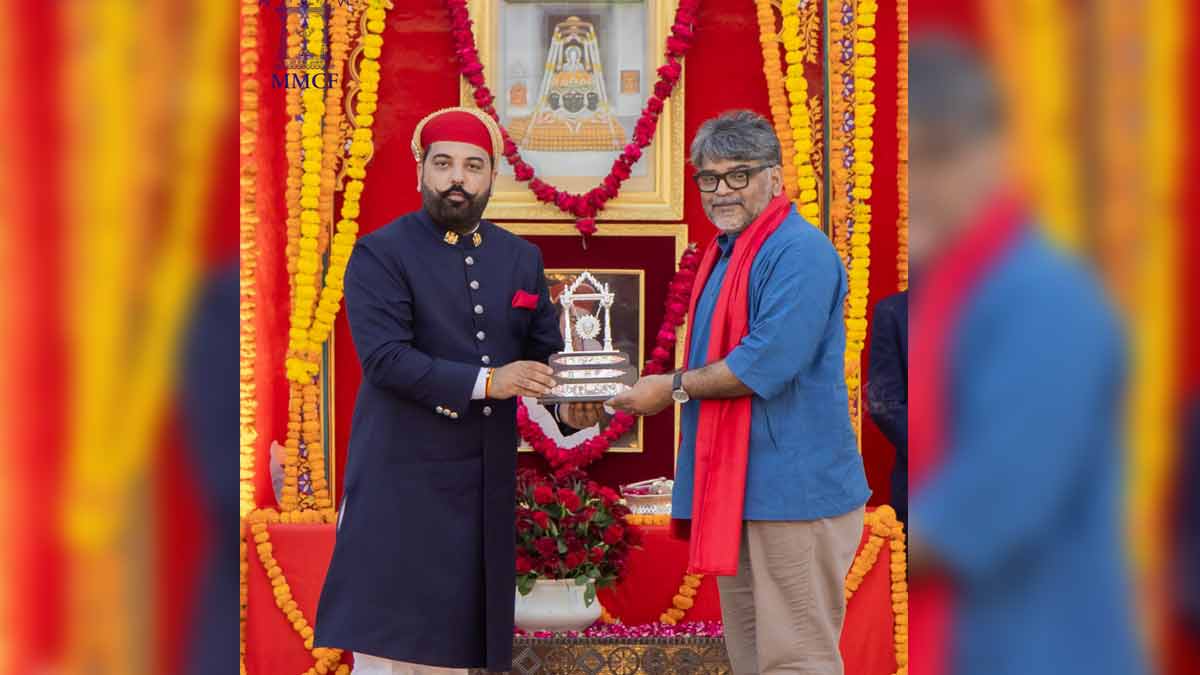
MUMBAI- Kamlesh Singh just turned a lifetime of sharp words into a shiny shield because when journalism wakes up a society, even the Maharana of Mewar wants to pin a medal on it.
The Maharana of Mewar Charitable Foundation (MMCF) conferred its prestigious Haldi Ghati Award on Kamlesh Singh, a senior editor at the India Today Group, during a ceremony in Udaipur on 15 March 2026. The national award, instituted in 1981-82, recognises “work of permanent value that initiates an awakening in society through the medium of journalism.”
Singh, who leads several editorial initiatives including Aaj Tak Radio, the Teen Taal community and The Lallantop, was presented the honour by Lakshyaraj Singh Mewar, Managing Trustee of MMCF. The citation highlighted his three decades of contributions to Indian media, innovations in digital journalism, mentoring young reporters, and his popular podcast persona “Tau” on Teen Taal, which fosters thoughtful public discourse.
The Haldi Ghati Award, named after the historic Battle of Haldighati symbolising valour and resilience, is one of four national awards given annually by MMCF. Past recipients include Tavleen Singh, Piyush Pandey and Raj Chengappa.
Other honourees this year included Padma Vibhushan Pt Hari Prasad Chaurasia, Vedamurti Devvrat Rekhe, Treeman of India Marimuthu Yoganathan, Vir Chakra Capt Rizwan Malik, and US-based researcher Molly Emma Aitken, who received the Colonel James Tod Award for contributions to understanding Mewar’s spirit and values.
In an era where headlines often shout louder than substance, the MMCF quietly reminded everyone that real journalism isn’t about noise, it’s about the quiet, persistent work that stirs society awake, one thoughtful story at a time.







