Hindi
FFI decides to boycott the IFFI 2012 for being ignored at every stage


New Delhi: The Film Federation of India, the apex body of the film industry, has decided to boycott all activities of the International Film Festival of India in Goa in November to protest it being by-passed and not being called to any Steering and other committee meetings.
In fact, it was informed about the Industry Coordination Committee meeting as late as August-end by which time some major discussions that are normally taken at this meeting had already been taken by the Directorate of Film Festivals and IFFI Secretariat.
FFI at its annual general meeting late last week in Mumbai where members from all over India were present unanimously decided that the federation will not participate in any of the activities of IFFI.
FFI has always been an essential component of the Steering Committee and its members actively involved in various other committees and sub-committees such as theatre, technical, hospitality and others. But this has not happened in recent years and ‘FFI can only assume that either the committees have been discontinued or FFI has been kept out of them.‘

According to FFI President Vinod Lamba, ‘it is now learnt that DFF has already taken all major decisions without calling for any joint meeting, or holding any discussions with the FFI; or even informing FFI.‘
In fact, in 2011, the time-honoured tradition of the vote of thanks being delivered by the FFI President at the IFFI opening had been done away with at the level of the DFF ‘with no proper and timely information being conveyed formally to the Information & Broadcasting Ministry or FFI.‘
Lamba added, ‘While this callous misadventure may appear to have been nipped in the bud and status quo restored, the deliberate mishandling of affairs at the inauguration event itself conveyed a greater affront to the persona and position of the FFI President, prompting the Minister (Mrs Ambika Soni) herself to rush on stage to take corrective action.‘
The IFFI by its very tenets is a festival held jointly by the government and the Indian film industry, and FFI being the apex body of the industry ‘has been playing their part with total sincerity and efficiency.‘
However, the same cannot be said of the Directorate of Film Festivals which has been persistently neglecting and slighting the FFI, in all matters that were once decided jointly.
Talking to indiantelevision.com, Lamba added that despite an assurance of remedial action, it seems that the insensitiveness seems to have gathered strength; instead of involving the FFI and through it the industry from the early stages, it seems that the DFF/IFFI Secretariat is bent on sidelining the industry in the major decision making processes, reaching out to it only in times of dire need of correcting embarrassing foul ups. At the same time, he stressed that FFI has never shied away from providing assistance.
Expressing surprise at the decision, IFFI Director Shankar Mohan told indiantelevision.com that he had been in constant touch with the film industry and it was erroneous to say they had been kept out. There has been constant coordination with the FFI, the Film and Television Producers Guild, and the Confederation of Cine Employees.
He added that only two committees had been formed this year – the Steering Committee and a Technical Committee.
He said he had been personally trying for the last month to arrange a meeting of the Industry Coordination Committee, but had failed to get a response.


Hindi
Zee5 and Applause Entertainment team up for whodunnit ‘Everybody Loves Sohrab Handa’
Rajat Kapoor directs star-studded murder mystery streaming from 10 April.
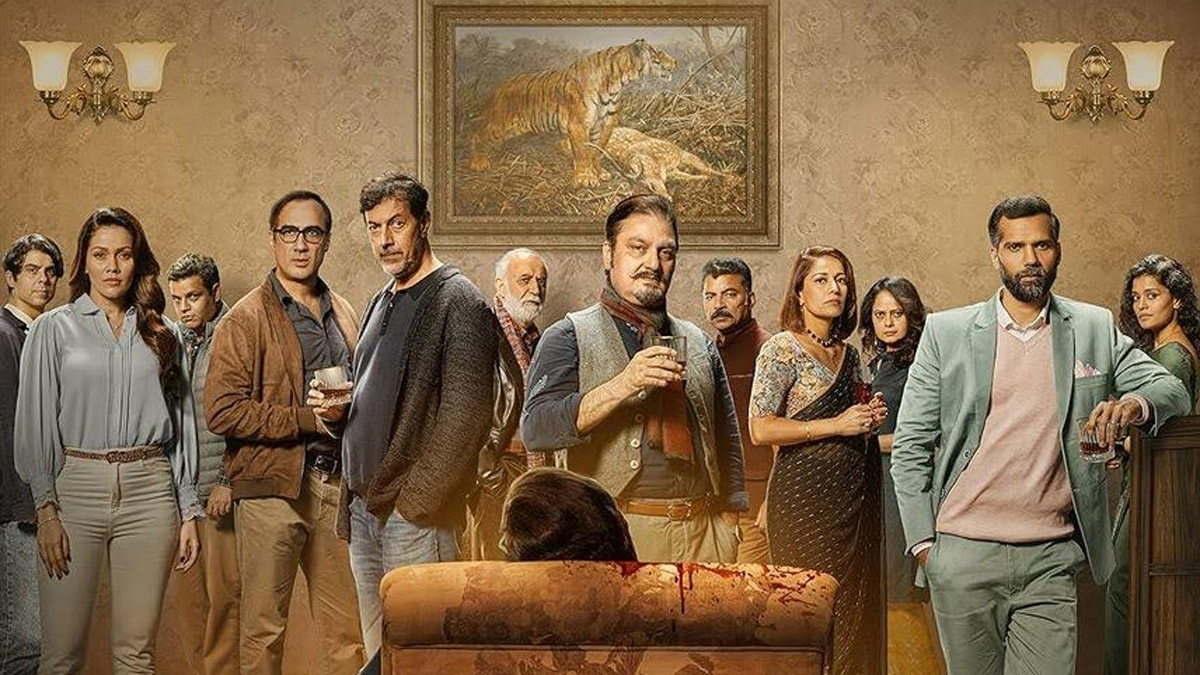
MUMBAI: Zee5 is serving up another killer collaboration and this time, the murder mystery comes with a generous side of dark humour and family dysfunction. The streaming platform has partnered with Applause Entertainment and Mithya Talkies to bring Everybody Loves Sohrab Handa, a fresh, twisted whodunnit written and directed by acclaimed filmmaker and actor Rajat Kapoor. The film will stream exclusively on Hindi Zee5 from 10 April.
The movie reimagines the classic murder mystery genre with a contemporary, darkly comic edge. It revolves around a group of friends and family who smile, drink, and celebrate together until the silence snaps and long-buried secrets spill out. The stellar ensemble cast includes Vinay Pathak, Ranvir Shorey, Waluscha De Sousa, Saurabh Shukla, Chandrachoor Rai, Neil Bhoopalam, Koel Purie, Palomi Ghosh, and Rajat Kapoor himself.
This latest offering continues the successful partnership between Zee5 and Applause Entertainment, which has previously delivered diverse hits such as Mithya, Bloody Brothers, and Jab Khuli Kitaab.
&TV Business Head of hindi Zee5 and chief channel officer Kaveri Das said, “Our collaboration with Applause Entertainment has consistently delivered distinct, high-impact storytelling. Everybody Loves Sohrab Handa is a natural progression, reinforcing our focus on genre-led content with a compelling whodunnit premise and a strong ensemble cast.”
Applause Entertainment business head for movies Sunil Chainani added, “This film adds yet another compelling layer to our slate with Rajat Kapoor’s unmistakable voice.”
Rajat Kapoor shared, “What interested me was not just the mechanics of a whodunnit, but the emotional violence that precedes physical violence. These are people who smile at each other, but there’s so much that is not said.”
The film promises razor-sharp writing, layered performances, and simmering tension, inviting viewers not just to solve the crime but to unravel the complex relationships at its heart.
If you love a good murder mystery served with wit and emotional depth, Everybody Loves Sohrab Handa looks set to be your next addictive watch. Mark your calendars, the whodunnit drops on Hindi Zee5 from 10 April.






