Hindi
Ferrari Ki Sawaari is a rocky ride

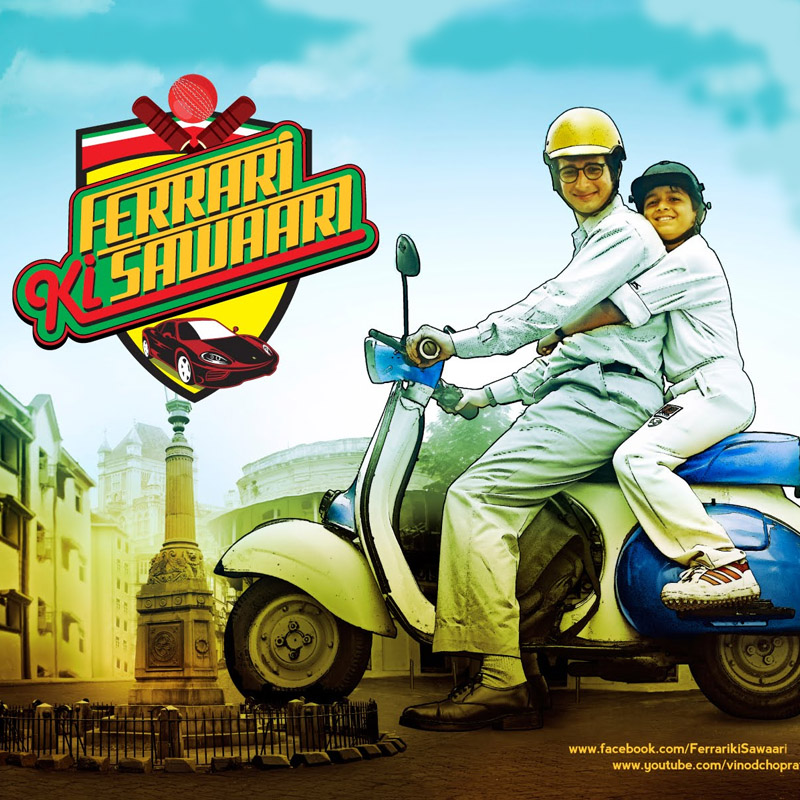
MUMBAI: When it comes to a sports film in India, the theme has to be ‘against all odds‘ and ‘the triumph of the underdog‘; people are always with the underdog. But Ferrari Ki Sawaari lingers somewhere between a children‘s film and a charade.
 |
|
Producer: Vidhu Vinod Chopra. |
It is about a young lad, Ritwik Sahore, who has the potential to become the next superstar of cricket, his determined father, Sharman Joshi, who is willing to invest his last rupee to encourage his son, and the grandfather, Boman Irani, who hates anything cricket. There is no angle provided for a female actor in the story.

Sharman Joshi, as he proudly introduces himself, is the head clerk at the RTO in Mumbai. He is so honest he finds a cop to pay the fine when he has to break a signal and nobody has seen him do it. He often helps the traffic police clear traffic jams. His son, Ritwik Sahore, loves cricket and also shows great potential to make it big someday. Sharman spares no efforts to get what his son needs in pursuit of cricket. That is, when he watches his son checking a bat out at a sport shop and putting it back after seeing its price tag, Sharman puts together the money from all his hiding places, including breaking the piggy bank. The bat cost Rs 2800 and he manages to buy it but then comes an impossible demand. Ritwik has been chosen for a coaching camp at Lords and the fees amount to Rs 150,000.
Boman Irani is no help as he has a past related to cricket which is not very pleasant and, as such, he does not let his son Sharman take up the game and also discourages his grandson from it. Boman Irani, it turns out, was a Mumbai Ranji level player along with Paresh Rawal. Both had merits to make it in the Indian team but there was place only for one of them. On the day of selection, Rawal plays dirty and smashes Irani‘s specs. Unable to spot a bouncer, Irani loses his sight in one eye. Since then, he has been sulking, spending his days on the sofa in front of a TV and munching peanuts. (Somehow, he has managed to marry and produce a child in Sharman in the meantime.)
Just when Sharman is mulling over the problem of raising Rs 150,000, in walks Seema Bhargava, an as- loud-as-they-come Punjabi wedding planner. One of her clients is a municipal corporator who wants his son‘s baraat to ride in a Ferrari instead of the traditional horse. The car he wants to ride in is one piece in Mumbai and is owned by Sachin Tendulkar. If Sharman manages to borrow Tendulkar‘s Ferrari using Boman Irani‘s contacts, there is Rs 150,000 in it for him. Sharman reaches Tendulkar‘s apartment and from behind the door he is handed the car keys. It seems he has been mistaken for the car wash guy and handed the key. Tendulkar has a number of cars but it looks like Ferrari is the only he cares to wash!
Sharman drives the car away to make his Rs 150,000 but leaves two very worried men behind, Tendulkar‘s domestic help, Aakash Dabhade, and the building watchman, Deepak Shirke. The duo has a few hours to trace the Ferrari before its owner arrives from his trip. As the two go around looking for the car on Shirke‘s moped they account for some funny moments in the mishmash that follows.
Meanwhile, Sharman Joshi has managed to make Boman Irani come to terms with the fact that Ritwik is extremely gifted. He bowls to Ritwik and sees his talent for himself. He now joins the efforts to see his grandson through to his Lords trip. The money is lost and then found again, the corporator‘s son wants to get even with his father for always showing him a gun, and so on: such things carry on in an attempt to make Ferrari Ki Sawaari funny with little success. Eventually, the film drags. Ideally the duration should have been 90 to 100 minutes instead of the 139-minute running time it now has.
Ferrari Ki Sawaari is a one track story about a father and son and the latter‘s ambition. Side tracks don‘t make up for the sagging script. There is no female lead in the film; Sharman is a widower tending to his son as well as father. There is no scope for romance or music that may stay with a viewer. Direction is not up the mark with too many loose ends; one can‘t make things brighter by lighting up an entire Parsi colony for Christmas if the spark is missing in the content.
Editing is shoddy. Sharman Joshi comes up with a sincere performance though his role offers little variations. Boman Irani, made up to look a frustrated loser, is his usual self but without any funny lines. Ritwik Sahore is the best of the lot, natural all through. Satyadeep Mishra as the coach is good. Seema Bhargava as the loud Punjabi is rank bad. Aakash Dabhade and Deepak Shirke are very good. Vijay Nikam and Nilesh Divekar are good but with sectional appeal as they play typical rogue family. Paresh Rawal in a cameo is okay. Vidya Balan‘s item number lacks in both, visual as well as audio appeal.
Ferrari Ki Sawaari is a funny film that fails to entertain; it is neither a fully children‘s film nor family fare. It faces a tough time at the box office.






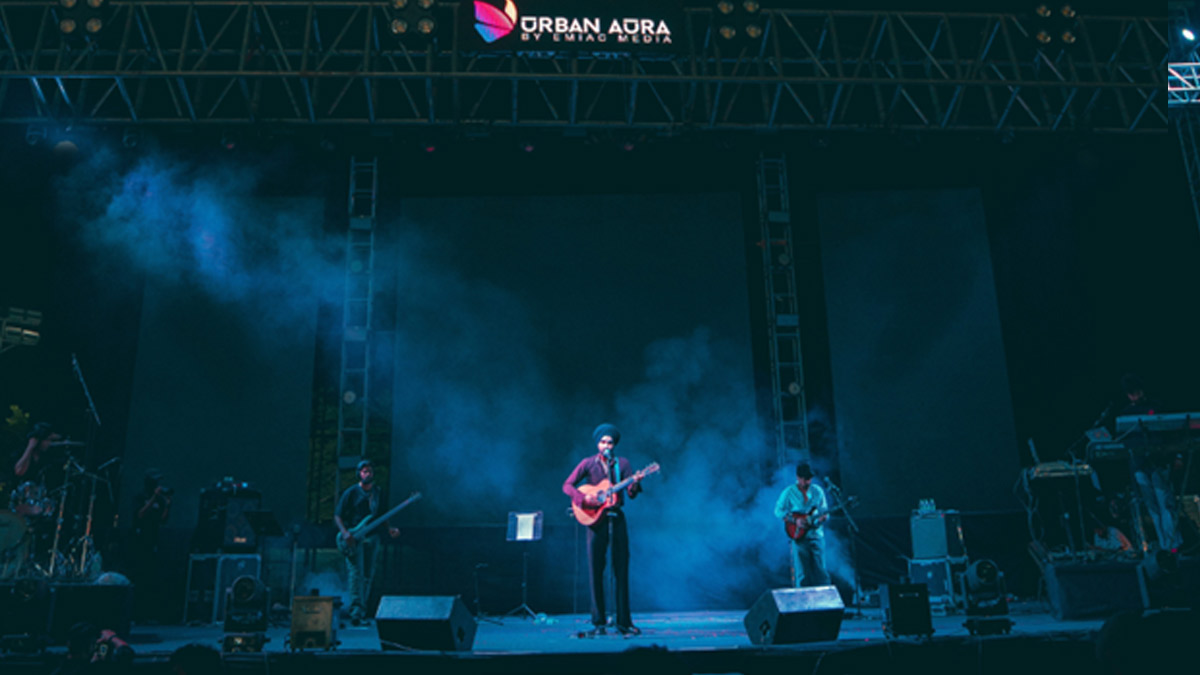
In a music industry that often rewards speed, spectacle, and instant recall, Navjot Ahuja’s journey feels refreshingly different. His story is not built on noise. It is built on patience, discipline, emotional honesty, and a quiet commitment to becoming better with every passing year. After 14 years of struggle, learning, performing, and writing, Navjot stands today as an artist whose success has not changed his centre. If anything, it has only made his purpose clearer.
For Navjot, music has never been about chasing fame alone. It has always been about expression. It is about writing more truthfully, singing more skillfully, understanding himself more deeply, and becoming a kinder human being in the process. That rare clarity is what gives his journey its beauty.
Where It All Began: A Writer Before a Singer
Indian singer and songwriter Navjot Ahuja’s musical journey began in the most familiar of places: school assemblies. But even then, what was growing inside him was not only the desire to sing. It was the need to write.
Long before he saw himself as a performer, he had already discovered the emotional release that writing offered him. For Navjot, words became the first true channel for feeling. Songwriting came before singing because writing was the only way he could let emotions flow through him fully. That inner pull shaped his artistic identity early on.
Like many young musicians, he sharpened his craft by creating renditions of popular songs.
Those experiments became his training ground. But the turning point came in 2012, when he wrote his first original song. That moment did not just mark the beginning of songwriting. It marked the beginning of self-definition.
A Calling He Did Not Chase, But Accepted
What makes the latest Indian singer-songwriter Navjot’s story especially compelling is the way he describes his relationship with music. He does not frame it as a career he aggressively pursued. In his own understanding, music was not something he chose. It was something that chose him.
There was a time when he imagined a very different future for himself. He wanted to become a successful engineer, like many young people shaped by ambition and conventional expectations. But life had a different script waiting for him. During his college years, around 2021, music entered his life professionally and began taking a firmer shape.
That shift was not driven by image-building or industry ambition. It came from acceptance. Navjot embraced the fact that music had claimed him in a way no other path could. That sense of surrender continues to define the artist he is today.
An Artist Guided by Instinct, Not Influence
Unlike many singers who speak openly about idols, icons, and musical role models, Navjot’s creative world is built differently. He does not believe his music comes from imitation or inherited influence. He listens inward.
He has never considered himself shaped by ideals in the traditional sense. In fact, he admits that he does not particularly enjoy listening to songs, especially his own. His decisions as a songwriter and singer come from instinct. He writes what feels right. He trusts what his inner voice tells him. He positions his music according to what he honestly believes in, not what trends demand.
That creative independence gives his work a distinct emotional sincerity. His songs do not feel calculated. They feel alive.
The Long Years of Invisible Struggle
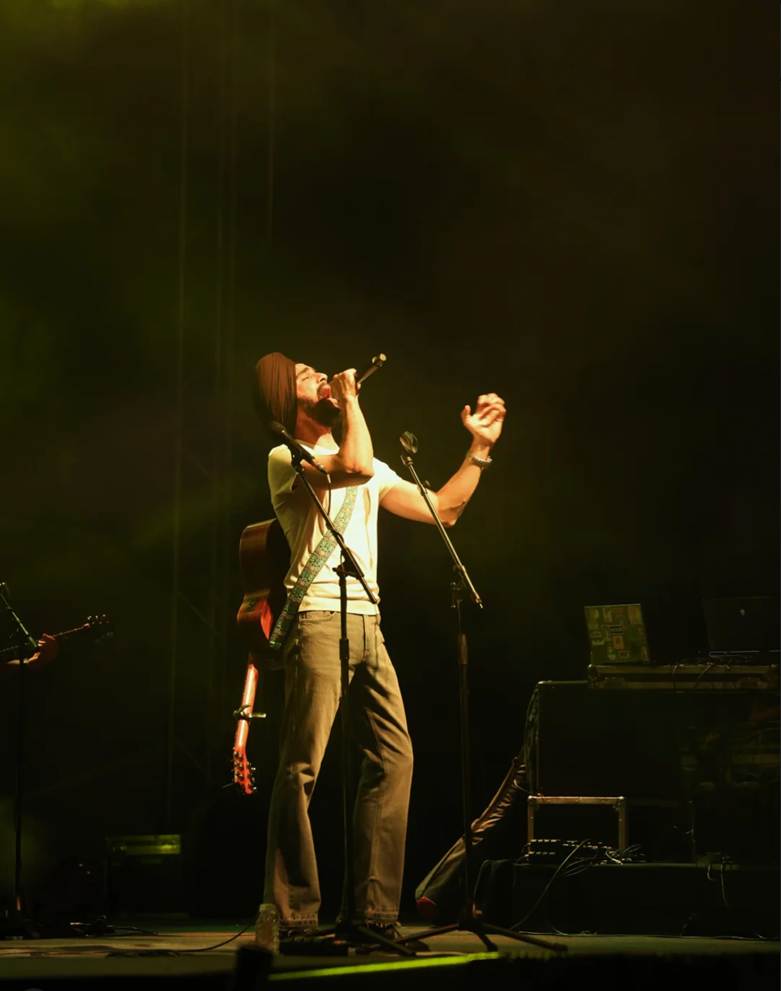
Every artist carries a chapter of struggle, and Navjot’s was long, demanding, and deeply formative. One of the biggest challenges he faced was building continuity as the best new indian singer songwriter in an era where musical collaboration is increasingly fluid.
For emerging singers, especially those trying to build with a band, consistency can be difficult. Instrumentalists today have more opportunities than ever to freelance and perform with multiple artists. While that growth is positive and well deserved, it can make things harder for singers who are still trying to establish a steady team and sound around their work.
For Navjot, one of the most difficult phases came during 2021 and 2022, when he was doing club shows almost every day. It was a period of relentless performance, but not always personal fulfillment. He was largely singing covers because clubs were not open to original songs that audiences did not yet know.
For a new Indian singer and songwriter, that can be a painful compromise. To perform constantly and still not have the freedom to share your own voice requires not just resilience, but restraint.
“Khat” and the Grace of Staying Unchanged
After 14 years of effort, Navjot’s new love song Khat became a defining milestone. Professionally, he acknowledges that the song changed how society viewed him as a musician. It strengthened his place in the public eye and altered his standing in meaningful ways.
Yet personally, he remains unchanged.
That is perhaps the most striking part of his story. Navjot says his routine is still the same. His calm is still the same. His writing process is still the same. He does not want success or failure to interfere with the purity of his art. For him, emotional detachment from public outcomes is essential because the moment an artist becomes too attached to validation, the writing begins to shift.
His joy comes not from numbers, but from the attempt. If he has tried to improve his skill today, if he has written his heart out more honestly than before, then he is at peace.
Growth, Not Glory, Remains the Real Goal
Even now, Navjot is not consumed by labels such as singles artist, performer, or digital success story. His focus remains deeply personal. He wants to sing better. He wants to play instruments better. He wants to understand himself more. And he wants to become a kinder person.
That is what makes Navjot Ahuja’s journey so moving. It is not simply the story of a musician finding recognition. It is the story of an artist who continues to grow inward, even as the world begins to look outward at him. In an age obsessed with applause, Navjot reminds us that the most meaningful success often begins in silence, honesty, and the courage to remain true to oneself.






