News Broadcasting
FCC releases report on cable prices


MUMBAI: US media regulatory body The Federal Communications Commission (FCC) has released its annual report on cable industry prices for 2005.
The report shows that average monthly rates for cable service — including basic and expanded basic cable programming services — increased by 5.2 per cent over the 12-month period ending 1 January 2005, from $40.91 to $43.04, and by 93 per cent since the period immediately prior to Congress’s enactment of the Telecommunications Act of 1996.
Specifically, the average monthly charge for basic service increased by 3.3 percent, rising from $13.84 on 1 January 2004 to $14.30 a year later. Over the same period, the average charge for expanded basic service rose from $27.07 to $28.74, an increase of 6.2 per cent — more than 84 per cent of cable consumers subscribe to the expanded basic service.

The report finds that for the 12-month period ending 1 January, the average monthly rate for basic and expanded basic cable programming services increased by 4.9 per cent for the group of cable operators in communities relieved from basic tier rate regulation (the “effective competition group”) and by 5.2 per cent for the group of cable operators without a finding of effective competition (the “noncompetitive group”).
As of 1 January 2005, cable operators without a finding of effective competition charged an average of $43.33 per month for basic and expanded basic programming, which was 7.9 per cent more than the $40.15 charged by the group of operators with a finding of effective competition. The degree of difference, however, varied by subgroup, with the highest percentage differential associated with the subgroup of cable operators for which relief from rate regulation was based on a second cable operator.
Prices charged by cable operators in these communities were 17 per cent lower than in communities without a finding of effective competition. DBS competition, however, does not appear to constrain cable prices – average prices were the same as or slightly higher in communities where DBS was the basis for relieving a cable operator from rate regulation than in non competitive communities.
The FCC also collected information on the prices charged for the most highly subscribed digital tier plus equipment consisting of a digital set-top converter and remote control unit. For all communities sampled, over the 12 months ending 1 January 2005, the price for this tier and equipment increased by 1.2 per cent, to $12.99. Of the 98 per cent of all cable subscribers served by systems that offered digital video service, 37 per cent subscribe to the digital tier.
The report also provides information on the average capacity of cable systems and the percentage of cable subscribers that are offered advanced services such as digital service, internet access, and telephone service. As of 1 January 2005, approximately 87 per cent of all cable subscribers were served by systems that had been upgraded to a capacity of at least 750 MHz. Also, 96 per cent of all cable subscribers were served by systems that offered Internet access. In addition, 42 percent of subscribers were offered telephone service by their cable operator.
There was very little variation between the groups (those with and without a finding of effective competition) in terms of system capacity or the percentage of subscribers offered advanced services.


News Broadcasting
Rising Bharat Summit 2026 spotlights India’s global ascent
PM Modi keynotes two-day event with ministers, diplomats and icons in New Delhi.
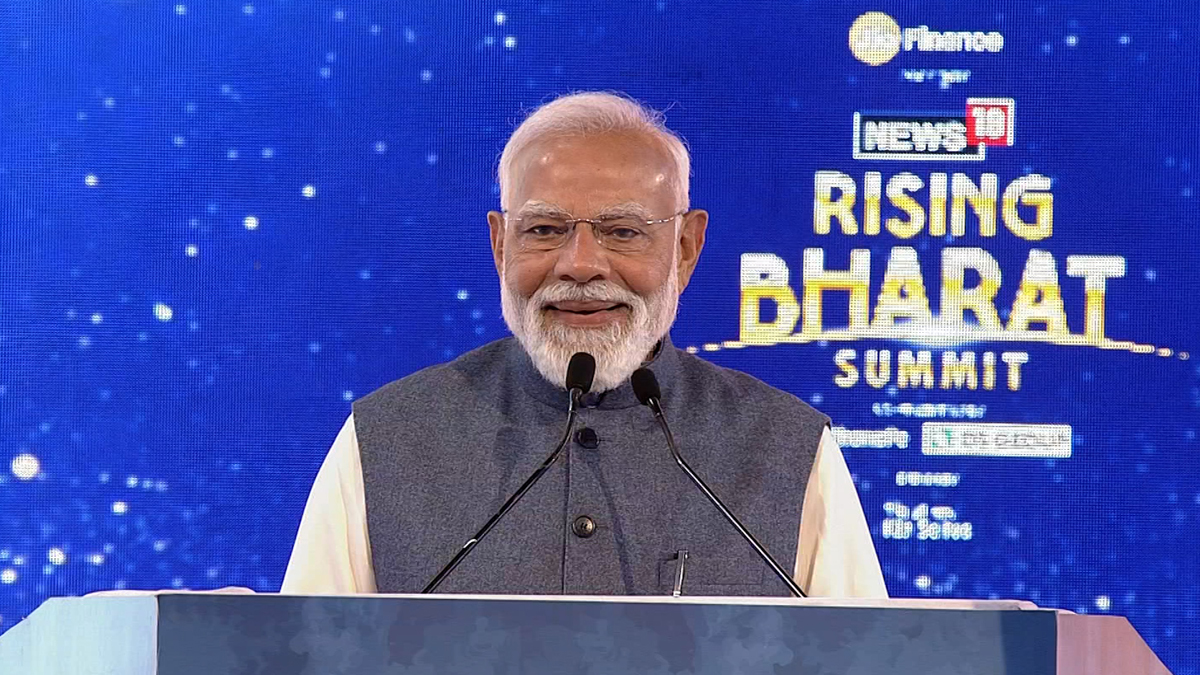
MUMBAI: India didn’t just host a summit, it threw a coming-out party for a nation ready to own the global stage. The News18 Rising Bharat Summit 2026, held on 27–28 February in New Delhi, emerged as a high-octane platform for ideas, vision and strategic dialogue, uniting national leadership, global policymakers, industry titans, defence strategists and cultural icons under the theme “Strength Within”.
Prime minister Narendra Modi set the tone with a keynote that framed India’s resurgence as a reclaiming of lost potential built over generations. “In previous industrial revolutions, India and the Global South were merely followers,” he said. “But in the era of Artificial Intelligence, India is a partner in decisions and shaping them.” He highlighted the country’s thriving AI startup ecosystem and the recent AI Impact Summit attended by over 100 nations.
Union minister Piyush Goyal (Commerce & Industry) stressed India’s readiness to scale exports and deepen manufacturing, while Ashwini Vaishnaw (Railways, I&B, Electronics & IT) positioned technology and infrastructure as twin engines of growth, especially in AI and digital trust. Jyotiraditya Scindia (Communications & North East Development) revealed India’s ambition to lead in 6G through the Bharat 6G Alliance and partnerships with over 30 countries.
Global voices added depth: former Singapore Foreign Minister George Yeo called India’s development “self-sustaining” and strategically vital; ex-UK Chief of Defence Staff General Sir Nick Carter asserted India deserves a seat at the great powers’ table; and former US Commerce Secretary Carlos M. Gutierrez joined ambassadors from Norway, Germany and Sweden in discussions on geopolitical realignment, sustainability and defence preparedness.
Other speakers included veteran investor Ramesh Damani, World Gold Council CEO David Tait, Vianai Systems founder Dr Vishal Sikka, DeepTech Bharat Foundation co-founder Shashi Shekhar Vempati, defence experts Rajesh Kumar Singh, Sunil Ambekar, Patrick McGee, Tom Cooper and Adrian Fontanellaz, plus cultural and sporting icons Kangana Ranaut, Saina Nehwal, PR Sreejesh, Mohammed Shami, Yuzvendra Chahal, Mithali Raj, Anil Kapoor and Yami Gautam.
The summit was supported by Jio Financial Services (Presenting Partner), Phonepe and DS Group (Co-Presenting Partners), Pernod Ricard India and Kia Seltos (Powered By & Driven By), state governments of Uttar Pradesh, Chhattisgarh and Uttarakhand (State Partners), and associate partners including NSE, M3M Foundation and Reliance Industries.
Broadcast live across News18 Network, CNBC-TV18 and CNBC Awaaz, the event reinforced India’s image as a confident democracy and emerging global power proving that when strength comes from within, the world can’t help but watch.