News Broadcasting
FCC nixes Echostar-DirecTV merger

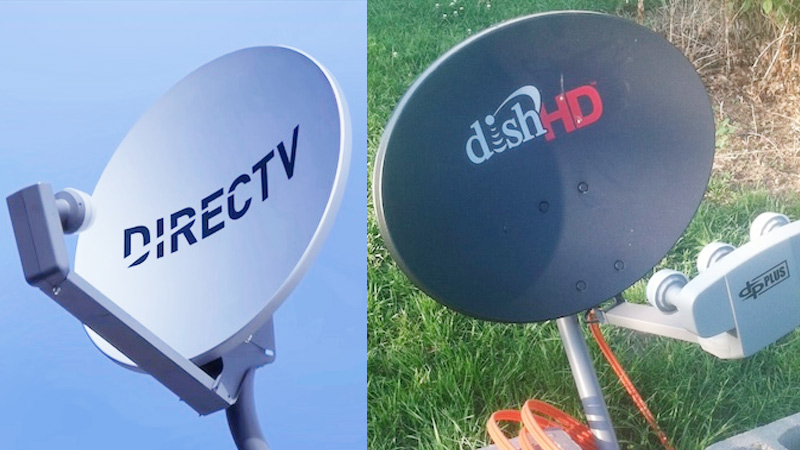
MUMBAI: The Federal Communications Commission (FCC) has rejected the proposed $ 18.5 billion merger between the two largest satellite-television companies in the US, EchoStar Communications Corp. and Hughes Electronics Corp, a subsidiary of General Motors.
In 4-0 ruling issued yesterday, the FCC said the two companies, who together make up 90 per cent of the satellite television market in the US, “have not demonstrated that approval of the transaction will serve the public interest, convenience, and necessity.”
In an order designating the application for a full evidentiary hearing before an administrative law judge, the FCC ruled that the likelihood of the merger harming competition in the multichannel video program distribution (MVPD) market outweighs any merger-specific public interest benefits. The FCC found that such a loss of competition within the MVPD market is likely to harm consumers by: (1)eliminating an existing viable competitor in every market; (2)creating the potential for higher prices and lower service quality; and (3) negatively impacting future innovation.

The FCC said the combination of EchoStar and DirecTV would eliminate existing facilities-based intramodal competition and replace it with a proposed “national pricing” plan, which would have to be enforced by regulatory authorities. The FCC said the effect would be to replace facilities-based competition with regulation, which is not consistent with either the Communications Act or with long-standing policy, both of which aim at replacing regulation with free market competition.
The 4-0 vote by the FCC marks a significant defeat for EchoStar chairman Charlie Ergen who had campaigned long and hard to push the deal through.
And waiting in the wings to make another possible run at Hughes’s DirecTV unit is News Corp boss Rupert Murdoch whose offer was rejected in favor of Ergen’s bid. Murdoch has outmanoeuvred Ergen on all fronts, whether it be lobbying on Capitol Hill or working with key groups across the US to ensure the merger was scuttled.
Just how determined Murdoch has been can be gauged from the meticulously planned grass-roots campaign that he stage-managed covering consumer and minority-interest groups, religious broadcasters and rural educators.
The Wall Street Journal reported that in February, Murdoch, accompanied by two News Corp executives, travelled to the National Religious Broadcasters (NRB) convention in Nashville, Tennesee, to meet group leaders.
The WSJ has quoted Glenn Plummer, chairman of the group as saying that Murdoch, a frequent target of religious broadcasters himself, wanted to impress upon the (NRB) that the pending merger between EchoStar and DirecTV was a monopoly and not in their best interest.
The WSJ reported that before the one-hour meeting broke up, one of the NRB leaders suggested a prayer. The dozen people in the room, including Murdoch, gathered their chairs in a circle and held hands. A prayer was said for Murdoch. Three months later the NRB announced that it was opposing the merger between EchoStar and DirecTV.
However, when quizzed by reporters after the News Corps’ annual general meeting on Wednesday whether he would launch a second bid for Hughes’ DirectTV if the merger was blocked, Murdoch was quoted as saying: “We have not thought about it, we are certainly undecided.”
Still, the merger isn’t completely dead. The FCC now must send its opinion on the merger to an administrative law judge for review, and EchoStar and Hughes have said they plan to file an amended proposal within a 30-day window.
And interestingly, an indication of the kind of lobbying at work is the reaction of the Consumer Union which has slammed the ruling. The consumer advocate body has supported the merger the deal in the expectation it would rein in rising cable rates. “It’s really startling that the FCC wouldn’t lift a finger to help cable customers,” Gene Kimmelman, the co-director of Consumer Union’s Washington office has been quoted as saying.
The FCC will send its findings to an administrative law judge, before whom EchoStar and DirecTV can make their case. The judge’s ruling would then be sent back to the commission for a final vote.



News Broadcasting
CNN-News18 rolls out Battle for the States ahead of key polls
Multi-format election coverage tracks voter mood across five battleground states
NEW DELHI: CNN-News18 has launched a special election programming initiative titled Battle for the States, as India gears up for high-stakes Assembly elections across West Bengal, Tamil Nadu, Kerala, Assam and Puducherry.
Built around the theme ‘Road to Power’, the multi-format coverage aims to follow the entire electoral journey, from campaigning and polling to results and government formation. The network is leaning into on-ground reportage and data-backed storytelling to decode voter sentiment across regions where local issues often shape the narrative.
The programming line-up includes ‘Vote Tracker’, a three-part series developed in collaboration with survey agency Vote Vibe. The show blends survey insights with expert commentary and field reporting, using augmented reality graphics to present complex electoral data such as vote share, seat projections and leadership preferences in a more accessible format. It will air every Monday evening until April 6.
Adding a cultural lens to political reporting is ‘So Saree!’, a ground-driven segment where women anchors travel across constituencies dressed in traditional handwoven sarees from each state. The format uses attire as a storytelling device, highlighting regional identity while capturing grassroots voices.
Meanwhile, ‘Unfiltered Kaapi’ and ‘Chai-Niti’ bring a more conversational tone, drawing inspiration from everyday political discussions in tea stalls and coffee corners. These segments aim to break down key issues through candid, fast-paced exchanges between anchors and reporters, tailored to regional sensibilities.
For viewers seeking deeper insights, the weekend docuseries ‘Reporters Project’ takes a longer view, with correspondents travelling across constituencies to map voter concerns and political shifts on the ground.
“Elections are about people, their aspirations, identities and the issues that matter to them, and every state tells a different story,” said CNN-News18 editorial affairs director Rahul Shivshankar. He added that the initiative focuses on understanding “the sentiment on the ground and what’s driving voter choices”.
Echoing the emphasis on credibility, Network18 CEO – English and business news Smriti Mehra said the network aims to combine on-ground reporting with data-led insights to deliver clear and timely coverage as the elections unfold.
With a mix of data, culture and grassroots reporting, CNN-News18 is positioning Battle for the States as a comprehensive window into one of India’s most closely watched electoral cycles, where every vote carries a story waiting to be told.