Cable TV
FCC mandate on digitised signals to boost global demand for switchers

MUMBAI: With US media regulatory body The Federal Communications Commission (FCC) mandating that broadcast signals be digitised, opportunities for switcher vendors in North America have opened up.
Also with the global economy stabilizing and advertising revenues on the rise, broadcasters and cable providers are investing in switchers to enable both simultaneous standard (SD) and high definition (HD) digital content, thereby boosting the broadcast switcher market worldwide.
News analysis from Frost & Sullivan on the world broadcast switcher market reveal that revenues in this industry totaled nearly $400 million in 2004 and can reach close to the billion-dollar mark in 2011.

Frost & Sullivan programme leader Mukul Krishna says, “The move toward digital transformation of the broadcast space as well as HD has been for a long time focused on North America because of the FCC mandate. Nevertheless, the shift to digital in the area is slow due to the need for tremendous investments in infrastructure in order to comply with the FCC mandate and the resultant lobbying to push back the deadline for implementing the mandate.”
Despite this, the pace of adoption of switchers is gathering speed as prices fall for digital media technologies. Enterprises are realising the strong benefits of employing HD, including easy access to digitally stored video assets, and reduced time required for broadcasting as well as massive savings on storage and maintenance. As a result, the return on investment (ROI) from digital video technology deployment is bolstering the broadcast switcher market.
Krishna adds, “There is a rise in broadcast switcher sales internationally, as the Soccer World Cup in Europe in 2006 and the Olympics in China in 2008 are generating a greater demand from consumers for broadcast in HD. Vendors need greater resources to utilize these opportunities in a global environment.”
Compared to Europe and North America, Asia is expected to have the most robust growth rates for broadcast switcher sales. This Frost & Sullivan has attributed to the well performing economies in emerging markets such as China and India that are gearing up their digital and HD transmission capabilities. Europe follows Asia in terms of growth rates for the same period.
The broadcasting industry generally does not suffer from bandwidth restrictions and does not have to deal with bandwidth problems. The availability of ample bandwidth, the increased flexibility, and speed of production provides incentive to customers to deploy digital video technology.
Moreoever, new video compression techniques such as moving pictures experts group (MPEG) enhance the digital viewing experience, thereby further bolstering the demand for digital media. This, in turn, has enhanced broadcast switcher sales worldwide.
Since broadcasters, the world over are concerned with the dependability of digital media enabling technologies, switcher vendors have to constantly demonstrate the reliability of their solution by providing data security. They also have to meet the fierce competition in the market by ensuring significant product value at a competitive price without lowering profit margins. Toward this end, vendors have to increase sales by utilizing customer preferences for smaller switchers capable of handling both SD and HD.
Frost & Sullivan, a global growth consulting company, has been partnering with clients to support the development of innovative strategies for more than 40 years. The company’s industry expertise integrates growth consulting, growth partnership services, and corporate management training to identify and develop opportunities.


Cable TV
Hathway Cable appoints Gurjeev Singh Kapoor as CEO
Leadership change comes as cable TV faces shrinking subscriber base and modest earnings pressure
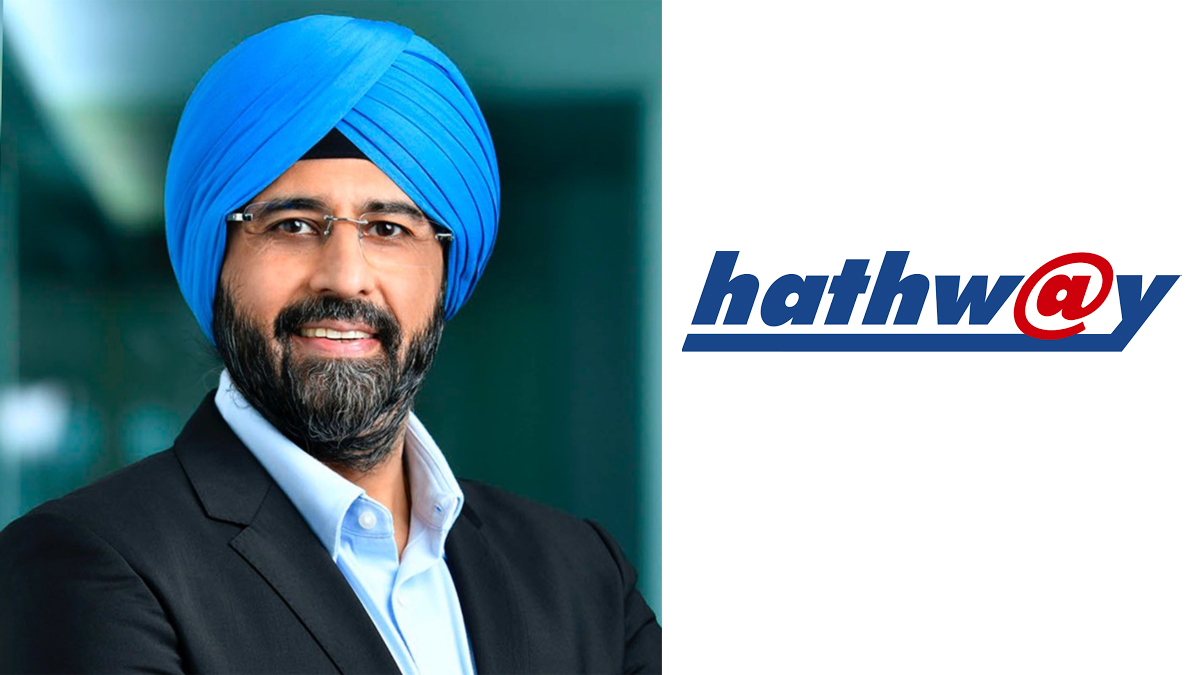
MUMBAI: Hathway Cable and Datacom has tapped industry veteran Gurjeev Singh Kapoor as chief executive officer, marking a leadership pivot at a time when India’s cable television business is under mounting strain.
Kapoor will take over from Tavinderjit Singh Panesar, who is set to retire in August after a long innings with the company. Panesar, chief executive since 2023, has held multiple leadership roles at Hathway, including his latest stint beginning in 2022.
Kapoor brings more than three decades of experience in media and entertainment. He most recently led distribution at The Walt Disney Company’s Star India business, now part of JioStar. His career spans television distribution and affiliate partnerships, with stints at Sony Pictures Networks India, Discovery Communications and Zee Entertainment.
Panesar, with over three decades in the industry, has worked across strategic planning, distribution and business development in media, broadcasting and manufacturing. His past associations include ESPN Star Sports, Star India, Apollo Tyres and JK Industries.
The transition lands as the cable sector grapples with structural disruption. Traditional operators are losing ground to streaming platforms, while telecom and broadband players tighten the squeeze with bundled offerings.
An EY report estimates India’s pay-TV base could shrink by a further 30 to 40 million households by 2030, taking the total down to 71 to 81 million. The slide follows a loss of nearly 40 million homes between 2018 and 2024, a contraction that has already wiped out more than 37,000 jobs in the local cable operator ecosystem.
Hathway’s numbers reflect the strain. The company reported a consolidated net profit of Rs 93 crore for FY25, down from Rs 99 crore a year earlier. Revenue inched up to Rs 2,040 crore from Rs 1,981 crore. As of December 2025, it had about 4.7 million cable TV subscribers and roughly 1.02 million broadband users.
Kapoor steps in with a familiar brief but a shrinking playbook. In a market where viewers are cutting cords faster than companies can reinvent them, the new chief executive inherits a business fighting to stay plugged in.







