News Broadcasting
Fashion journalism seminar brings out flaws in the trade

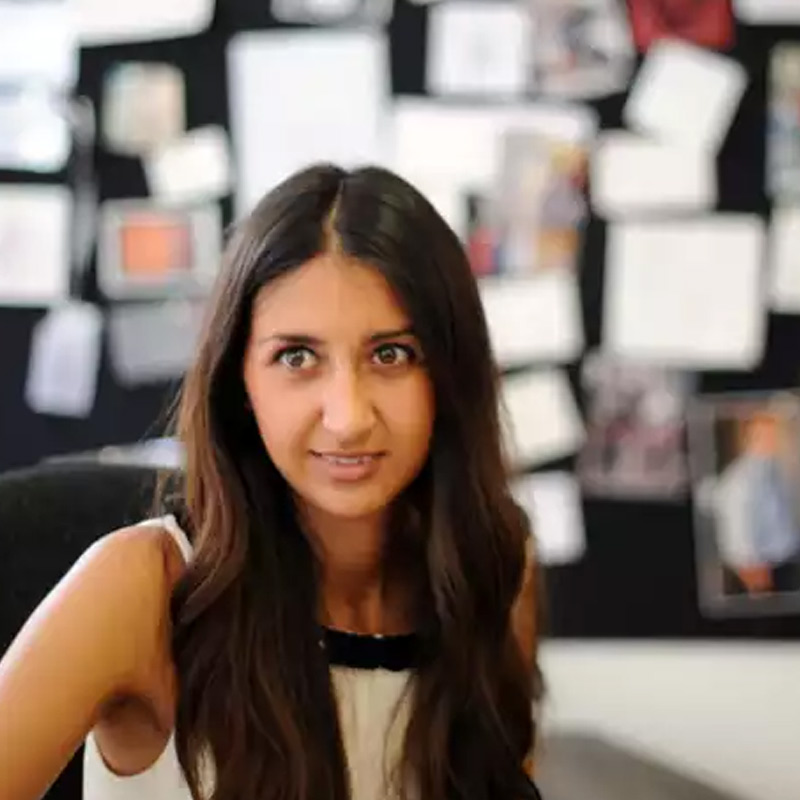
MUMBAI: A seminar on the evolution of fashion Journalism was organised by the Fashion Design Council of India at the ongoing Lakme India Fashion Week 2002, kickstarting the Business of Fashion seminars series slated to be held during the event.
Perfect Relations consulting partner Dilip Cherian who spoke at the seminar stressed the need for Indian Fashion Journalism to address all aspects of the business of fashion and not just remain people centric. Analysing the current ‘non serious’ slant of fashion journalism, Cherian said that it had till now failed to look at the more serious and relevant issues of the Industry and had restricted itself to the colourful and the glossy.
He said journalism coverage was superficial as it mainly revolved around the quantum of skin that was revealed or the virtual nonentities who attended the fashion shows. This has caused a huge gap in the reporting where, evaluation of the issues confronting the industry and developments within it were almost missing, he said. The fashion media lacked the ability to inform and educate the players in the industry, he added. It was this visible and pronounced lack of expertise that had made the target audience of fashion journalism almost immune to its influence.

He also criticised the fashion industry by saying, “The fault does not lie entirely with the media, it is the industry itself that has painted itself into a corner by completely ignoring the mainstream bits of the business. This was in fact, one of the big reasons why fashion journalism was also way off the mark, in content, impact, seriousness and therefore relevance. What is more annoying is the home-grown approach to this industry that specialisation simply does not matter.”
Disagreeing with the argument that fashion journalism was still nascent in India and therefore needed time to mature, Cherian said that the Indian fashion industry was competing with global benchmarks, and. it was important therefore for fashion reporting to grow side by side. As with other streams, fashion journalism also needed to focus on reporting the news, like the state of domestic market, export markets, technology, retailing, global trends, regional flavours and situation analysis
Concluding his remarks, Cherian made a plea for the ‘growth of fashion journalism’ and said that owners and editors of publications had an equally important role to play in taking fashion journalism to its next stage of evolution. It was equally important for industry players to spend more time with reporters giving industry information to them. Education combined with argument, Cherian said would hopefully result in more balanced and acceptable comment.
In its third consecutive year, the Lakme India Fashion Week 2002 is being held from 2-8 August at the Taj Palace Convention Centre in New Delhi.


News Broadcasting
Network18 channels lead YouTube news viewership in March 2026
CNN-News18, News18 India and CNBC channels top categories with record views
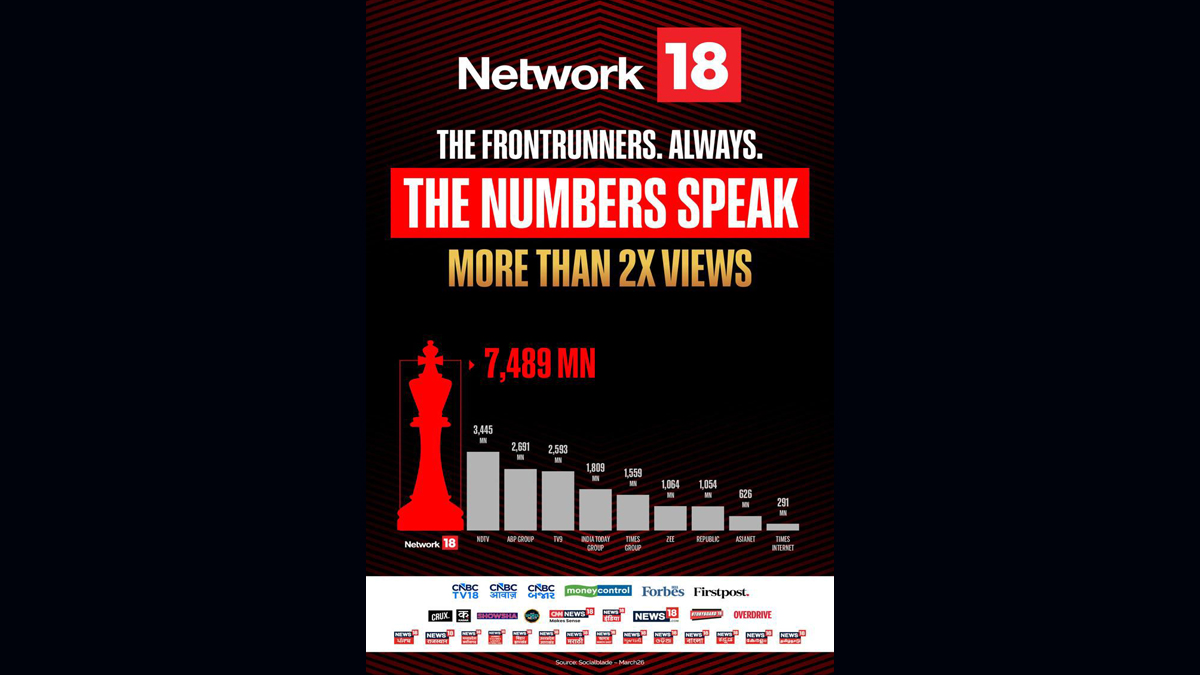
MUMBAI: When the world hit refresh on breaking news, Network18’s channels were already streaming ahead. As geopolitical tensions and war-driven headlines fuelled a surge in global news consumption, the network’s digital playbook delivered big clocking record Youtube viewership across English, Hindi and business news categories in March 2026.
At the forefront was CNN-News18, which emerged as the clear leader in the English news segment with 130 million live and video-on-demand views. The channel edged past competitors such as Times of India (126.5 million), Times Now (101.1 million), India Today (88.2 million) and NDTV (77.5 million), according to Databeings data for March.
In the Hindi news arena, News18 India delivered a commanding performance, racking up a staggering 3,297 million views on YouTube. The channel comfortably outpaced NDTV India, which recorded 3,119 million views, underlining its deep reach and consistent engagement with mass audiences, as per Playboard data.
The network’s dominance wasn’t confined to general news. In the Hindi business segment, CNBC Awaaz topped the charts with 92 million views, narrowly ahead of Zee Business (90 million) and well ahead of ET Now Swadesh (57 million). Meanwhile, its English counterpart CNBC-TV18 posted a strong 58 million views, reinforcing the network’s cross-category strength.
The spike in viewership reflects a broader shift in audience behaviour, with viewers increasingly turning to digital platforms particularly Youtube for real-time updates and in-depth coverage during high-intensity news cycles. For Network18, the numbers signal more than just scale; they underline the effectiveness of a multi-platform strategy that blends speed, credibility and continuous coverage.
In a month where the news never paused, it seems viewers chose to stay tuned where the stream never stopped.






