News Headline
Fakt Marathi to convert into full GEC from April 2020

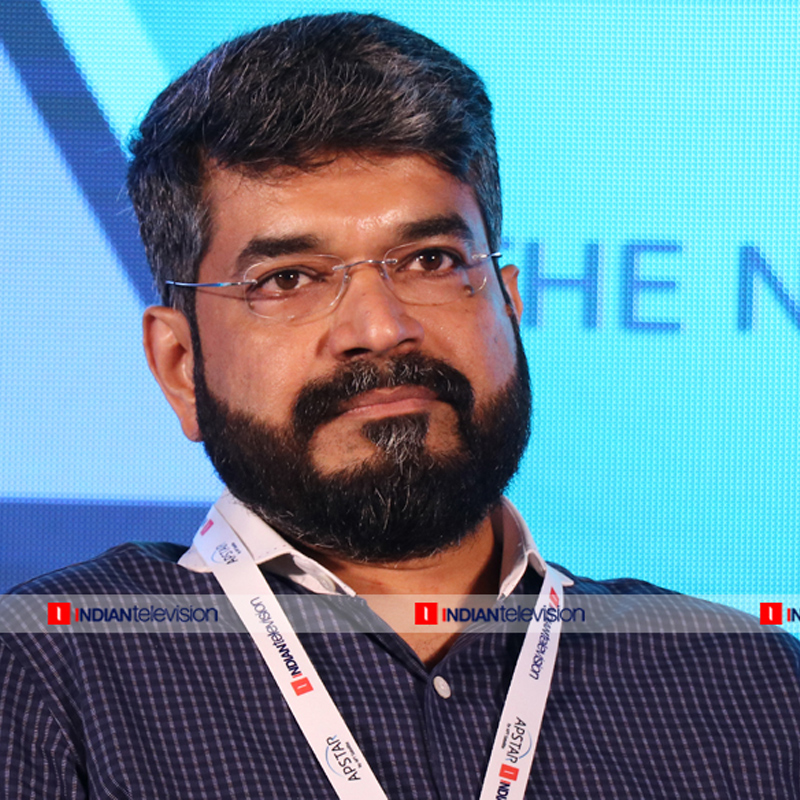
MUMBAI: The free to air (FTA) Marathi channel Fakt Marathi has made a strategic move to compete with pay broadcasters in the post NTO era. The channel is all set to become a complete GEC from April 2020. It will air three hours of original content in the primetime slot in genres like kids, mythology, socio-mythology, history, crime and comedy.
In an interaction with Indiantelevision.com, Fakt Marathi MD Shirish Pattanshetty shared his plan on competing with pay broadcasters in post NTO era after being sampled by the audience in the transition period of NTO. He also highlighted the need for a level playing field between pay and FTA channels, advertiser’s interest on FTA channels and programming strategy of the channel.
In the transition period, Fakt Marathi was seen leading the Marathi market for a few weeks in BARC India’s weekly rating but now the channel is observed holding its fourth position for the past few weeks. However the channel has geared up to regain its leading position with the revamp to a complete GEC.

Original programming will start from 7 pm to 10 pm. Currently the channel airs one hour of original content and will be launching new show Special Police Forces in two weeks. In morning slot, the channel will continue to air devotional content, afternoon slot will have repeat telecast of original shows and primetime slot will have original content. The channel will air movie in two slots one at 9.30 am to 12 noon and other at 4.30 pm to 7 pm.
Along with original shows the channel will also air the other syndicated shows and dubbed content of Tarak Mehta Ka Ooltah Chashma as Gokuldhamchi Duniyadari. The show helped channel to grow by 1200 per cent in the time band of 9 pm in Mumbai.
The channel has strategically decided to air the repeat telecast of original show in the afternoon slot. “In the primetime slot, there is a traction towards bigger broadcasters like Zee Marathi and Colors Marathi. So, people would like to watch our shows in the afternoon to get new content. It might be very difficult to get eyeballs from bigger channel because they also have their popular shows running in that slot for longer time. So, maybe if our shows are not notice at night during other parts of the day viewers may come to see it,” said Pattanshetty.
According to Chrome LIVE data, pay channels witnessed a drop of 24 per cent from week 4 to week 9 in 2019. On the other hand, FTA channels saw a spike from 21 per cent to 26 per cent in the same time span.
“During the transition period of NTO, we did a little bit of exposure related to GEC, a lot of viewers got the opportunity to see us for the first time and noticed us. The content that we showcased attracted people. On the movie channel there was only two channels that time Zee Talkies and Fakt Marathi while Zee Talkies turned pay so Fakt Marathi was the only option left,” informs Pattanshetty.
One of the woes of being FTA is handling ad revenue. "There is no subscription business model like pay channel for us. To create a level playing field for pay and FTA channel either the government should intervene and say that they can make it only premium and no advertising channel or pay channel should stick to a norm of 12 minutes of per hour advertising. There is a norm but nobody is following that, if the rules are followed everybody will co-exist,” he opines.
With regards to advertisement on FTA channels, Pattanshetty informs that economic slowdown has impacted the market to some extent and till the time it doesn’t improve the industry will not be able to swing around.
To attract more advertisers, the channel aims to grow in the urban market with the offering of more original content. “If my urban market penetration increases by 35 per cent my advertiser cost will also increase. 60 per cent of the advertisers looks at urban as a market. If I am to upswing there, I’ll be able to get a better ROI," explains Pattanshetty.
He further adds that the channel has recruited different teams which will look at retail advertisers. "The idea is to have certain field rates coming from retailers. The ad rates for local advertisers will be little different from others and it has to be premium for them because their buying capacity will be smaller. It will not be at the level of national advertisers. For example, if the national advertisers is buying 20,000 sec per month, the retail advertisers will not be able to buy that much," he says.
With the conversion to channel to complete GEC, the costing will go up but Pattanshetty is confident. "If we bring better ratings then that would be a benefit that we are going to carry further," he concludes.



NEW DELHI: Hamdard Laboratories gathered a cross-section of India’s achievers in New Delhi on Friday, handing out the Hakeem Abdul Hameed Excellence Awards to figures who have left their mark across healthcare, education, sport, public service and the arts.
The ceremony, attended by minister of state for defence Sanjay Seth and senior officials from the ministry of Ayush, celebrated individuals whose work blends professional success with a sense of public purpose. It was as much a roll call of achievement as it was a reminder that influence is not measured only in profits or podiums, but in people reached and lives improved.
Among the headline awardees was Alakh Pandey, founder and chief executive of PhysicsWallah, recognised for turning affordable digital learning into a mass movement. On the sporting front, Arjuna Awardee and kabaddi player Sakshi Puniya was honoured for her contribution to the game and for pushing women’s participation onto bigger stages.
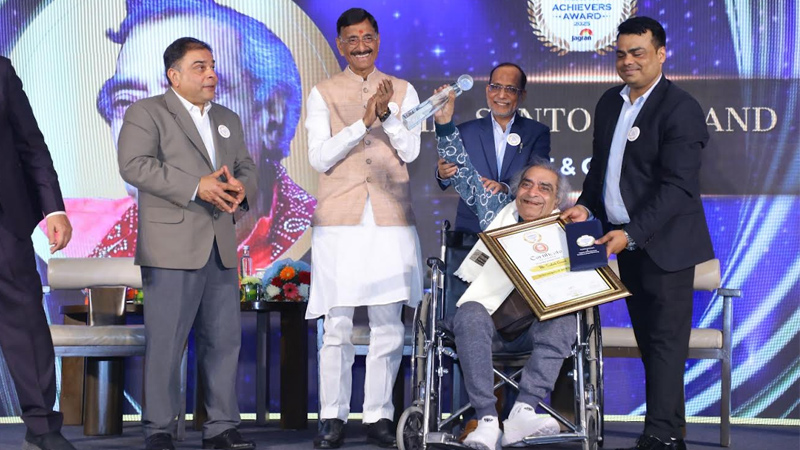
The cultural spotlight fell on veteran lyricist and poet Santosh Anand, whose songs have echoed across generations of Hindi cinema. At 97, Anand accepted the honour with characteristic humility, reflecting on a life shaped by perseverance and hope.
Healthcare honours spanned both modern and traditional systems. Manoj N. Nesari was recognised for strengthening Ayurveda’s place in national and global health frameworks. Padma shri Mohammed Abdul Waheed was honoured for his research-backed work in Unani medicine, while padma shri Mohsin Wali received recognition for his long-standing contribution to patient-centred care.
Education and social development also featured prominently. Padma shri Zahir Ishaq Kazi was honoured for decades of work in education, while former Meghalaya superintendent of Police T. C. Chacko was recognised for public service. Goonj founder Anshu Gupta received an award for his dignity-centred rural development initiatives, and the Hunar Shakti Foundation was honoured for empowering women and young girls through skill development.
The Lifetime Achievement Award went to former IAS officer Shailaja Chandra for her long career in public healthcare and governance, particularly in the traditional systems under Ayush.
Speaking at the event, Hamdard chairman Abdul Majeed said the awards were a tribute to those who combine excellence with empathy. “These awardees reflect Hakeem Sahib’s belief that healthcare, education and public service must ultimately serve humanity,” he said.
Minister Seth struck a forward-looking note, saying India’s young population gives the country a unique opportunity to become a global destination for learning, health and wellness by 2047.
The ceremony also featured the trailer launch of Unani Ki Kahaani, an upcoming documentary starring actor Jim Sarbh, set to premiere on Discovery on 11 February.
Instituted in memory of Unani scholar and educationist Hakeem Abdul Hameed, the awards have grown into a national platform that celebrates those building a more inclusive and resilient India. For one evening at least, the spotlight was not just on success, but on service with substance.






