International
Explore five Ridley Scott masterpieces before Napoleon’s arrival

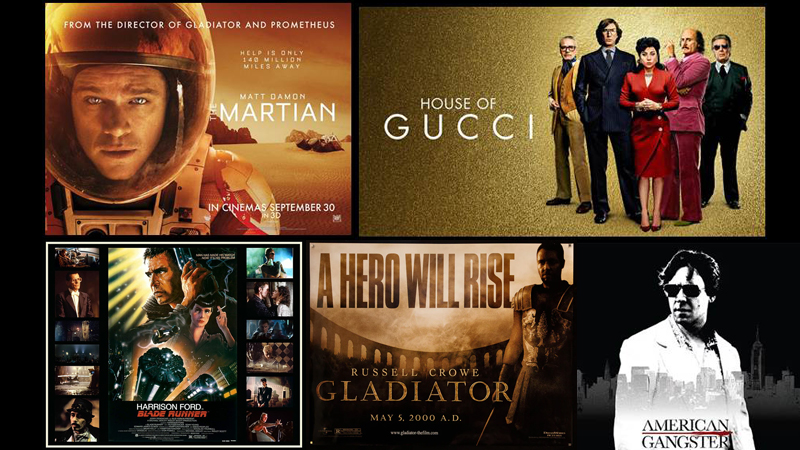
Mumbai: Ridley Scott, the visionary director behind iconic films, has left an indelible mark on the world of cinema. His ability to seamlessly blend compelling narratives with stunning visuals has solidified his place as a cinematic maestro. Fans eagerly await his upcoming project, Napoleon – a film about the rise and fall of the French Emperor Napoleon Bonaparte and his relentless journey to power – starring Joaquin Phoenix all set to release on 24 November 2023 in cinemas including your nearest PVR INOX outlets. Ahead of the film’s release, here are five Ridley Scott movies you should watch if you haven’t already
Gladiator (2000)
No exploration of Ridley Scott’s filmography would be complete without a journey to ancient Rome in Gladiator. Released in 2000, this epic historical drama follows the story of Maximus Decimus Meridius, a betrayed general seeking revenge against the corrupt emperor who murdered his family. Russell Crowe’s portrayal of Maximus earned him an Academy Award for Best Actor, and the film itself claimed five Oscars, including Best Picture and Best Director for Ridley Scott. Gladiator is a masterclass in storytelling, character development, and visual spectacle. The intense gladiatorial combat scenes, combined with a powerful score by Hans Zimmer, create an immersive cinematic experience.

American Gangster (2007)
Transitioning from ancient Rome to 1970s Harlem, American Gangster showcases Ridley Scott’s versatility as a director. Released in 2007, this crime drama stars Denzel Washington as Frank Lucas, a real-life drug lord, and Russell Crowe as Richie Roberts, the detective determined to bring him down. The film is a gripping exploration of crime, power, and morality. Ridley Scott’s keen directorial eye captures the essence of the era, and the dynamic performances by Washington and Crowe elevate the narrative.
Blade Runner (1982)
Blade Runner is a groundbreaking science fiction classic that immerses viewers in a dystopian future where humanoid robots, known as replicants, struggle for autonomy. Harrison Ford takes on the role of Rick Deckard, a blade runner tasked with hunting down rogue replicants. Ridley Scott’s visionary direction, coupled with the film’s neo-noir aesthetic, has made Blade Runner a landmark in science fiction cinema. The film explores themes of identity, humanity, and morality, showcasing Scott’s ability to weave philosophical depth into visually stunning narratives.
The Martian (2015)
Ridley Scott’s directorial range extends to the vastness of space in The Martian. Released in 2015, this science fiction survival film is based on Andy Weir’s novel of the same name. Starring Matt Damon as Mark Watney, an astronaut stranded on Mars, the film explores the resilience of the human spirit and the power of ingenuity in the face of adversity. The Martian is a compelling blend of drama, humor, and scientific intrigue. Ridley Scott’s direction, coupled with Matt Damon’s charismatic performance, makes for an engaging cinematic experience.
House of Gucci (2021)
Ridley Scott’s latest venture into the world of true crime and high fashion, House of Gucci, is a compelling addition to his diverse filmography. Released in 2021, this biographical crime drama stars Lady Gaga as Patrizia Reggiani, the ex-wife of Maurizio Gucci, played by Adam Driver. The film chronicles the scandalous events leading to Maurizio’s murder and the subsequent trial of Reggiani. House of Gucci showcases Ridley Scott’s ability to craft gripping narratives based on real-life events. The film’s star-studded cast, including captivating performances by Lady Gaga, Al Pacino, Jared Leto and Adam Driver, adds depth to the compelling storytelling.
And here’s the film that inspired this list:
Napoleon (2023)
Napoleon is a sweeping epic that chronicles the life of the legendary French military and political leader, Napoleon Bonaparte. Starring Joaquin Phoenix in the titular role, the film delves into the complexities of Napoleon’s rise to power, his military conquests, and the intricate web of alliances and conflicts that defined his era. With Scott’s signature visual flair and meticulous attention to historical detail, Napoleon promises to be a captivating journey through one of history’s most enigmatic figures. Joaquin Phoenix’s portrayal is anticipated to bring depth and nuance to the character, making this cinematic exploration of Napoleon’s life a must-watch for history enthusiasts and film lovers alike.
If you’re a devoted admirer of Ridley Scott’s cinematic masterpieces and possess a genuine passion for historical narratives, be sure not to miss the eagerly awaited premiere of Napoleon this Friday at your closest PVR INOX outlets.







International
Russia-India cinematic spectacle Persimmon of My Love set for grand Moscow debut
Hindi cinema style musical revives Indo-Soviet cinema ties for today

MUMBAI: A new chapter in cross-border storytelling is set to unfold as Persimmon of My Love gears up for its premiere in Moscow on 1 April 2026, marking the first large-scale cinematic collaboration between Russia and India in decades.
Positioned as a modern nod to the cultural exchange that once brought Indian classics to Soviet audiences, the film blends Hindi cinema flair with Russian storytelling, aiming to rekindle a long-standing cinematic friendship.
Directed by Marius Weisberg, the musical comedy follows two brothers navigating a lively world of music, family and romance. The lead roles are played by Demis Karibidis and Mikhail Galustyan, with Karibidis also contributing as a screenwriter.
Shot entirely in India, the production leans heavily into Hindi cinema style spectacle. Filming took place across Mumbai studios and the cities of Udaipur and Jodhpur, whose architecture was used to create the fictional setting of Khurmada. A crew of over 350 worked on the project, with large-scale sequences featuring up to 1,000 extras.
The film also brings Indian creative talent into the mix. Dance sequences are choreographed by Jay Kumar, while music by Zurab Matua features songs in both Hindi and Russian, adding to its cross-cultural appeal.
Backed by TNT channel, MyWayStudio and the Russian Cinema Fund, the project reflects a broader push to strengthen cultural ties between the two countries.
With its mix of colour, comedy and cross-border collaboration, Persimmon of My Love is not just a film release but a reminder that cinema, much like music, travels well across borders.