Applications
Expanding teledensity and broadband services major challenges: PM

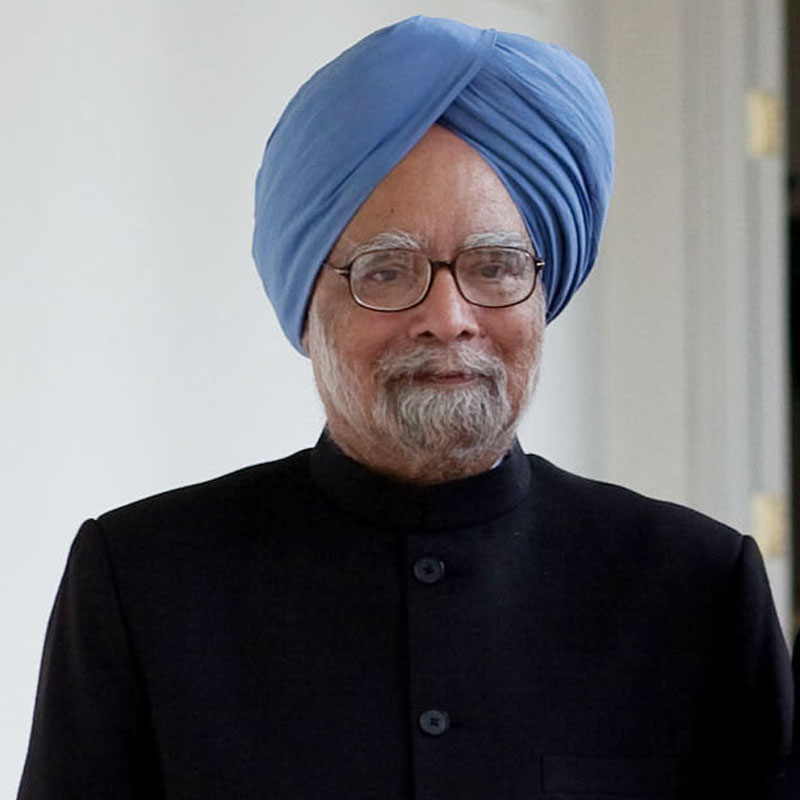
NEW DELHI: Prime Minister Manmohan Singh today flagged off three major challenges for the industry and the Government to take the Telecom revolution to the next level: deepening penetration of basic telecom services, providing affordable and accessible broadband services, and strengthening domestic manufacturing capabilities across the entire value chain in telecom and electronics.
Addressing the Seventh edition of India Telecom under the theme ‘New Policy Framework: Envisioning the Next Telecom Revolution‘, Dr. Singh said: “The Indian telecom sector has seen phenomenal growth over the past decade or so. With around 965 million telephone connections, India is the second largest telecom market in the world as a whole. The telecom sector has also been the driver of foreign direct investment and FII flows into our country. It has contributed in a major way to the dynamism of our economy.”
The three-day ‘India Telecom‘ is organised by FICCI in association with the Department of Telecommunications, Communications and Information Technology Ministry. This is the biggest telecom event in the Indian subcontinent and has been the forum for emerging knowledge center, inspiring innovation, technology transfer, exchange of innovative ideas and joint ventures in telecom sector since 2006.

The Prime Minister said during the last one year, the government had taken a number of initiatives in the telecom sector. “We have announced the New Telecom Policy-2012. We have attempted to clarify the policy positions on a number of complex issues. We have attempted to ensure adequate availability of spectrum and its allocation in a transparent manner through market-related processes. I am confident that the futuristic policy regime that we are now putting in place will address, and address effectively, the concerns that have been worrying investors and will provide a new impetus to the growth of telecommunication industry in our country,” remarked Dr. Singh.
He listed three broad aspects which should guide the collective efforts in telecommunications in the years to come.
The first issue is the penetration of basic telecom services in our rural economy. The exponential growth of the telecom sector has been primarily driven by growth in the use of telephones in urban areas. The full potential of telecommunications in enabling higher growth will not be realised until the use of telephones spreads much wider in the rural economy of India as well. While urban India has today reached a teledensity of 169 per cent, the teledensity in rural India stands at only 41 per cent. Not only this, the bulk of the 59 per cent people who do not use phones in rural areas is perhaps from the socially and economically backward sections of our society.
He added, “We must address this rural-urban divide if we have to achieve our goal of socially inclusive growth. Today, network coverage is there in most parts of our country and the bulk of the population is already covered. It is possible that there are economic or other barriers preventing the spread of telephone usage. There is also an economic case for investing in business at the bottom of the pyramid. I urge industry, which has shown great innovation in the telecom sector, to come up with strategies to expand teledensity in rural areas. I also urge the Department of Telecommunications to think big and think creatively to see how the resources available to it, either through the USO Fund or otherwise, are better used to achieve this purpose. We cannot and we should not have an India where lack of a phone is a hindrance to inclusive growth. The New Telecom Policy-2012 envisages 70 per cent rural penetration by 2017 and 100 per cent by 2020. We should all work together to achieve these targets and in fact do better than what we have promised.”
On the issue of availability of broadband services,Singh said broadband improves the lives of people by providing affordable access to information and knowledge. Many Information and Communication Technology applications such as e-commerce, e-banking, e-governance, e-education and telemedicine require high speed Internet connectivity. Studies show that there is a direct correlation between an increase in broadband connectivity and growth in a country‘s GDP.
“The advent of smart phones and tablets at reasonable prices along with wide availability of telecom infrastructure across our country would provide an opportunity for us to ensure an equitable spread of broadband services. We must, therefore, seize this opportunity. Recognizing the significance of broadband connectivity as a tool for empowering our rural masses, our government has launched the National Optical Fibre Network project to provide broadband connectivity to all our Panchayats. This unique project will usher a new era in telecommunications by establishing information highways across the whole length and breadth of our country, particularly in rural areas,” said Singh. In this context, he urged all government departments and the private sector to work creatively to ensure that this infrastructure is efficiently used to make broadband services truly affordable and accessible.
“I would also like to reflect on the thinning down of our domestic manufacturing capabilities in telecom in particular and in electronics in general over the past two decades. We need to strengthen our domestic manufacturing capabilities across the entire value chain in telecom and electronics. The new Telecom and Electronics Policies lay down the regime for enabling this to happen. Now it is for the captains of our industry, particularly in the private sector that they have to seize this unique initiative. As a major automobile buying country, we have developed a strong automotive sector. I believe this can be and must be replicated in telecom and electronics as well. We need leaders in telecom and electronics manufacturing who can break new ground and create the ecosystems to enable India to be a major producer of hardware,” stated Dr. Singh.
Telecom Minister Kapil Sibal announced that nationwide Mobile Number Portability (MNP) is expected to be rolled out by February next year, which will allow users to retain their numbers even if they move from one state to another.
Sibal said, “For the timely implementation of the National Telecom Policy (NTP) 2012, the Department of Telecom has finalised broad agenda for next three months from December 2012 to February 2013.”
Some of the key initiatives to be completed by February 2013 mentioned by him were approval of spectrum assignment and pricing, unified licensing regime, M&A guidelines, finalisation of guidelines for spectrum sharing, creation of fund for R&D and manufacturing and MNP on a nationwide basis.
Minister of State for Telecom Milind Deora pointed out that the telecom sector is at a nascent stage and technologies and policies are still evolving. “We need to create a data ecosystem and all Indians must have access to voice services, high-speed internet connection at affordable prices and New Telecom Policy 2012 aims to achieve this target by 2020. Also, unified license which is approved by the Cabinet will further help in penetrating rural India,” Deora explained.
FICCI President R V Kanoria said the New Telecom Policy 2012 will provide a platform for socially inclusive growth of the telecom sector. “It will help in formulating the next step to sustain this growth and ensure affordable telephony, impact the services, delivery and will empower rural India,” he added.






Applications
With 57 per cent single new users, Ashley Madison rebrands as discreet dating platform
Platform says majority of new members now identify as single

INDIA: Ashley Madison is shedding the “married-dating” label that defined it for two decades, repositioning itself as a platform for discreet dating in what it calls the post-social media age.
The rebrand, unveiled in India on 27 February, 2026, marks a structural shift in business model and identity. Once synonymous with married dating, the company now describes itself as the “premier destination for discreet dating” under a new tagline: Where Desire Meets Discretion.
The pivot is data-driven. Internal figures show that 57 per cent of global sign-ups between 1 January and 31 December, 2025 identified as single: a notable departure from the platform’s married core. The company argues that its community has already evolved beyond its original positioning.
“In an age where our lives have been constantly put on public display, privacy has become the new luxury,” said Ashley Madison chief strategy officer Paul Keable. He framed the platform’s offering as “ethical discretion” for singles, separated, divorced and non-monogamous users seeking private connections.
The shift also taps into wider digital fatigue. A global survey conducted by YouGov for Ashley Madison, covering 13,071 adults across Australia, Brazil, Canada, Germany, India, Italy, Mexico, Spain, Switzerland, the UK and the US, found mounting discomfort with hyper-public online lives.
Among dating app users, 30 per cent cited constant swiping and messaging as a source of fatigue, while 24 per cent pointed to pressure to curate public-facing profiles and early personal disclosure. Some 27 per cent said fears of screenshots or information being shared contributed to exhaustion; an equal share cited unwanted attention.
The retreat from oversharing appears broader. According to the survey, 46 per cent of adults actively try to keep most aspects of their life private online. Only 8 per cent feel comfortable sharing most aspects publicly, while 35 per cent say they are becoming more selective about what they disclose.
Ashley Madison is betting that this cultural recalibration towards controlled visibility can be monetised. By doubling down on privacy infrastructure and reframing itself around discretion rather than infidelity, the company is attempting to convert reputational baggage into a premium proposition.








