News Broadcasting
Euronews launches in Arabic


MUMBAI: Euronews, which covers world affairs from a European perspective, has started broadcasting in its eighth language, Arabic, from 12 July. The other languages of broadcast are: English, French, German, Italian, Spanish, Portuguese and Russian.
Euronews Arabic will use the existing distribution network globally. The channel has been carried on two new satellites of the Arabsat fleet, since 1 July, via digital transmission to extend its reach to a potential audience of nearly 32 million households in the Middle East, says a company release.
Euronews claims that with these two satellites, the channel is now available in 248 million households in 135 countries worldwide.

For the new channel, Euronews has recruited a 17-member team of Arabic-speaking journalists. The team is headed by Mohamed Abdel Azim, who participated in the original launch of Euronews in 1993, and is made up of journalists from eight different countries: Algeria (6), Bahrain (1), Egypt(1 + the head of the Arabic team), Lebanon (3), Morocco (1), Palestinian territories (1), Syria (1) and Tunisia (2).
“We must build an intellectual and cultural bridge over the Mediterranean; a bridge founded on mutual understanding and shared values. Increased cooperation in the Euro-Mediterranean region is of vital and strategic importance for all partners in political, economic and cultural terms. Euronews in Arabic will contribute to the exchange of cultures between the European Union and the peoples of other parts of the world, in particular from the other side of the Mediterranean and the Middle East,” said European Parliament president Hans-Gert Pöttering.
Adding further, Euronews chairman and CEO Philippe Cayla said, “Our Arabic version will help Arabic-speakers to better understand the framework and issues around European policies. Euronews Arabic will also enhance the channel’s position as an international reference for global news.”




News Broadcasting
CNN-News18 to host Fury in the Gulf conclave on West Asia crisis
Three-hour summit to unpack geopolitical fallout and impact on India
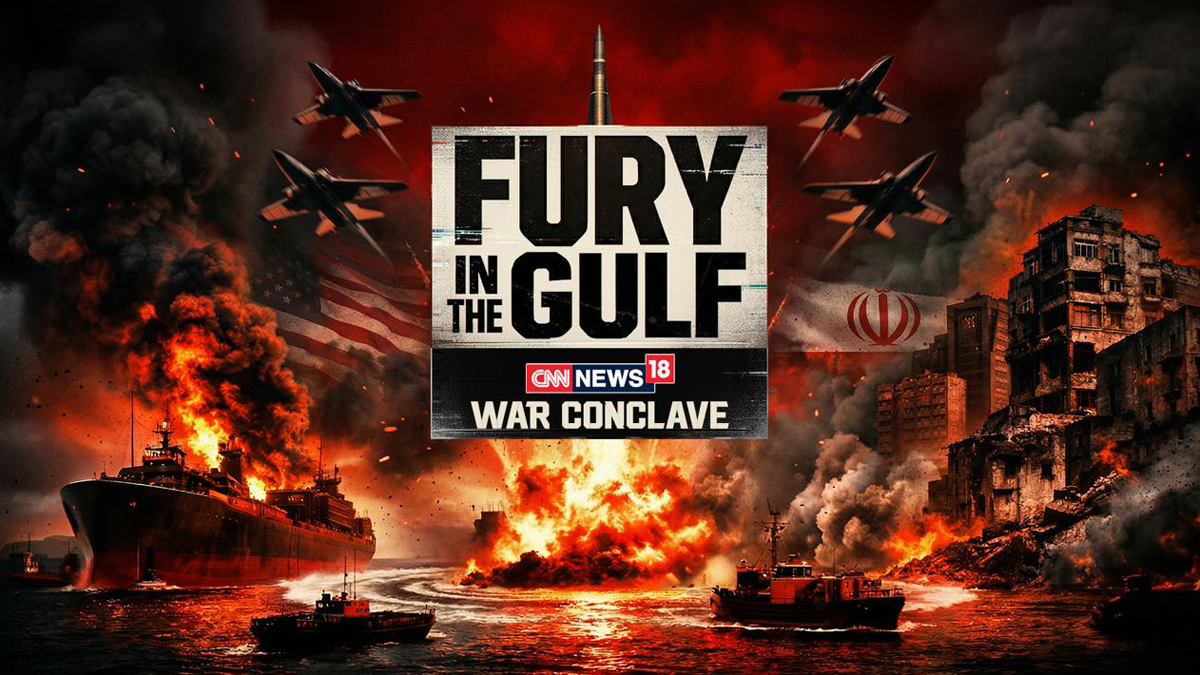
MUMBAI: CNN-News18 is set to host a special three-hour broadcast, Fury in the Gulf – War Conclave, on April 7, aiming to decode the escalating West Asia crisis and its far-reaching implications for India.
Scheduled from 4:00 PM to 7:00 PM, the conclave comes at a time when tensions between Iran and the United States are reshaping global geopolitics and triggering economic uncertainty. With India’s deep energy ties, trade links and large diaspora in the Gulf, the developments carry significant domestic relevance.
Built around the theme ‘Conflict, Consequences, and The Future,’ the programme will feature six curated sessions combining one-on-one interviews and panel discussions. The focus is to cut through the clutter and offer viewers a clearer understanding of the fast-evolving situation.
Key sessions include ‘Diplomacy in Times of War’ featuring Shashi Tharoor, and ‘World After the Iran Conflict’ with voices such as Ram Madhav, Reuven Azar, representatives from the European Union and the Iranian Deputy Envoy. Another session titled ‘Another Dunkirk?’ will bring together K. J. S. Dhillon and Jitin Prasada among others.
CNN-News18 editorial affairs director Rahul Shivshankar said, “In times of war, clarity becomes the most powerful tool. Fury in the Gulf – War Conclave brings together credible voices to address the questions and confusion that arise amid an overwhelming influx of information.”
He added that the initiative is aimed at delivering “facts, perspective, and insight” at a time when misinformation can easily cloud public understanding.
Echoing the sentiment, CNN-News18 CEO– English and business news Smriti Mehra said the conflict marks a defining global moment, with consequences that extend well beyond the region. She noted that the conclave seeks to present the crisis with “depth, nuance and responsibility” so audiences can better grasp its real-world impact.
As geopolitical tensions continue to dominate headlines, the conclave positions itself as an attempt to bring order to the noise, offering viewers a structured, insight-led look at a complex and rapidly shifting global situation.






