News Broadcasting
ET NOW lights up Diwali with mega market specials


MUMBAI: This Diwali, ET NOW is making markets sparkle! India’s leading English business news channel has launched its Mega Diwali programming special, “Samvat 2082: Save, Invest, Prosper”, bringing investors closer to the festive action while decoding the country’s economic pulse.
Presented by SBI Bank and co-powered by SBI Life Insurance and Polycab, the week-long coverage runs until 20 October and culminates in the Grand Muhurat Trading special on 21 October. With GST rate cuts and policy reforms shaping the economic backdrop, ET NOW aims to empower viewers with insights into investment strategies, consumption trends, and market opportunities.
Highlights include Investment Gurus, featuring experts like Ramesh Damani, Rajeev Thakkar, Atul Suri, and others, who decode their outlooks for Samvat 2082. Consumption Pulse explores festive spending across automobiles, FMCG, retail, jewellery, and real estate, with insights from industry leaders including Harsh Mariwala and Santosh Iyer.

Live interaction formats like deal or no deal answer viewers’ stock queries, while Fund’tastic Managers presents strategies from top mutual fund leaders such as Radhika Gupta and Prashant Jain. Commodity trends are tracked in Commodity Central, and investment opportunities are identified in Cracker Stocks, ranging from “Safe sparklers” to “High-risk rockets.”
Primetime specials include ET NOW Realty Reckoner on 15 October, deep-diving into real estate across metros and emerging cities, and The Ultimate Snakes & Ladders on 17 October, reflecting India’s market highs and lows. The grand finale on 21 October features Muhurat Trading, with market stalwarts Vijay Kedia, Nilesh Shah, and Sunil Singhania leading live coverage and sharing wealth insights.
With this festive line-up, ET NOW is combining expert analysis, interactive shows, and cultural relevance to help viewers navigate Samvat 2082 with confidence, ensuring Diwali celebrations are as bright financially as they are culturally.






News Broadcasting
News18 India launches Command Centre war explainer with Arya
New show shifts from debates to decoding global conflicts and impacts
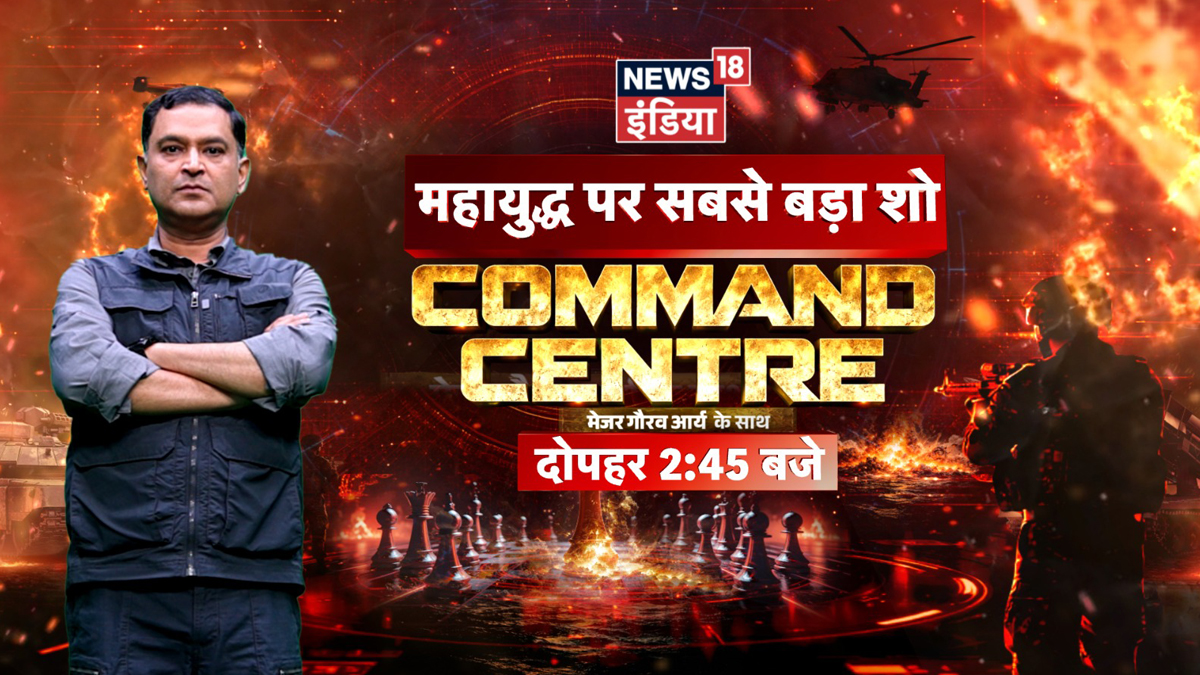
MUMBAI: News18 India has rolled out a new war-focused programme, Command Centre, featuring Gaurav Arya, as it looks to offer viewers a sharper, more grounded take on global conflicts amid rising tensions in West Asia.
Positioned as an “insider war room”, the show moves away from conventional panel debates and instead focuses on explaining military developments, decoding strategy and connecting global events to their everyday impact, from fuel prices to economic shifts.
The format leans heavily on visuals and data. The studio has been designed like a command hub, complete with large LED war maps, real-time graphics and an alert system to track developments as they unfold.
At the centre of it all is Arya, who brings his military background to simplify complex war strategies for viewers. His signature line, “Seedhi baat samjhiye”, anchors the show’s promise of clarity over noise.
News18 India managing editor Jyoti Kamal said, “Command Centre, featuring Major Gaurav Arya is designed to deliver accurate insights and a clear perspective on how evolving conflicts impact everyday life, from household budgets to national security. With expert voices analysing every development in real time, the show goes beyond headlines to decode what’s happening now, what it means, and what could come next.”
Echoing the intent, Gaurav Arya added, “In times of war, confusion is the biggest threat. With News18 India’s Command Centre, we are bringing viewers inside the war room, decoding strategies, tracking every escalation, and explaining, in the simplest terms, what it means for India and for every household. Seedhi baat samjhiye, this is where you understand not just what is happening, but what happens next.”
The weekday show will air in the afternoon slot and will also feature Gaurav Shukla, adding to its editorial depth.
With its mix of analysis, visuals and a clear focus on impact, the show reflects a broader shift in news consumption. Viewers are no longer just watching events unfold, they are looking to understand what those events mean for them.







