News Broadcasting
ESS threatens to switch-off InCable following expiry of deal


MUMBAI / NEW DELHI: It was too good to last. The “truce” reached last month (14 December) between sports broadcaster ESPN Star Sports and Hinduja group MSO InCableNet looks all set to unravel in Mumbai and possibly in other centres as well.
And for the avid cricket lover, the timing couldn’t have been worse. The Indian cricket team’s magnificent performance in the ongoing test series with Australia would only have vetted the viewers’ appetites for the one-day spectacle that is to follow.
For the record, ESS shot off a missive to InCableNet yesterday, asserting that the agreement that was in place had become invalid as off 31 December. The letter set a deadline of 5 pm today for InCableNet to revert on the matter. The letter holds out the threat that if the MSO failed to respond, ESS would be free “to take all necessary and relevant steps” (read shut-off).

InCableNet on its part sent off a reply asserting that since a meeting to discuss this very matter had already been scheduled for the 5th in Mumbai, it did not understand the purpose of the letter issued by ESS. InCableNet has further stated that as per the understanding reached between the two parties on 14 December, disconnection requires seven days prior intimation.
InCableNet also covered old ground in its response regarding the difficulties it was facing in raising monies from the ground:
*The MSO’s declared base to ESS in Mumbai exceeds its paid connectivity.
*Consumer resistance to increasing pay TV rates continues to be a strong disincentive to increasing rates.
*ESS’ “best rates and favourable terms” imply an increase of monthly pay outs by 36 to 40 per cent and with substantial upfront payments
Sricharan Iyengar, V-P affiliate sales ESPN Software had this to say about the looming face-off: “If the Hindujas don’t come back to us within the given deadline, then we would have no option but to switch them off.” He however clarified that at the moment both the parties were talking about the Mumbai market only, adding, “If the Hindujas don’t want to renegotiate for Mumbai, then we’d presume they won’t like to do for other markets too. The onus is on them.”
According to Iyengar, “The problem here is that the Hindujas are insisting on paying us according to the old rates that were signed two years back. Things have changed since 2001 and we would like to renegotiate, which they are not willing to do.”
“We had given them very attractive offers, including a variety of tariff plans, but they are not willing to negotiate. This stance is certainly not acceptable to us. They have come back to us on certain things, but they are actually non-proposals and bizarre.”
Iyengar further stated, “It is strange that the Hindujas neither want to accept the increased subscription rates (Rs 39.70), nor do they want to go in for an increase in the declared subscriber base. Their plea is that the company cannot pay anything more as they themselves get paid a certain amount. If the Hindujas want to give the ESS feed free to their distributors, it’s their problem, not ours. Why should we sacrifice our revenues for such subsidisation?”
Looks like the first major face-off of the year between the cable fraternity and the pay broadcasters will be played out between “regular antagonists” ESS and InCableNet. And with the other pay broadcasters expected to make their own announcements of subscription rate hikes, expect more such face-offs to surface in the near future.




News Broadcasting
Network18 channels lead YouTube news viewership in March 2026
CNN-News18, News18 India and CNBC channels top categories with record views
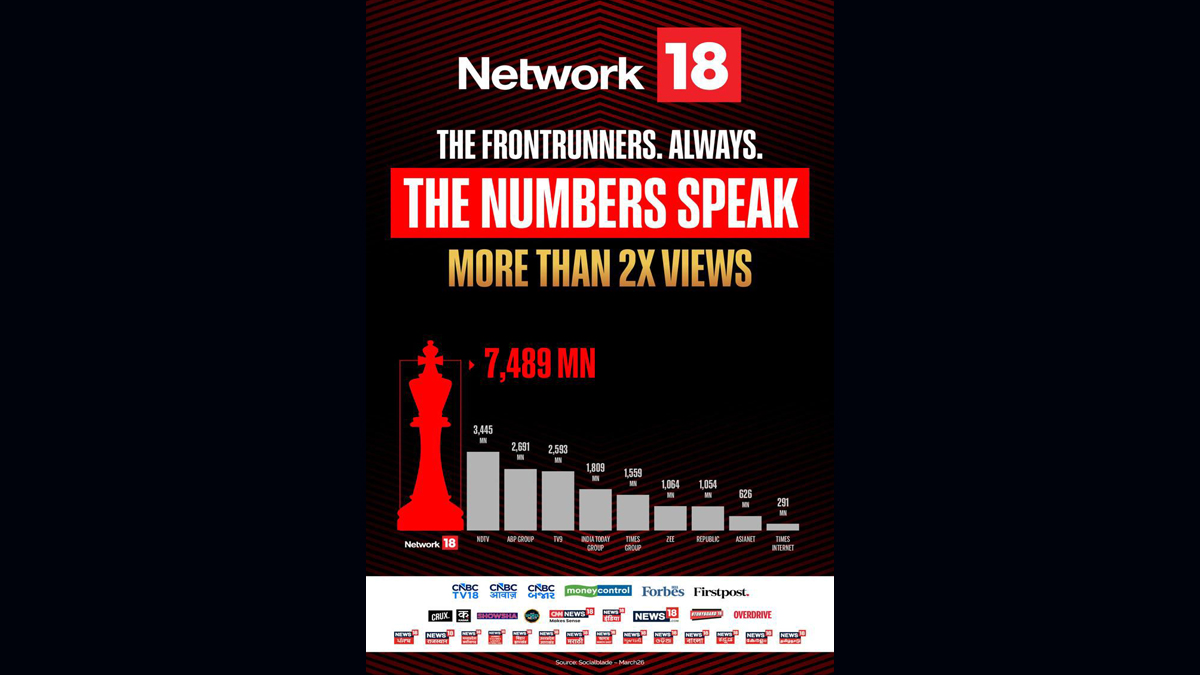
MUMBAI: When the world hit refresh on breaking news, Network18’s channels were already streaming ahead. As geopolitical tensions and war-driven headlines fuelled a surge in global news consumption, the network’s digital playbook delivered big clocking record Youtube viewership across English, Hindi and business news categories in March 2026.
At the forefront was CNN-News18, which emerged as the clear leader in the English news segment with 130 million live and video-on-demand views. The channel edged past competitors such as Times of India (126.5 million), Times Now (101.1 million), India Today (88.2 million) and NDTV (77.5 million), according to Databeings data for March.
In the Hindi news arena, News18 India delivered a commanding performance, racking up a staggering 3,297 million views on YouTube. The channel comfortably outpaced NDTV India, which recorded 3,119 million views, underlining its deep reach and consistent engagement with mass audiences, as per Playboard data.
The network’s dominance wasn’t confined to general news. In the Hindi business segment, CNBC Awaaz topped the charts with 92 million views, narrowly ahead of Zee Business (90 million) and well ahead of ET Now Swadesh (57 million). Meanwhile, its English counterpart CNBC-TV18 posted a strong 58 million views, reinforcing the network’s cross-category strength.
The spike in viewership reflects a broader shift in audience behaviour, with viewers increasingly turning to digital platforms particularly Youtube for real-time updates and in-depth coverage during high-intensity news cycles. For Network18, the numbers signal more than just scale; they underline the effectiveness of a multi-platform strategy that blends speed, credibility and continuous coverage.
In a month where the news never paused, it seems viewers chose to stay tuned where the stream never stopped.






