News Broadcasting
ESS creates music video to give PHL a push


MUMBAI: Music is the message for ESPN Star Sports (ESS) as regards creating awareness around its upcoming Premier Hockey League (PHL) initiative that kicks off on 13 January is concerned. Ek naya junoon! That is the title of the music anthem that ESS has created. The broadcaster had roped in A-list playback singer Sonu Nigam and music director Sandesh Shandilyato create the anthem for the event.
Sonu Nigam and music director Sandesh Shandilya
Speaking on the initiative ESS assistant marketing director Paras Sharma said, Hockey requires a punch to take it from its current status. Music is an ideal platform to re ignite the passion people have for the game. A music video will be crated from the anthem which will start airing on our channels and also on music channels. The song is about a renewal of spirit and passion, which is what ESS is aiming to do with PHL.
The music video is an attempt on our part to get hockey back into the reckoning. To create awareness about the PHL brand we are using our brand ambassador Sachin Tendulkar. He can be seen in promotional spots talking up PHL. These spots are airing during Indias match against Bangladesh. When the games kick off we are looking at roping in film stars to support the players

Sharma added that as the kick off date approaches the broadcaster will use print and radio in a big way in order to familiarise people with the teams and the different players. Online it will create a microsite where fans can get information of the teams as well as the playing schedule. There will also be road shows in the different cities whose teams are participating.
Team captains will visit important hangouts and locations. The aim is to create excitement among the locals that their team is participating and to enable them to rally around their team. He also dismissed the idea that the mediocre performance of the Indian national hockey team at the recently concluded Champions Trophy in Pakistan could dampen enthusiasm about the game. As far as sponsorship is concerned Sharma said that deals were in the process of being worked out.
Speaking about his involvement Nigam said, It feels great to be a part of the revival of hockey. Unfortunately Indians have lost interest in the game as cricket is seen as being more glamorous. The media is also to blame. All they want to do is promote cricketers and actors. In fact our music industry is also suffering as a result.
Why cant our media promote Dhanraj Pillay and music directors? What have we done for hockey and the players in the last 20 years? If we are unwilling to do anything to uplift the game then we should stop calling it our national sport. The PHL initiative is a laudable step by ESS and the Indian Hockey Federation (IHF) to bring back glory to the game. The anthem has been done with a great deal of enthusiasm and I am sure that it will inspire the players to give their best effort. Personally speaking I would like to see The Maratha Warriors do really well. Mumbai has produced some great sporting icons in the past like Prakash Padukone and the PHL could well be the avenue for more.
As had been reported earlier by indiantelevision.com Each game will have four quarters of 17 minutes and 30 second each, instead of the two halves. New concepts of time-outs have also been introduced in order to liven up the game. The winner within the stipulated time will get three points for each victory while the team winning in the extra time will share the points 2:1. The games will be played under floodlights.
The league will have two tiers having five teams each in the first year. Tier I will be called the Premier Division and Tier II will be called the First Division. The League will follow a round robin format with all teams playing each other twice. The winner will be decided on the basis of total points. What is interesting is that the team names were decided by a survey of people living in that particular city. For instance Hyderbad Sultans was chosen as Hyderbadis are associated with royalty and tradition which goes hand in hand with modernity. Bangalore High Fliers was chosen as residents of the Garden City consider themselves to be trendsetters, fore runners and leaders.
Buoyed by the success that its dual feed in English and Hindi for cricket received in the past ESS will also do the same for PHL. The television producers it has roped in have experience in producing hockey at the Olympics and Commonwealth games. One of the good things about PHL is the fact that players from Spain, Pakistan among other countries will also be participating. That will give the Indians valuable exposure. Right now discussions are going on with the various international hockey federations.




News Broadcasting
CNN-News18 to host Fury in the Gulf conclave on West Asia crisis
Three-hour summit to unpack geopolitical fallout and impact on India
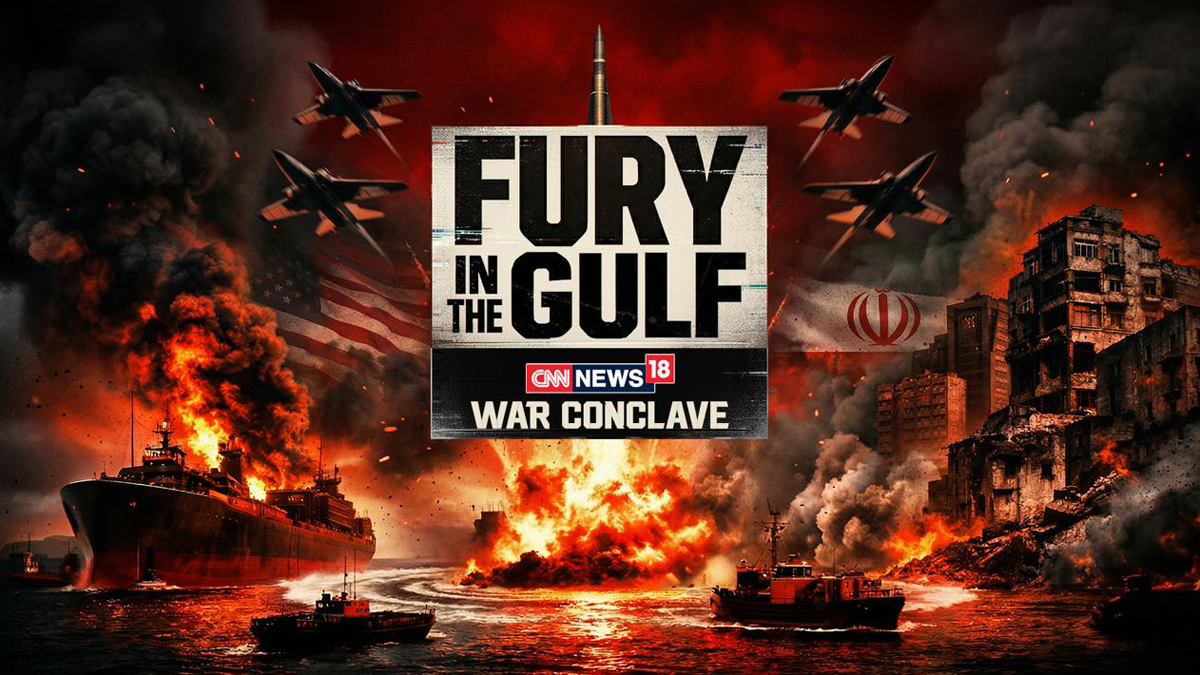
MUMBAI: CNN-News18 is set to host a special three-hour broadcast, Fury in the Gulf – War Conclave, on April 7, aiming to decode the escalating West Asia crisis and its far-reaching implications for India.
Scheduled from 4:00 PM to 7:00 PM, the conclave comes at a time when tensions between Iran and the United States are reshaping global geopolitics and triggering economic uncertainty. With India’s deep energy ties, trade links and large diaspora in the Gulf, the developments carry significant domestic relevance.
Built around the theme ‘Conflict, Consequences, and The Future,’ the programme will feature six curated sessions combining one-on-one interviews and panel discussions. The focus is to cut through the clutter and offer viewers a clearer understanding of the fast-evolving situation.
Key sessions include ‘Diplomacy in Times of War’ featuring Shashi Tharoor, and ‘World After the Iran Conflict’ with voices such as Ram Madhav, Reuven Azar, representatives from the European Union and the Iranian Deputy Envoy. Another session titled ‘Another Dunkirk?’ will bring together K. J. S. Dhillon and Jitin Prasada among others.
CNN-News18 editorial affairs director Rahul Shivshankar said, “In times of war, clarity becomes the most powerful tool. Fury in the Gulf – War Conclave brings together credible voices to address the questions and confusion that arise amid an overwhelming influx of information.”
He added that the initiative is aimed at delivering “facts, perspective, and insight” at a time when misinformation can easily cloud public understanding.
Echoing the sentiment, CNN-News18 CEO– English and business news Smriti Mehra said the conflict marks a defining global moment, with consequences that extend well beyond the region. She noted that the conclave seeks to present the crisis with “depth, nuance and responsibility” so audiences can better grasp its real-world impact.
As geopolitical tensions continue to dominate headlines, the conclave positions itself as an attempt to bring order to the noise, offering viewers a structured, insight-led look at a complex and rapidly shifting global situation.






