iWorld
Eros Now has 39.9mn paying global subscribers

KOLKATA: Eros Now has reported a 39.9 million paid subscribers and a total 224 million registered users worldwide as on 31 March, 2021. This represents 10.6 million net new paid subscriber added since 31 March, 2020, accounting for an annual growth rate of 36.2 per cent.
Eros Now plans to concentrate its reporting and guidance on premium paid subscribers, going forward, as the platform believes it is a more meaningful indicator of the platform’s performance and economic vitality, it has said in a statement.
As previously communicated, Eros Now has developed and grown through symbiotic partnerships with mobile telecom operators and other third-party distribution partners around the world. The Company believes these partnerships were fundamental to the business in its early stages of development because they allowed Eros Now to rapidly increase scale and cast a wide net to reach as many consumers as possible in a capital efficient manner.

While these partnerships will continue to play an important role going forward, Eros Now expects to pivot its distribution model to focus primarily on direct-to-consumer relationships while continuing to strengthen and expand select key distribution partnerships.
The COVID-19 pandemic continues to be a challenging crisis globally with significant business impact. Eros Now has seen growth in subscribers and consumption amidst the pandemic lockdowns, although there was a correction in the final months of calendar 2020 following the early lockdown surge. Overall engagement statistics on the Eros Now platform have increased in 2021 to date. For some indices, such as watch hours, engagement levels are at approximately twice the level as compared to “pre-lockdown”.
Subscribers: Going forward, Eros Now will concentrate on reporting the number of Premium Paid subscribers. A Premium Paid subscriber is defined as a consumer who subscribes to the Eros Now product for at least one month (30 days), either directly or indirectly through a bundled package with a distribution partner. As of 31 March, 2021, Eros Now had 19.0 million Premium Paid subscribers. The other 20.9 million paid subscribers, who purchase content a la carte or with sachet pricing (including single downloads or subscriptions lasting a day or a week), are defined as Base Paid subscribers.
Average Revenue per User (ARPU): Eros Now uses a “geo-sensitive” pricing model for its product in each market. Pricing is guided by the expectation that Eros Now is meant to be a high-quality and affordable mass-market entertainment service that allows people to consume content how and when they choose. Many users start their journey on Eros Now with short-form content or a la carte transactions for specific content, and then move on to more traditional subscription plans. The depth and availability of mass-market content is a tool to introduce consumers to the Eros Now product. As consumer engagement and consumption increases, Eros Now expects to focus on migrating these subscribers onto higher ARPU plans of longer duration. Consistent with Eros Now’s strategy to concentrate on direct-to-consumer relationships, the ARPU metric for Premium Paid subscribers will be an important indicator of the company’s progress. In fiscal 2021, the annual ARPU (net to Eros Now after deducting commissions, partnership fees, etc.) of Premium Paid subscribers was as follows:
All Premium Paid Subscribers – Global: $0.52
· Premium Paid Subscribers – India: $0.30
· Premium Paid Subscribers – International: $10.01
Watch Hours: A primary metric for video streaming businesses is watch hours, which represents the total viewing time spent by all consumers on an aggregate basis. Total watch hours for Eros Now in fiscal 2021 was 28.1 million hours. Watch hours relating to the top 25 titles on Eros Now was 10.3 million hours. This means that 63 per cent of total watch hours was generated by catalogue or non-tentpole films, including regional language movie titles, which is a testament to the salience and affinity of catalogue content with Eros Now subscribers.
Original content and series remain a very important driver and differentiator for subscriber growth. The Eros Now original series Flesh, which premiered on Eros Now in August 2020, was the biggest Eros Now original series as measured by paid subscriber increases, unique streams and watch hours. The total watch hours related to original Eros Now series during fiscal 2021 was 2.6 million hours, which represents nine per cent of the total Eros Now watch hours.
Consumer Profiles: Eros Now believes that analyzing consumption patterns from its subscribers and viewers around the world is an important factor in understanding the growth trends of the business. Below are selected datapoints of the global Eros Now consumer profile in fiscal 2021. Note that the datapoints are representative averages and there may be variances based on content launches, addition of new geographies and new subscriber additions to the platform.
· Gender: 75 per cent male / 25 per cent female
· Geography: Two third of Eros Now viewers are from India and the rest are from outside of India (United States is the second largest market with 10 per cent contribution)
· Age: 18-34 constitutes 80 per cent of the viewer base. The 25-34 age group demonstrated the largest growth during fiscal 2021.
· Tier 2 and Tier 3 cities in India (medium-to-small sized cities) now represent 50 per cent of overall Indian viewers.
The Indian OTT viewer has evolved throughout the pandemic period. Most of the OTT viewership growth in India is coming from Tier 2 and Tier 3 cities. In line with this, the majority of Eros Now viewers are in the younger demographic, less fluent in English and prefer to consume entertainment in Hindi or their native languages. Eros Now original series consumption is meaningful in India. The country accounted for 80% of watch hours for original series, of which 50% came from consumers in Tier 2 and Tier 3 cities.
Screen Engagement: A significant amount of Eros Now consumption is through smart TVs. For example, 50 per cent of watch hours for Metro Park season 2, which debuted in January 2021, were on smart TVs versus a single digit percentage of watch hours at the close of fiscal 2020.
Eros Now is focused on delivering premium digital entertainment to consumers across the world. Eros Now expects to see a modest reduction in Premium Paid subscribers in the short term due to the pivot in strategy towards direct-to-consumer. To maximize reach, Eros Now currently has global collaborations and partnerships with market-leading telecommunications operators, OEMs and digital distribution entities such as Amazon, Apple, Virgin Media and Roku, which allow Eros Now to be available to global audiences.
Eros Now currently has over 120 distribution partners and growing, with a meaningful number of partners signed up during the past twelve months alone. In addition, Eros Now has a unique and strategic relationship with Microsoft to further develop and create backend video technology on Azure. This collaboration will help Eros Now develop a new intuitive online video platform to ensure seamless delivery of content across varied consumer cohorts.
By 31 December 2021, Eros Now is targeting an annual Premium Paid subscriber ARPU globally in the range of $1.20 to $1.30. The company expects the ARPU growth will be driven by the pivot in strategy to focus more on direct-to-consumer relationships and by leveraging the bundling opportunities with distribution partners. Eros Now believes these factors will help grow ARPU and reduce churn.
The Eros Now content strategy will focus on new original Hindi language series, as well as augmenting the portfolio of regional language series to maintain and grow its leadership position in tier 2 and tier 3 regions of India. As previously announced in December 2020, Eros Now is planning to release a total of 46 original series and movies premieres across 8 Indian languages during fiscal 2021. To date Eros Now has released 25 titles with the rest to follow during fiscal 2021. In addition, Eros Now plans to introduce more genres of content.







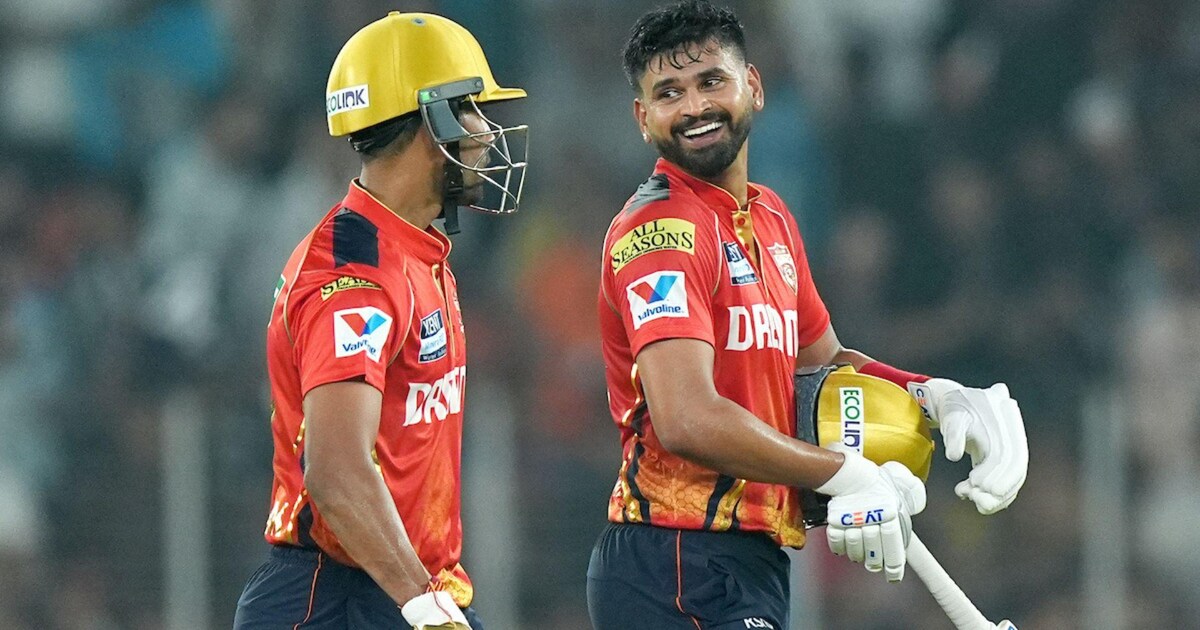
MUMBAI: If cricket were a binge-worthy series, this one just dropped its most explosive pilot yet. The opening weekend of the 2026 edition of the Indian Premier League has come out swinging, smashing records across both television and digital platforms and reaffirming the tournament’s unmatched pull in India’s sporting and media landscape.
Backed by two high-octane matches featuring 200-plus run chases, the tournament delivered a combined reach of over 515 million viewers across linear TV and digital platforms via JioStar’s broadcast ecosystem, including Star Sports and JioHotstar. More tellingly, engagement surged alongside reach, with total watch-time hitting 32.6 billion minutes, a sharp 26 per cent jump over the opening weekend of the previous season.
The numbers reveal a deeper shift in how India watches cricket. Connected TV (CTV) consumption rose by 30 per cent, while peak concurrency on digital platforms jumped 61 per cent, signalling a growing appetite for shared, big-screen streaming experiences. On traditional television, the momentum held strong, with TV ratings (TVR) climbing 24 per cent compared to earlier seasons’ opening matches.
A key driver of this spike has been the evolution of the viewing experience itself. This season introduced differentiated feeds, most notably a Hindi CTV broadcast featuring cricketing voices such as Ravichandran Ashwin, Suresh Raina, Harbhajan Singh, Virender Sehwag and Irfan Pathan. Blending expert analysis with a watch-along format, the feed has added a conversational, almost second-screen feel without requiring viewers to leave their screens.
According to JioStar CEO for Sports Ishan Chatterjee, at the opening weekend underscores not just scale but also the depth of engagement that live cricket continues to command. He noted that the combination of large-screen viewing and digital interactivity is creating a more immersive and personalised experience, while also delivering tangible outcomes for brand partners.
From the league’s perspective, the early numbers point to a tournament that continues to reinvent itself. Arun Singh Dhumal, Chairman of the IPL, said the strong start reflects how high-quality cricket paired with enhanced viewing formats is resonating with audiences nationwide, while Board of Control for Cricket in India secretary Devajit Saikia highlighted the “quality of engagement” as a key takeaway, not just the scale.
Commercially too, the opening weekend signals robust advertiser confidence. The broadcast is led by co-presenting sponsors including Google (Search AI Mode), Campa Energy, and Havells & Lloyd, alongside co-powered partners such as Birla Opus, Hero Motocorp and Amazon. A long tail of associate sponsors from OpenAI and Asian Paints to Flipkart and Amul further reflects the league’s unmatched ability to aggregate advertiser interest at scale.
Taken together, the opening weekend numbers are less a spike and more a statement. With 515 million viewers, 32.6 billion minutes of watch-time, and double-digit growth across formats, IPL 2026 has not just started strong, it has set the tone for a season that looks poised to push the boundaries of both sport and spectacle.






