News Headline
‘Era of subscription rather than advertising supported media content is approaching us fairly quickly’

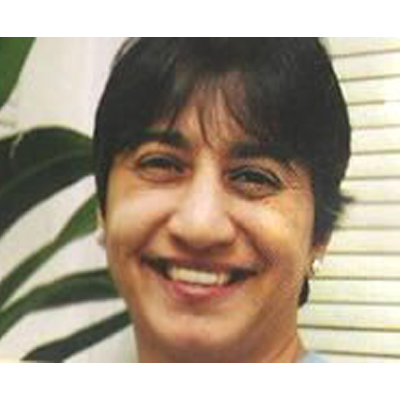
Lintas Media Services director Lynn de Souza says the year has been good for business. But she has a word of caution: there is just too much of ads going around for viewers to stomach.
Business wise, 2006 has been a good year for advertising with both value (up 19 per cent) and volume increases. The total number of spots aired on television has shot up by 35 per cent from 10.3 million in 2005 to 13.9 million this year. For the month of September alone there was a 51 per cent increase. Plus, there was more branded content on all media including cinema than ever before.

However, was this also good for the lay consumer, the housewife in Amritsar, the executive in Bandra, and the schoolboy in Chhatisgarh?
Our lives have been swept up by the media. A good one third of the average Indian’s waking hours is spent with the mass media in some form or other – all through the day. Our lifestyles, values and opinions are being shaped by what we see and hear on the mass media as never before. 2006 gave birth or renewed life to many news and children’s tv channels, global magazine titles, regional language editions of newspapers, FM radio stations. So far all of these, without exception, are advertiser supported.
It has therefore become virtually impossible for the average consumer to find a free moment in space or time where he or she is not accosted by advertising – on the streets, in malls, in airplanes, on the cellphone, in coffee shops, hotels and health clubs, while surfing the internet – besides the expected fare on tv, radio, newspapers and magazines.
It should come as no surprise to us therefore that he or she has begun to get rather annoyed. Our latest estimate of active ad avoidance in this country has crossed 70 per cent for every medium, among heavy upmarket media consumers. Passive ad avoidance is not far behind. Avoidance of advertising among the rural rich is even higher. I therefore doff my hat at all of us who persist with our careers in advertising. This must be the only profession in the world in which the eventual consumer does his or her best to ignore and avoid and turn away from what we have to say.
Intellect, our research and technology unit, recently released ‘Engross’, a survey conducted last month among over 2000 upmarket Indians to measure ad avoidance, ad perception and media engagement. Since we expected to find high ad avoidance levels, even on the more personalized media like radio and internet, we further probed on the reasons, our suspicion being that perhaps consumers didn’t like advertising at all. Indeed, the feedback was exactly the opposite. An overwhelmingly high cross section of consumers enjoy and appreciate advertising, and find it informative and helpful.
So why do they avoid something they like? Simply because there is just too much of it going around to stomach. The same ad over and over again. Too many ad breaks. Ads inside content. Ads on covers. For the smart consumer, it’s really getting to be a bad mad ad world.
There is a lesson in this for both media owners and advertisers. The day is not far off when these consumers will pay extra for ad free content. The era of subscription rather than advertising supported media content is approaching us fairly quickly. As advertisers we have unfortunately been caught up in the whirlwind of downward spiralling media rates, and have helped compound the problem of over advertising. Every time we have insisted on a lower unit rate we have been given bonus time and space by the media owners, thus contributing to the overload. We have together written up a volume over value charter, and the consumer is now clearly saying to us, “I don’t like this. I don’t like being taken for granted.”
I hope we will all listen to this voice in 2007. Engross gave us another important learning – for years, content has been informative and advertising has been entertaining. Now however, the consumer finds content, even on the so called information media, highly engaging and entertaining, and considers good advertising to be informative. We would therefore be quite foolish to demean the value of advertising in his or her mind through poorly judged placements.
To 2007, may our business continue to grow, and may our customers enjoy it too.


NEW DELHI: Hamdard Laboratories gathered a cross-section of India’s achievers in New Delhi on Friday, handing out the Hakeem Abdul Hameed Excellence Awards to figures who have left their mark across healthcare, education, sport, public service and the arts.
The ceremony, attended by minister of state for defence Sanjay Seth and senior officials from the ministry of Ayush, celebrated individuals whose work blends professional success with a sense of public purpose. It was as much a roll call of achievement as it was a reminder that influence is not measured only in profits or podiums, but in people reached and lives improved.
Among the headline awardees was Alakh Pandey, founder and chief executive of PhysicsWallah, recognised for turning affordable digital learning into a mass movement. On the sporting front, Arjuna Awardee and kabaddi player Sakshi Puniya was honoured for her contribution to the game and for pushing women’s participation onto bigger stages.
The cultural spotlight fell on veteran lyricist and poet Santosh Anand, whose songs have echoed across generations of Hindi cinema. At 97, Anand accepted the honour with characteristic humility, reflecting on a life shaped by perseverance and hope.
Healthcare honours spanned both modern and traditional systems. Manoj N. Nesari was recognised for strengthening Ayurveda’s place in national and global health frameworks. Padma shri Mohammed Abdul Waheed was honoured for his research-backed work in Unani medicine, while padma shri Mohsin Wali received recognition for his long-standing contribution to patient-centred care.
Education and social development also featured prominently. Padma shri Zahir Ishaq Kazi was honoured for decades of work in education, while former Meghalaya superintendent of Police T. C. Chacko was recognised for public service. Goonj founder Anshu Gupta received an award for his dignity-centred rural development initiatives, and the Hunar Shakti Foundation was honoured for empowering women and young girls through skill development.
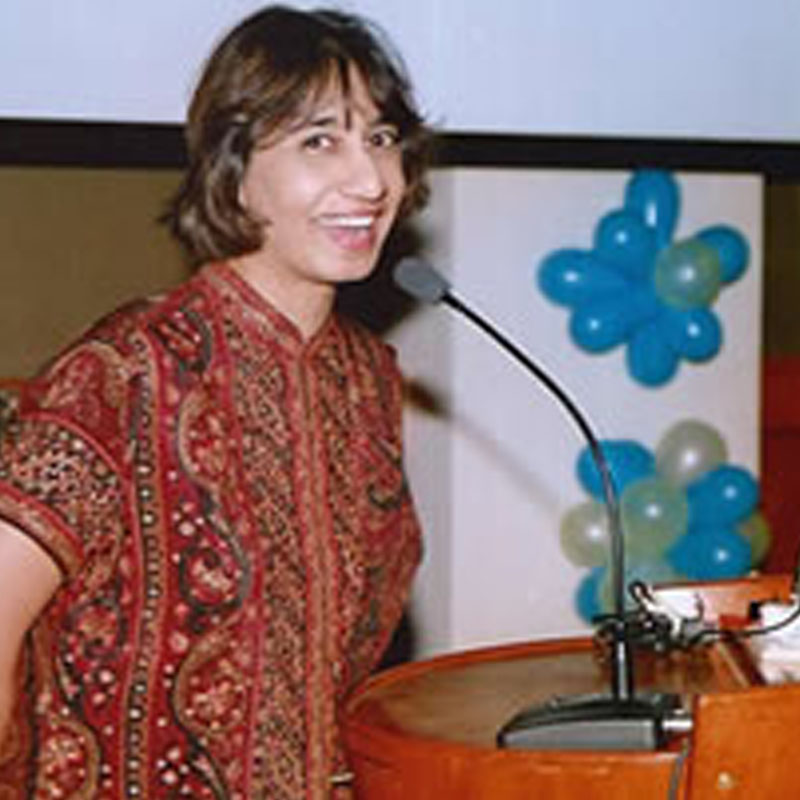
The Lifetime Achievement Award went to former IAS officer Shailaja Chandra for her long career in public healthcare and governance, particularly in the traditional systems under Ayush.
Speaking at the event, Hamdard chairman Abdul Majeed said the awards were a tribute to those who combine excellence with empathy. “These awardees reflect Hakeem Sahib’s belief that healthcare, education and public service must ultimately serve humanity,” he said.
Minister Seth struck a forward-looking note, saying India’s young population gives the country a unique opportunity to become a global destination for learning, health and wellness by 2047.
The ceremony also featured the trailer launch of Unani Ki Kahaani, an upcoming documentary starring actor Jim Sarbh, set to premiere on Discovery on 11 February.
Instituted in memory of Unani scholar and educationist Hakeem Abdul Hameed, the awards have grown into a national platform that celebrates those building a more inclusive and resilient India. For one evening at least, the spotlight was not just on success, but on service with substance.







