GECs
Enter Media 2001 ends; industry fears overregulation in new convergence bill


The The convergence bill may be a long way away but it was very much on the radar screen as the two-day Enter Media 2001 conference organised by the Confederation of Indian Industry (CII) in Mumbai ended today.
The point was forcefully made in the penultimate as well as the last session of the conference which dealt with the print media and the regulatory environment respectively. Speakers representing the print media decried the government’s plans to introduce a far more overarching media council to replace the existing Press Council of India. The last session dealing specifically with “governance for the media and entertainment industry” ended with a common consensus that the industry must safeguard its own interests and needed self-regulatory mechanisms put in place. It was agreed that education on the issues involved was critical and that there was a need for an arbitration body which would be able to centralise agreements under one forum.
Chairman the conference task force, Biren Ghose, CEO of UTV Interactive, summed up issues which had a realistic chance of resolution if an organised effort was initiated. These would be included in the white paper to be produced by CII in conjunction with Ernst and Young within a month. That all these issues would be addressed within a time frame of 12 months is what is being promised.

FILMS: 1) Curbing piracy and enforcement. 2) Need for corporatisation of the industry. 3) Nurturing of film professionals – first assistant directors and scriptwriters.
TELEVISION AND BROADCASTING: 1) Addressability – Crucial both on the revenue front as well as enabling proper assessments of connectivity and related issues. 2) Subscriber rates have to go up if the industry was to launch itself into the next phase of growth. 3) Current television ratings systems need to acquire greater credibility as to how representative they are of actual channel and programme penetration.
FM RADIO: 1) Privatisation should continue. 2) Licence fees too high. 3) More FDI (foreign direct investment) inflows needed. MUSIC: All round appreciation for the way the industry has organised itself to curb piracy. Attempt should be to scale up the IMI (Indian Music Industry) model across the entertainment industry.
CONTENT: Build Indian services / content across global markets.
INTERNET AND BROADBAND: 1) Bandwidth issues are best left to the government or at best big corporates. 2) How to use the Internet as a transaction currency. 3) Spread cyber cafes the way STD booths have spread across the country. 4) Work on anti-piracy models for the Net.
FINANCING: 1) Look at a model of a risk reduction formula. 2) Corporatisation 3) Limited partnerships



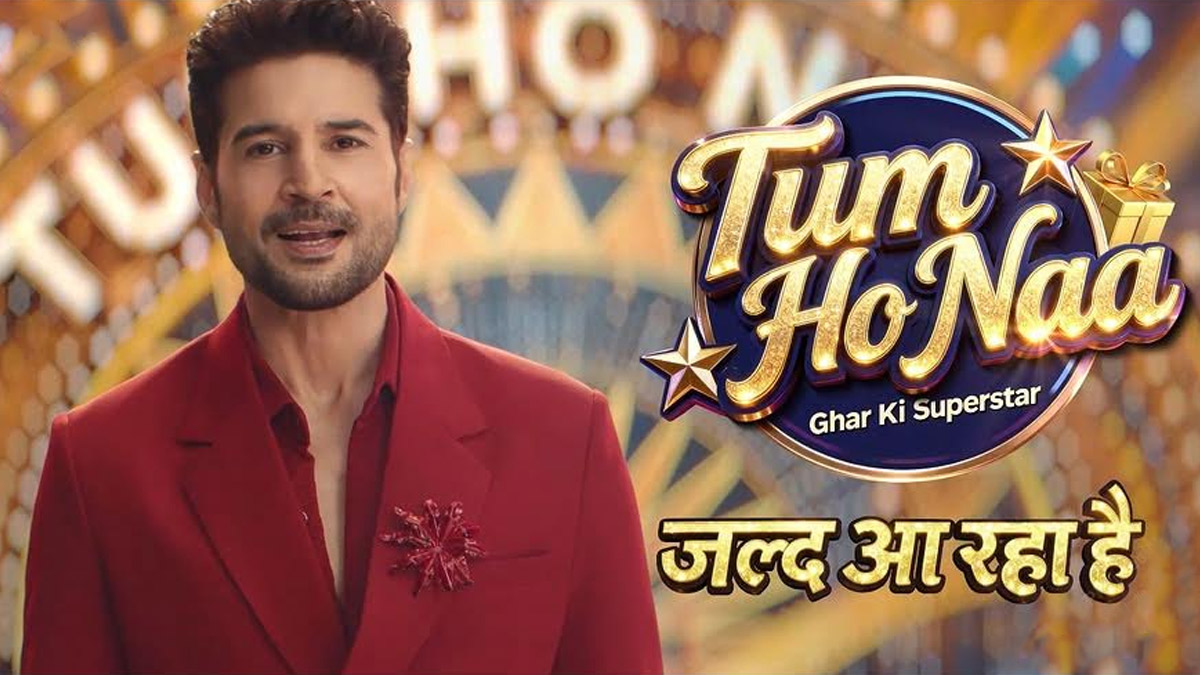
MUMBAI: Lights, camera… connection because this time, the game isn’t just about winning, it’s about who’s with you. Sony Pictures Networks India is gearing up to launch a new reality game show, Tum Ho Naa, expanding its unscripted slate with a format that promises both emotion and engagement.
The show will premiere soon on Sony Entertainment Television and stream on Sony LIV, with Rajeev Khandelwal stepping in as host. Known for his measured screen presence and selective choices, Khandelwal’s return to television adds a layer of familiarity and credibility to the upcoming format.
While specific details of the gameplay remain under wraps, the positioning suggests a reality format that leans as much on emotional resonance as it does on competition, an increasingly popular blend in Indian television, where audiences are gravitating towards content that offers both stakes and storytelling.
Khandelwal, reflecting on his return, noted that his choices have often been guided by instinct rather than convention, describing Tum Ho Naa as a project that feels “close to the heart”. His association also signals Sony’s continued focus on anchoring new formats with recognisable faces who bring both relatability and depth.
The launch comes at a time when broadcasters are doubling down on original non-fiction formats to drive appointment viewing, even as digital platforms expand parallel reach. By placing the show across both linear television and OTT, Sony appears to be aiming for a dual-audience strategy capturing traditional viewers while engaging digital-first consumers.
As the countdown to premiere begins, Tum Ho Naa positions itself not just as another game show, but as a reminder that sometimes, the biggest prize on screen isn’t the jackpot, it’s the journey shared along the way.






