Hollywood
Emerging technologies create problems for release of new films


NEW DELHI: Over 350 different versions of Captain America: The Winter Soldier was created in just 17 days, in order to play in all its formats in theatres across the United States and internationally.
Those formats include: 2D, 3D, film and digital. Other variants might include 4D, IMAX, and high frame rate. In the near future, laser light projectors, Dolby Atmos, and Barco Auro will require even further versions of feature films. These can include any combination of 2D, 3D (typically at least two versions at different light levels), possibly Imax and in the case of The Hobbit, a high-frame-rate option. If one has a “4D” release, each of the three 4D companies — CJ 4DPlex, MediaMation and D-Box — require their own proprietary version.

With tight turnaround times, and an ever-increasing number of variables to consider, executives are not seeing an end to this problem, though they are hoping that standards will help alleviate at least some of the workflow.
“Standards will help with some of the chaos,” says an executive. “But we can’t afford to stay static. This is the new normal. We get it done, but it’s not easy. We learn, we get more efficient, and then something new comes along. It’s a cycle.”
With more than 95 per cent of the cinema screens in North America now converted to digital, executives find the situation is getting chaotic.
“Controlled chaos” is how one studio exec (who was not involved with The Winter Soldier) describes the situation as. The reason is that the various options afforded by digital technologies means that multiple versions of a movie are needed. “The number has skyrocketed.”
Several sources confirmed that it is not uncommon for a studio to create roughly 15 different versions of a movie for a domestic release — and some recent tentpoles have exceeded 30 different versions just for North America.
Meanwhile, laser light projectors with the promise of offering brighter images will be made available this year — and that may require another version. Barco’s recently unveiled Escape system (which creates a sort of Cinerama experience) would require another.
Film prints are still needed for the remaining theatres, though domestic distribution of a typical tentpole title to 4,000 screens generally means fewer than 100 film prints are being created. “It’s getting harder because all of this takes time,” admitted one studio executive.





Hollywood
Remembering Chuck Norris: the man, the myth, the legend at 86
From martial arts legend to internet folklore, fans honour his final level up
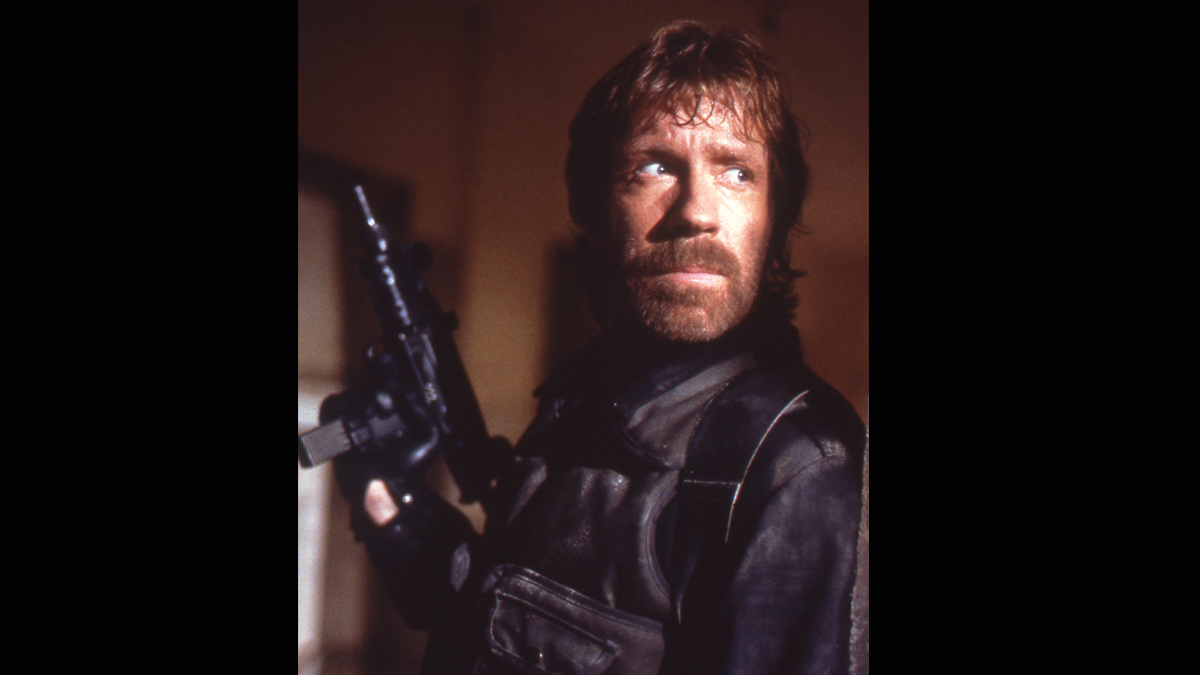
KAUAI: The world lost a legend on 19 March 2026, when Chuck Norris died aged 86. For a man long treated as immortal in internet folklore, the news felt almost unreal. Yet in true Norris fashion, the farewell has been less about mourning and more about myth-making.
Just days before his passing, on his 86th birthday, Norris shared a video from Kauaʻi, Hawaii, showing him sparring under the sun. His caption was characteristically wry: “I don’t age. I level up.” It now reads like a final wink to fans who had spent years elevating him to near-superhuman status.
His death followed a sudden medical emergency while on holiday. He passed away peacefully, surrounded by family, who described him not just as a global symbol of strength, but as a devoted husband, father and grandfather.
Online, grief quickly gave way to tribute in the language Norris helped popularise. Social media filled with one last wave of “Chuck Norris Facts”, the tongue-in-cheek myths that turned him into a digital demigod. The jokes wrote themselves, as always. Death did not take Norris, it finally dared to meet him.
Behind the humour, however, lies a formidable real-world legacy.
Long before the memes, Norris was Carlos Ray Norris, a decorated martial artist. After serving in the US Air Force, he rose to become a six-time world professional middleweight karate champion. His on-screen duel with Bruce Lee in Way of the Dragon remains one of cinema’s most iconic fight sequences.
Through the 1980s, he became the face of action cinema with films such as Missing in Action and The Delta Force, embodying a stoic, no-nonsense hero. In the 1990s, he reached living rooms worldwide as Cordell Walker in Walker, Texas Ranger, blending Western grit with martial arts flair.
Off-screen, his work carried equal weight. His foundation, Kickstart Kids, continues to teach martial arts to at-risk youth, focusing on discipline and self-worth. He also founded Chun Kuk Do, a martial arts system that trained thousands.
What made Norris unique was not just his strength, but his willingness to laugh at it. When the internet transformed him into an exaggerated symbol of invincibility, he embraced the joke. In doing so, he bridged generations, from cinema-goers to meme-makers.
His passing marks more than the loss of an action star. It signals the fading of a rare cultural crossover, where genuine athletic prowess met Hollywood heroism and early internet humour.
For many, remembering Chuck Norris means recalling a time when heroes were simple, punches were decisive and the internet still felt like a playground of shared jokes.
And if the myths are to be believed, this is not quite the end. It is simply Chuck Norris moving on to his next level.