News Headline
EC, I&B min turn down IBF plea

NEW DELHI: An impassioned plea by the Indian Broadcasting Foundation (IBF) for political advertisements to be allowed on TV channels, which have a wider reach than any other medium, failed to cut much ice today either with the Election Commission or the information and broadcasting ministry.
wAt both places, broadcasters were told that the law of the land is to be followed and the rules, as per the cable TV (Network) Regulation Act, state that no advertisements having political or religious overtones can be aired on TV channels as part of the programming and advertising code.
Information and broadcasting ministry secretary Pawan Chopra told journalists after a meeting with IBF members today, “EC has asked the government to follow the rules and we are doing it.” Unable to muster much support from the government or the election regulator, the broadcasters are now examining whether taking a legal recourse would make a difference or not. “All options are open to us,” IBF secretary-general NP Nawani shot back when asked whether the broadcasters would knock on the doors of the courts.

However, a member of the IBF, expressed his apprehension at moving the court on this issue. “Options would be discussed at a board meeting, but I don’t think moving court on the issue would be prudent,” the IBF member told indiantelevision.com.
It is interesting to see how the EC and the government are lobbing the issue of political ads back and forth in each other’s court. When asked specifically whether the government would disallow political ads on TV, though the India Shining campaign was given a free run on the electronic medium, Chopra said that it’s not in his or the government’s hands to take any new step at this juncture.
“The government is on an auto pilot mode (after the announcement of the general elections and the schedules over four phases) and at my level, at least, I don’t think things can be changed now,” Chopra explained, hinting that there is no proposal afoot to amend the rules concerned or the CATV Act.
The IBF’s contention has been that since TV is a mass medium, political advertisements should be allowed, as it would help facilitating “empowerment of the people” on the pros and cons of elections and voting, in general.
“There are millions of illiterates (in the country) who should be told about the election process and the agenda of political parties in a crisp manner,” Nawani said, adding, it’d be unfair on the government and EC’s part to “shut out” TV channels as far as political ads were concerned.Though Nawani said it would be difficult to compute the loss to the TV channels if political ads are banned on TV channels, industry said the amount would range between Rs 500-700 million.
Those who represented the IBF today included Zee Telefilms vice-chairman Jawahar Goel, TV Today Network CEO G Krishnan, BBC World resident director V Bakshi, representatives from Star India and Discovery India and officials from the IBF secretariat.
COURT DIRECTIVE ON INDIA SHINING CAMPAIGN
Even as the I&B ministry today termed that the India Shining campaign could not be called political advertisement, a Delhi court today asked the central government to disclose the amount spent on the much publicised ‘India Shining’ campaign.
Asked by indiantelevision.com how come the India Shining campaign was allowed on TV if political ads were banned under the CATV Act, Chopra said, “That cannot be termed a political advertisement. That campaign was to highlight the government’s achievements.”
The secretary did not elaborate what would be the criterion for political ads and those for `achievement’ campaigns. Meanwhile, a division bench, comprising chief justice B C Patel and Justice B D Ahmed, without issuing notice, asked the Centre to produce by next week the guidelines for incurring such huge expenditure (on the India Shining campaign in the media), reports United News of India (UNI).
The bench was dealing with two public interest litigations (PILs), seeking a ban on the publicity blitz and a full and proper statement of funds used in the ”India Shining” ”Bharat Uday” campaign. The petitioners — Unemployed Youth Unity Movement through its president and general-secretary and advocate Chanchal Thakur — alleged that the campaign was to benefit one political party, the UNI report stated.
On 25 February, the Centre had defended its advertisement campaign in the high court, saying it was the government’s right to inform the public about its achievements. Opposing the two PILs, standing counsel Sanjay Jain said such campaigns were not new and were being carried out by various state governments and even previous governments, as also in countries like the US and the UK.
The government intended to follow the model code of conduct once it comes into force, he had said. Saying that informing the public was necessary but it should not put a burden on the state exchequer, the division bench had asked the Election Commission to inform the court by next week about the various directions issued by it on the issue.
The Youth Movement, through counsel Siddarth Mridul, had sought that the amount spent on the campaign should be recovered from the party for whose benefit the advertisements were being made, and also action against those responsible for the criminal misuse of national fund for partisan interest.
It also wanted the EC to intervene in the matter and enforce the model code of conduct from the date of dissolution of Parliament in letter and spirit, UNI reported.
The Union Government through the Cabinet Secretary, the Prime Minister through the Principal Secretary, the Planning Commission, the Finance Secretary, the Finance Ministry, the Directorate of Advertising & Visual Publicity (DAVP), Ministry of Information and Broadcasting, the EC and the Comptroller and Auditor General have been made respondents in the matter, the agency report stated.


NEW DELHI: Hamdard Laboratories gathered a cross-section of India’s achievers in New Delhi on Friday, handing out the Hakeem Abdul Hameed Excellence Awards to figures who have left their mark across healthcare, education, sport, public service and the arts.
The ceremony, attended by minister of state for defence Sanjay Seth and senior officials from the ministry of Ayush, celebrated individuals whose work blends professional success with a sense of public purpose. It was as much a roll call of achievement as it was a reminder that influence is not measured only in profits or podiums, but in people reached and lives improved.
Among the headline awardees was Alakh Pandey, founder and chief executive of PhysicsWallah, recognised for turning affordable digital learning into a mass movement. On the sporting front, Arjuna Awardee and kabaddi player Sakshi Puniya was honoured for her contribution to the game and for pushing women’s participation onto bigger stages.
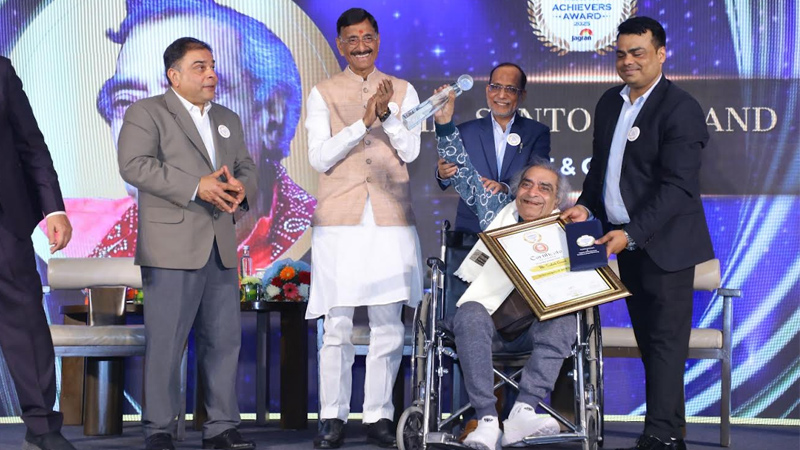
The cultural spotlight fell on veteran lyricist and poet Santosh Anand, whose songs have echoed across generations of Hindi cinema. At 97, Anand accepted the honour with characteristic humility, reflecting on a life shaped by perseverance and hope.
Healthcare honours spanned both modern and traditional systems. Manoj N. Nesari was recognised for strengthening Ayurveda’s place in national and global health frameworks. Padma shri Mohammed Abdul Waheed was honoured for his research-backed work in Unani medicine, while padma shri Mohsin Wali received recognition for his long-standing contribution to patient-centred care.
Education and social development also featured prominently. Padma shri Zahir Ishaq Kazi was honoured for decades of work in education, while former Meghalaya superintendent of Police T. C. Chacko was recognised for public service. Goonj founder Anshu Gupta received an award for his dignity-centred rural development initiatives, and the Hunar Shakti Foundation was honoured for empowering women and young girls through skill development.
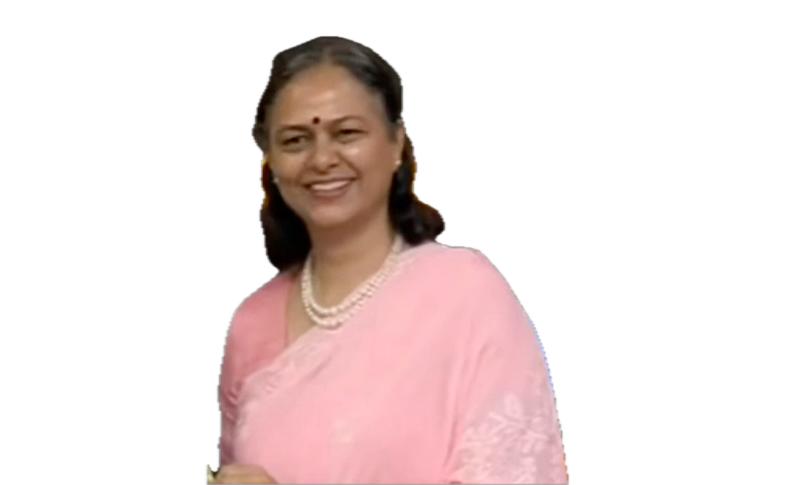
The Lifetime Achievement Award went to former IAS officer Shailaja Chandra for her long career in public healthcare and governance, particularly in the traditional systems under Ayush.
Speaking at the event, Hamdard chairman Abdul Majeed said the awards were a tribute to those who combine excellence with empathy. “These awardees reflect Hakeem Sahib’s belief that healthcare, education and public service must ultimately serve humanity,” he said.
Minister Seth struck a forward-looking note, saying India’s young population gives the country a unique opportunity to become a global destination for learning, health and wellness by 2047.
The ceremony also featured the trailer launch of Unani Ki Kahaani, an upcoming documentary starring actor Jim Sarbh, set to premiere on Discovery on 11 February.
Instituted in memory of Unani scholar and educationist Hakeem Abdul Hameed, the awards have grown into a national platform that celebrates those building a more inclusive and resilient India. For one evening at least, the spotlight was not just on success, but on service with substance.