News Broadcasting
DW News eyes greater coverage on S. Asia riding on reach in India

NEW DELHI: German public service broadcaster Deutsche Welle, which launched its 24-hour English news channel in India on 22 June, 2015, is committed to increase its coverage on south Asia from the current 30 per cent, riding on its large scale reach in India. While the company’s flagship channel DW had started out with 300 TV homes in India, DW News now beams in 71 million TV households across direct to home (DTH) and cable platforms.
DW News is aiming to increase its coverage in India of local issues as well as highlight local heroes and has appointed two India correspondents for the same. Speaking to Indiantelevision.com, DW head of news and current affairs Carsten von Nehman said, “Now that we have two correspondents in India, we hope that there will be greater coverage.”

DW News India head Sudeep Malhotra added that the channel is available on DTH platforms namely Dish TV, Airtel and DD Freedish. It is also available on cable networks including Asianet, Hathway, DEN Network, InCable Network, Ortel and GTPL. The programmes are beamed via ASIASAT 7 satellite. According to him, the channel’s viewers included teens to people in their mid or late forties.
According to von Nehman, the channel’s morning slots were generally devoted to Europe, while the early afternoon slots were about news from south Asia. The late afternoon slots were on African news and the night shows related to North America. This had been planned meticulously based on the time zones in these respective countries.
He said apart from news on the hour, highlights included the lifestyle shows like Euromaxx, Arts 21 and Tomorrow Today. Other show include Discover Germany, Global 3000, In Good Shape, Kick-off (DW has a tie-up with the German Football Association) and the political talk show Conflict Zone with Tim Sebastian.
Asked about the marketing of the channel, von Nehman said that there would be no advertising in newspapers or elsewhere. Marketing was being done more subtly through involving viewers via contests and interactions.
“The new DW TV opens a window to the world for our viewers in South Asia. DW offers a unique perspective that is especially valued by local business and opinion leaders and DW News will now provide them with insights into international head-lines and the details behind regional issues,” said DW head of distribution Asia Dorothee Ulrichs.
German ambassador Martin Ney and Prasar Bharati CEO Jawhar Sircar were the main speakers at the formal launch in India.
It may be recalled that Prasar Bharati had signed a memorandum of understanding (MoU) with DW last year paving way for distribution of DD India on DTH platform of Hotbird-13B Satellite and the reciprocal distribution of DW-TV on DD Freedish.
According to Ney, India had Germany had many things in common, including federalism, a free press and healthy trade relations. “Germans are curious to know more about India and this is evident from the growing number of tourists to Germany from this country,” he said.
Sircar said the primary aim of a public service broadcaster should not be to impose any news or information on the viewers, and leave it for the consumer to decide.
“India has over 400 news channels and so there’s ample choice, but the real challenge lies in getting to the 150 million cellphones since the consumer is not using the mobile to get information,” Sircar said.
DW is Germany’s international broadcaster with content in 30 languages. The flagship channel DW provides analysis and insights to viewers around the globe, reporting on important issues in English 24/7.




News Broadcasting
CNN-News18 to host Fury in the Gulf conclave on West Asia crisis
Three-hour summit to unpack geopolitical fallout and impact on India
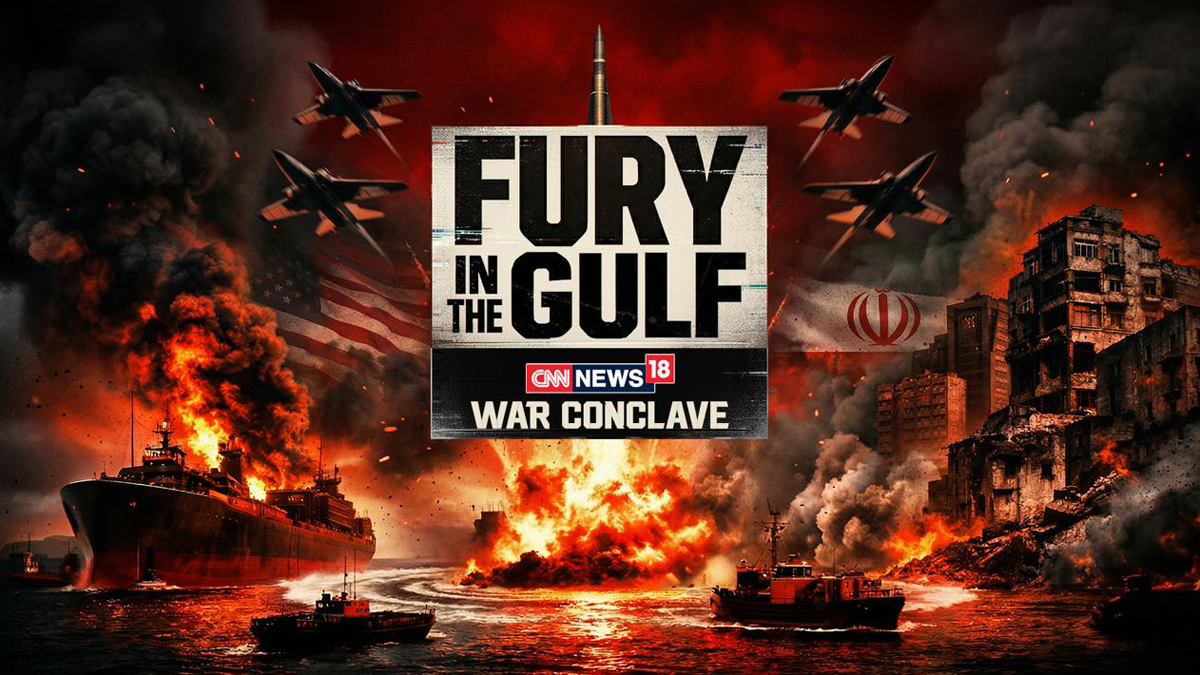
MUMBAI: CNN-News18 is set to host a special three-hour broadcast, Fury in the Gulf – War Conclave, on April 7, aiming to decode the escalating West Asia crisis and its far-reaching implications for India.
Scheduled from 4:00 PM to 7:00 PM, the conclave comes at a time when tensions between Iran and the United States are reshaping global geopolitics and triggering economic uncertainty. With India’s deep energy ties, trade links and large diaspora in the Gulf, the developments carry significant domestic relevance.
Built around the theme ‘Conflict, Consequences, and The Future,’ the programme will feature six curated sessions combining one-on-one interviews and panel discussions. The focus is to cut through the clutter and offer viewers a clearer understanding of the fast-evolving situation.
Key sessions include ‘Diplomacy in Times of War’ featuring Shashi Tharoor, and ‘World After the Iran Conflict’ with voices such as Ram Madhav, Reuven Azar, representatives from the European Union and the Iranian Deputy Envoy. Another session titled ‘Another Dunkirk?’ will bring together K. J. S. Dhillon and Jitin Prasada among others.
CNN-News18 editorial affairs director Rahul Shivshankar said, “In times of war, clarity becomes the most powerful tool. Fury in the Gulf – War Conclave brings together credible voices to address the questions and confusion that arise amid an overwhelming influx of information.”
He added that the initiative is aimed at delivering “facts, perspective, and insight” at a time when misinformation can easily cloud public understanding.
Echoing the sentiment, CNN-News18 CEO– English and business news Smriti Mehra said the conflict marks a defining global moment, with consequences that extend well beyond the region. She noted that the conclave seeks to present the crisis with “depth, nuance and responsibility” so audiences can better grasp its real-world impact.
As geopolitical tensions continue to dominate headlines, the conclave positions itself as an attempt to bring order to the noise, offering viewers a structured, insight-led look at a complex and rapidly shifting global situation.






